Hunting note
Start with the decision, then inspect the details.
A practical guide for homeowners and renters researching furniture purchases online on plywood vs MDF for shelving, covering the best next steps, tradeoffs, and when to call a pro.
Plywood is usually the stronger, lighter, and more moisture-tolerant choice for long shelves or heavy loads. MDF is flatter, smoother, and often less expensive, making it appealing for painted built-ins and shorter decorative shelves. Neither material is automatically best: span, depth, load, edge treatment, support spacing, finish, and room conditions determine whether a shelf stays straight.
For books, records, pantry goods, or wide unsupported spans, good-quality plywood is generally the safer starting point. For a closely supported painted unit in a dry room, MDF can produce exceptionally smooth surfaces and crisp-looking panels. The most successful projects size the shelf around the expected load instead of choosing material by appearance alone.
How Plywood and MDF Are Made
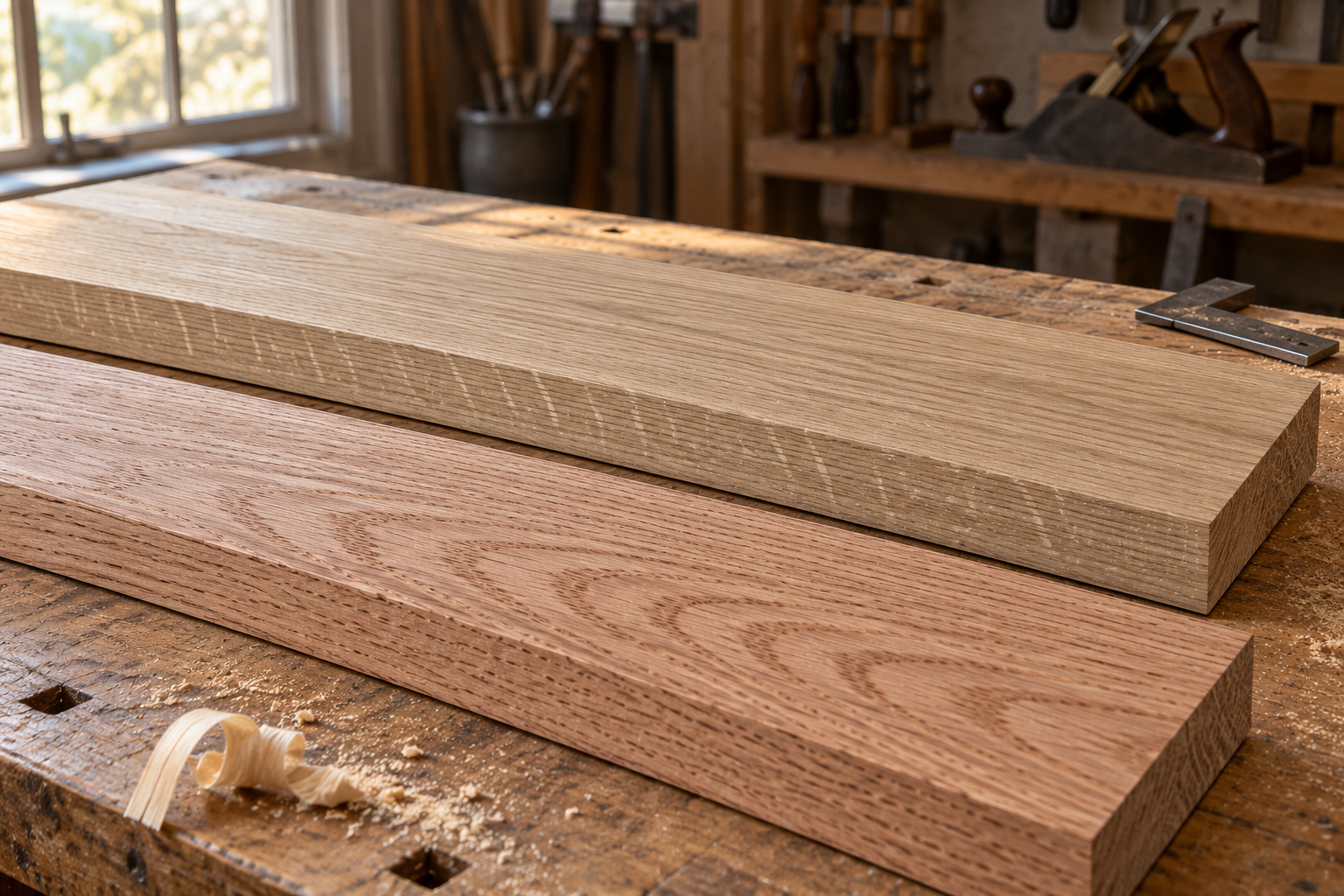
Plywood is built from thin wood veneers laminated in alternating grain directions. Cross-lamination gives a panel strength in both directions and helps limit the movement found in solid lumber. Quality varies: veneer species, number of plies, core voids, adhesive, face grade, and manufacturing accuracy all affect stiffness, screw holding, and the appearance of exposed edges.
Medium-density fiberboard is made from refined wood fibers combined with resin and pressed into a dense, uniform sheet. It has no grain and few of the internal variations found in low-grade plywood. That uniformity creates a smooth face and predictable machined edge, but the panel is heavy, vulnerable to swelling after water exposure, and generally less effective at holding fasteners in its edges.
The Quick Comparison
| Factor | Plywood | MDF |
|---|---|---|
| Stiffness for a similar thickness | Generally better | Generally lower |
| Weight | Usually lighter | Usually heavier |
| Painted finish | Good with preparation | Excellent smooth surface |
| Exposed edge | Layered; can be attractive or banded | Porous; needs sealing or trim |
| Screw holding | Better, especially in faces | Fair in faces, weaker at edges |
| Moisture tolerance | Varies; usually better | Standard MDF swells readily |
| Cost | Often higher for cabinet grades | Often lower, market dependent |
| Cutting dust | Dust and splinters | Very fine dust; strict extraction needed |
These are general tendencies rather than engineering values. An inexpensive plywood panel with large core voids may perform worse than expected, while moisture-resistant MDF is not the same product as standard MDF. Always identify the actual grade and consult panel data when loads or safety are important.
Strength, Stiffness, and Sag
A shelf usually disappoints through sag rather than sudden breakage. Sag increases rapidly as the unsupported span grows, which means moving supports closer together can matter more than a small upgrade in thickness. Shelf depth, panel thickness, load distribution, and how the back and front edges are restrained also affect deflection. A row of heavy books creates a much more demanding load than a few lightweight objects.
Plywood’s veneer structure generally gives it a better stiffness-to-weight ratio. MDF can work well over short spans, but a long, deep MDF shelf loaded with books is prone to bowing unless reinforced. Adding a solid-wood front edge, a torsion-box structure, a center divider, or a continuous cleat can increase stiffness. Decorative nosing is most useful when it is structurally bonded and oriented to resist bending, not merely pinned to the edge.
Match the Material to the Load
For bookshelves, record storage, kitchen equipment, tool storage, and office equipment, favor plywood and conservative support spacing. Vinyl records are particularly dense and should be treated as a heavy load. A printer or monitor creates a concentrated load, so position it near supports or use a shelf designed for that point load. Do not infer capacity from a listing photo.
MDF is better suited to display shelving, painted alcove units, media cabinetry with frequent vertical partitions, and other designs where spans are short. If you are integrating shelving into an office, consider the weight and cable requirements of the entire setup rather than treating each item separately. The same planning discipline used when choosing the best L-shaped desk for a home office applies: dimensions and rated support matter more than a broad style label.
Thickness and Support Spacing Matter
Common sheet thicknesses are only nominal, so measure the panel and size joinery to the actual material. A three-quarter-inch panel is a common cabinet choice, but it is not a universal guarantee against sag. Long spans may need a thicker construction, front stiffener, fixed back, or additional vertical support. Very deep shelves place the front edge farther from wall brackets and increase leverage.
Bracket spacing must follow the bracket manufacturer’s rating and the wall structure, not just the panel material. A strong plywood shelf on inadequate drywall anchors is still unsafe. Whenever possible, fasten standards or cleats into studs or suitable masonry anchors. For freestanding bookcases, secure the finished unit to the wall with an anti-tip system appropriate to the wall and furniture, especially where children could climb.
Finish Quality and Edge Treatment
MDF’s smooth face makes it excellent for paint. Seal cut edges because they absorb primer quickly and can become fuzzy. Apply compatible primer and paint in a well-ventilated area, following product safety instructions. Rounded or routed profiles can look seamless after careful preparation, though delicate profiles may be vulnerable to impact damage.
Plywood faces can be clear-finished when the veneer is attractive, stained with care, or painted after filling and priming. Exposed plies create a deliberate modern detail on high-quality Baltic-birch-style panels, while ordinary construction plywood often looks better with wood edge banding or solid nosing. Thin face veneers are easy to sand through, so use a light touch and test finishes on an offcut.
Fasteners and Joinery
Plywood typically holds screws well when fasteners are correctly sized and kept away from damaged edges or voids. Predrilling reduces splitting and helps place hardware accurately. Dados, rabbets, dowels, biscuits, and pocket screws can all be useful in appropriate designs, but glue surface and mechanical support should match the load. Avoid driving screws into unsupported veneer edges without considering the core quality.
MDF holds screws more reliably through its face than into its edge. Use fasteners intended for composite panels, predrill where recommended, and avoid over-tightening, which can strip the fibers or create a mound around the head. Confirmat-style screws are useful in some cabinet construction, but they do not transform weak layout into a safe structure. A fixed shelf housed in dados and supported by a back can be far stiffer than a loose shelf resting on four small pins.
Moisture, Humidity, and Room Choice
Standard MDF can swell and lose integrity after water reaches an unsealed edge. That makes it a poor default near plumbing leaks, damp basements, wet entryways, or locations that receive frequent mopping splashes. Moisture-resistant MDF offers improved performance but is not waterproof. Its product data and finishing requirements still matter.
Interior plywood also varies in moisture resistance. Exterior-rated adhesive can improve tolerance of occasional humidity, but exposed edges and low-grade cores can still take up water, delaminate, stain, or support mold under persistent dampness. Fix the moisture source instead of expecting shelving material to survive it. In a pantry or utility area, keep shelves clear of supply connections and provide access for inspection.
Weight, Handling, and Installation Safety
MDF is notably heavy. A full sheet or assembled bookcase can be awkward to lift and can injure a person or damage flooring. Break large projects into manageable components, use proper supports, and get assistance rather than attempting an unstable lift. Never cut sheet goods while they are balanced loosely between two points; support the panel so the offcut cannot pinch the blade or fall.
Both materials create hazardous dust. MDF produces especially fine dust, while plywood cutting can create dust and splinters. Work with effective dust extraction, eye protection, and respiratory protection appropriate to the task and product safety data. Cut outdoors or in a suitable workshop rather than filling an occupied room with dust. Keep guards in place, disconnect tools before blade changes, and do not wear loose clothing near rotating equipment.
Cost and Long-Term Value
MDF often has a lower sheet price and reduces labor for a flawless painted face. However, reinforcement, edge preparation, extra supports, and the difficulty of moving a very heavy finished unit can narrow the difference. Plywood costs more in cabinet grades, but its lower weight and stronger screw holding may simplify installation and improve durability.
Compare the complete project: panels, edge banding, solid nosing, brackets, wall anchors, primer, paint, delivery, and waste. A premium panel is not economical if the design leaves a long unsupported span that sags anyway. Conversely, buying the cheapest material and rebuilding the shelf later is rarely a saving. Apply the same total-cost thinking used for other furniture purchases, such as selecting a <a href="/products/article-seno-71-dining-table-walnut/" class="product-inline-link">dining table</a> for six people.
Common Mistakes to Avoid
Do not use a generic online span claim as a capacity rating for your exact panel. Panel quality and load pattern vary. Do not assume thicker automatically means safe if brackets are poorly anchored. Avoid placing heavy objects at the center of a long shelf, and do not rely on thin decorative edge banding as structural reinforcement.
Another mistake is finishing only the visible face. Balanced finishing can help reduce uneven moisture response, and all MDF edges need attention. Do not install either material over an active damp problem. Finally, never leave a tall, loaded shelving unit unanchored merely because its plywood carcass feels rigid; tip-over is a separate hazard from shelf sag.
Which One Should You Choose?
Choose plywood when the shelf will carry books or equipment, span a wider opening, face occasional humidity, rely heavily on screws, or need to be moved without excessive weight. Seek a cabinet-grade panel with a sound core and enough plies for the project. Add a stiff front edge and closer supports when loads are demanding.
Choose MDF when the priority is a smooth painted built-in, spans are short, supports are frequent, the room stays dry, and the unit will not be moved often. Seal every exposed surface and design joinery around MDF’s edge limitations. For compact rooms, visual mass matters too; ideas used when selecting a <a href="/products/article-amoeba-42-5-coffee-table-walnut/" class="product-inline-link">coffee table</a> for a small space can help keep shelving proportions from overwhelming the room.
Frequently Asked Questions
Is 3/4-inch MDF strong enough for bookshelves?
It can be for short, well-supported spans, but long MDF shelves carrying books often sag. Use conservative spacing, structural front edging, a fixed back, or additional dividers, and base the design on the actual panel and load.
Can plywood shelves be painted as smoothly as MDF?
They can look excellent, but grain and veneer joints may remain more visible. Fill defects, sand gently, use a suitable primer, and choose a high-quality face grade when a refined painted finish matters.
Is moisture-resistant MDF safe for bathrooms?
It resists humidity better than standard MDF but is not waterproof. Seal it as directed, keep it away from direct wetting, ventilate the room, and repair leaks promptly. Plywood or another material may be more forgiving in vulnerable locations.
What is the best edge reinforcement?
A properly bonded solid-wood front edge with meaningful vertical height can improve stiffness. Its size and attachment must match the span and load. Thin iron-on veneer hides the edge but contributes little structural strength.
When should a cabinetmaker or installer design the shelf?
Get professional help for wall-spanning units, valuable collections, unusual masonry, concealed wiring or plumbing, very heavy equipment, floating shelves with hidden supports, or any installation where failure could injure someone.