Hunting note
Start with the decision, then inspect the details.
A construction-led comparison of boucle and sherpa: how each fabric is made, how it wears, how it should be cleaned, and which rooms each one belongs in.
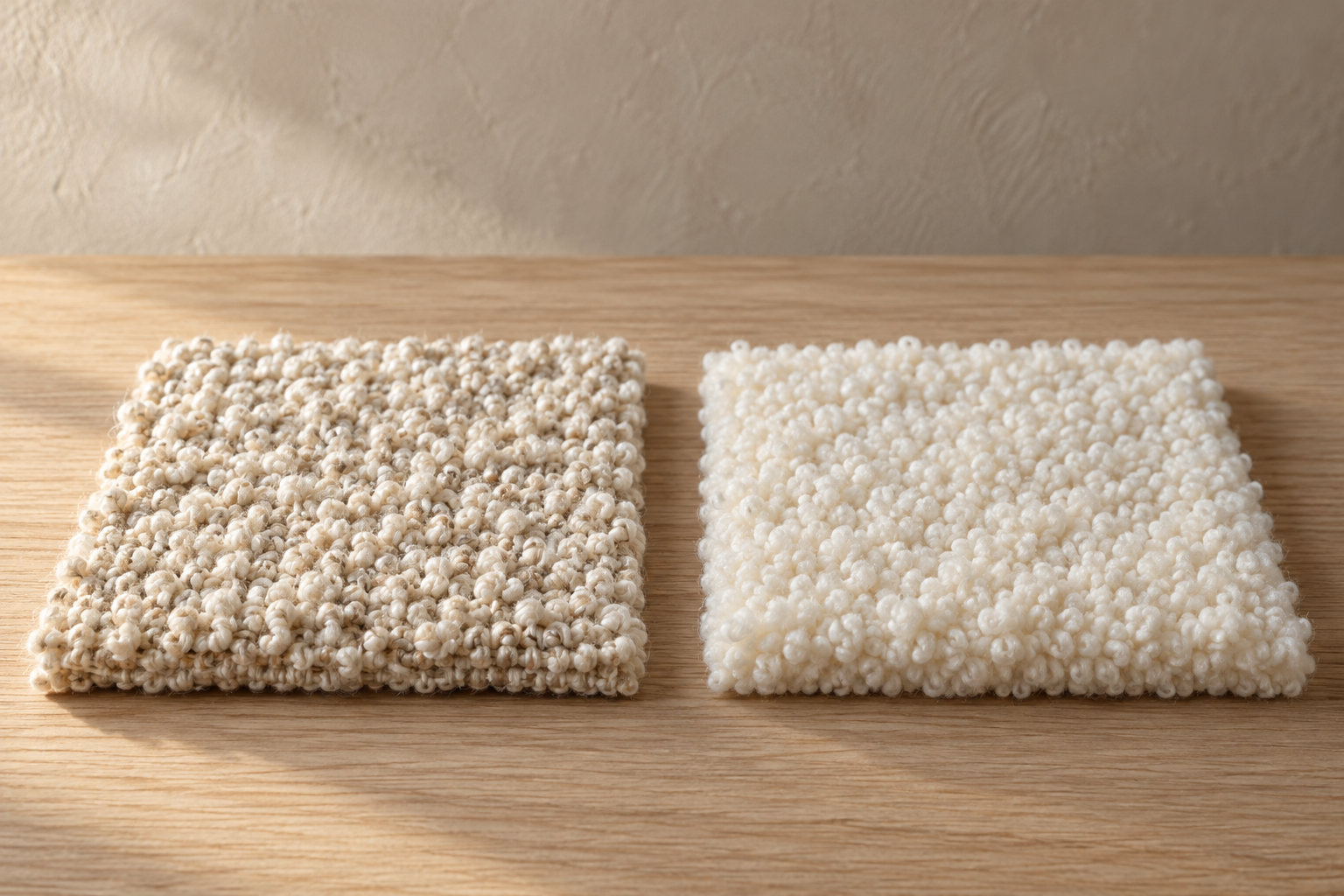
Bouclé and sherpa are not two versions of the same fabric. Bouclé is a looped yarn — or the woven fabric that keeps those loops on its surface — and it can be made from wool, cotton, linen, rayon, polyester or a blend. Sherpa is a curly pile fabric built from synthetic yarns such as acrylic or polyester, designed to imitate sheepskin. In practice: bouclé is a texture you weave, sherpa is a pile you raise. That single construction difference explains almost every practical tradeoff below — how each one ages, what it snags on, how it cleans, and which rooms it should stay out of.
This guide is research-based, not a lab test. We read the construction definitions and the durability discussion in the sources linked below, then translated them into buying decisions. The care guidance follows standard upholstery practice rather than any single source, and the item's care label overrides it. Where the evidence does not support a claim, we say so instead of filling the gap with a confident guess.
The short answer
Choose bouclé when you want visible texture that reads as furniture rather than upholstery, and you accept that loops need a little attention. Choose sherpa when you want warmth and softness in a low-traffic, low-abrasion role: a throw, a cushion, a bench pad, a reading chair in a cool room. Do not choose sherpa for the family sofa. Pile fabrics crush, mat and shed where bodies and pets press into them daily, and a synthetic curly pile shows that wear faster than a woven loop.
If you are choosing between bouclé and a performance weave for a main sofa, the honest framing is that bouclé is the look decision and performance fabric is the wear decision. Our guide to performance fabric sofa pros and cons covers that trade directly.
What bouclé actually is
Bouclé is defined by its yarn, not by a fibre. The yarn is built from loops of similar size that can range from tiny circlets to large curls, and the fabric woven from it keeps that looped appearance — which is why the same word describes both the yarn and the finished cloth.
The construction detail matters when you are judging quality. To make bouclé, at least two strands are combined and plied with very different tension: one strand stays loose and forms the loops (the effect yarn), while the other acts as the anchor. Machine spinning does the same job in a single step through a hollow spindle, and loop regularity is set by the distance between the point where the core yarns come together and the guide: widen that gap and the bouclé effect becomes more irregular.
Two things follow for buyers. First, loop size and regularity are a design choice, not a defect — a chunky, irregular bouclé is supposed to look hand-made. Second, the fibre underneath can be anything. Architectural Digest's 2025 look at why bouclé persists quotes a designer noting how far wool and rayon blends have come in the category, and another saying that many of his clients have families, which is why he specifies bouclé for its durability and versatility. That is a designer's judgement, not a test result, but it matches the construction: a woven loop structure with a compact ground cloth is a sturdier base than a loose pile.
What sherpa actually is
Sherpa is a curly pile fabric made from synthetic yarns such as acrylic or polyester. The texture is soft and fluffy, and on the piled side it is meant to resemble wool or sheepskin. Sherpa fleece is a knitted fabric, and the name itself began as a trade mark for a man-made pile fabric.
That origin explains the feel and the weakness. Sherpa's commercial history is largely in linings and winter wear. A pile is the raised surface of a fabric, made of upright loops or strands; the same family includes velvet, terry cloth, corduroy and carpet. Pile has length and depth: high pile means longer strands, low pile means shorter ones. Sherpa sits firmly on the deep, soft end of that scale, which is exactly what makes it feel good against skin and exactly what makes it a poor match for a surface that takes repeated friction.
None of this makes sherpa a bad fabric. It makes it a specialised one. Used as a throw, a cushion cover, a headboard pad or a bench seat in a room nobody eats in, it does what it was designed to do. Used as the main upholstery on a sofa in a household with a dog, a toddler and a habit of movie-night snacks, it will look tired long before the frame does.
The real differences, side by side
| Question | Bouclé | Sherpa |
|---|---|---|
| Construction | Looped effect yarn, woven; loops stay on the surface | Curly pile raised from synthetic yarns; often a knit base |
| Fibre content | Varies widely: wool, cotton, linen, polyester, blends | Usually acrylic or polyester; read the label |
| Surface | Loops you can see and feel; slightly nubby hand | Deep, soft, sheepskin-like nap |
| Directionality | Loops sit in place; little nap direction | Pile has direction and depth — brushing changes the look |
| Failure mode | Snags and pulled loops; pilling in blends | Crushing, matting, shedding, flattened patches |
| Heat | Depends on fibre; wool blends feel warm, cotton and linen cooler | Traps warmth by design |
| Best role | Accent chairs, headboards, statement pieces; sofas in dense wool blends | Throws, cushions, bench pads, winter accents |
| Cleaning risk | Water can distort loops if scrubbed | Pile agitates, mats and sheds when scrubbed |
| Price signal | Higher when wool content and dense ground cloth | Lower when fully synthetic |
The table is the decision tool. Read the fibre line and the failure-mode line together, and the rest follows.
Where each fabric belongs in a room
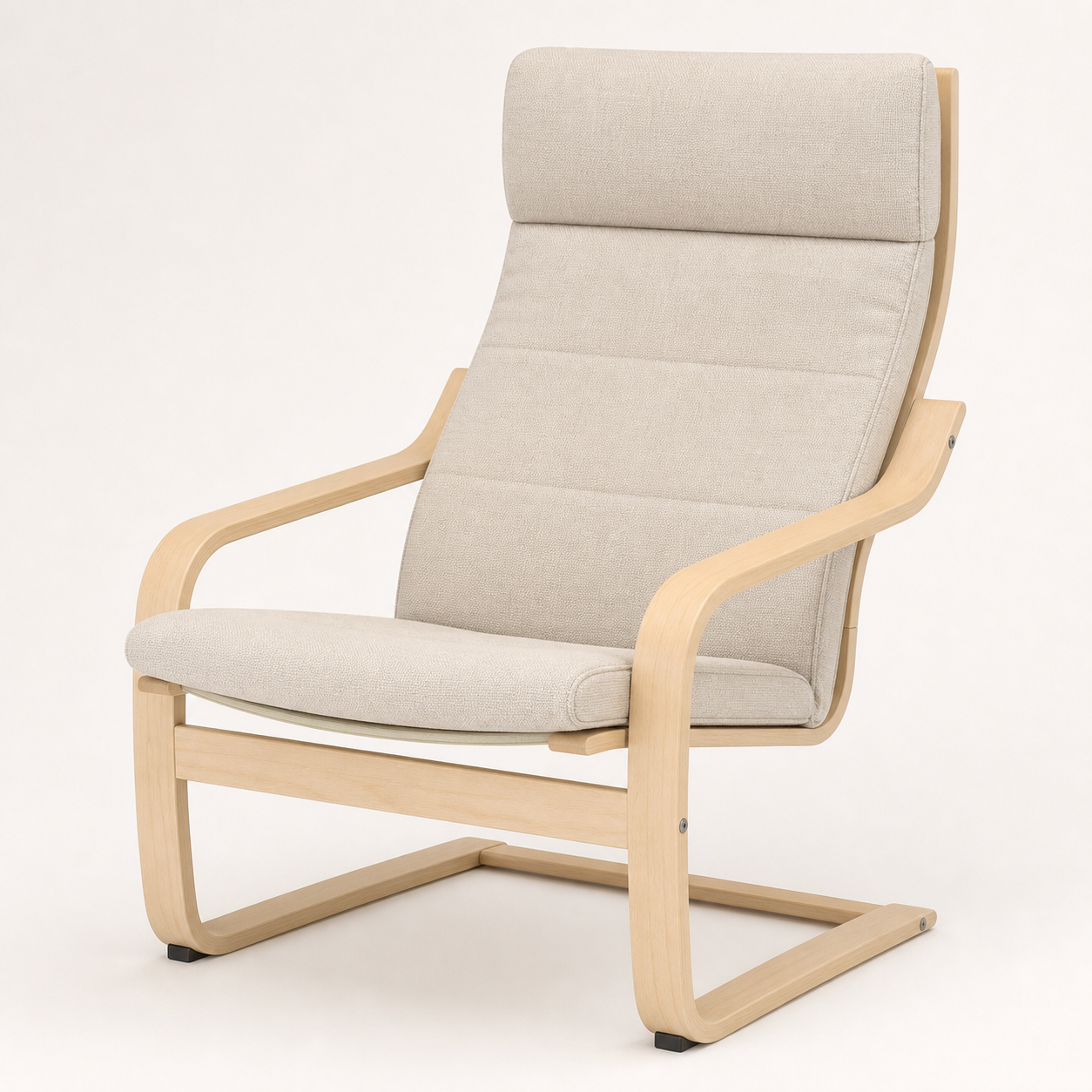
Bouclé belongs where it can be seen and not mauled. An accent chair in a corner, a headboard, a bench at the end of a bed, a sofa in a living room that is used for conversation rather than nachos. A tight, low-loop bouclé on a chair frame is one of the few textures that makes an inexpensive piece look considered — which is why tight, low-loop bouclé turns up so often on affordable accent chairs. Our guide to choosing an affordable bouclé chair walks through what to check on the frame and the loop density before you buy.
Sherpa belongs where skin meets fabric briefly. A throw over the arm of a sofa, a cushion on a window seat, a pad on a wooden bench, a reading nook in a cold room. Its whole value proposition is warmth and softness in short contact. Put it where a body sits for two hours with a plate, and you are asking a lining fabric to do an upholstery job.
Velvet sits between the two and is worth understanding as a third option: it is also a pile fabric, but a dense, short, woven pile that behaves differently from sherpa's deep synthetic curl. If you are drawn to soft surfaces but need something that survives a living room, our guide to choosing a velvet sofa that lasts is the closer comparison. And before any of these decisions, check the dimensions against the room — the wrong size defeats the right fabric, which is the whole point of our sofa sizing guide.
Durability, shedding and pilling: what construction predicts
Three wear stories come straight out of the construction, and none of them require a testing lab to explain:
Pulled loops. A bouclé surface is a field of loops held by an anchor strand. A watch strap, a claw, a zipper or a keyset can catch one and pull it proud of the surface. Do not cut a pulled loop — cutting turns one raised loop into a short end that works its way out. Push it back through with a blunt needle where the weave allows, and treat repeated snagging in one spot as a sign the fabric is wrong for that seat, not that the chair is broken.
Crushed pile. Pile fabrics have depth, and depth compresses. Wherever a body, a bag or a pet repeatedly presses, sherpa loses height and the surface takes on a flattened, slightly greasy look. This is not dirt, and cleaning will not restore it, because the fibres have been bent and matted. Rotating cushions and keeping the piece out of the highest-traffic spot delays it; nothing fully reverses it.
Shedding and pilling. A curly synthetic pile can release loose fibre, especially when new, and blended loop yarns can pill where friction is constant. Some shedding in the first weeks is normal for pile; permanent shedding at armrests and seat fronts is a wear signal. Pilling on a bouclé blend is usually a surface issue — remove pills with a fabric comb rather than a razor, which can catch a loop.
How to read a fabric spec sheet before you buy
Most furniture listings give you four useful data points and one misleading one.
1. Fibre content, with percentages. "Bouclé" and "sherpa" are construction words, not fibre words. A 70% polyester bouclé and a 60% wool bouclé are different products at the same price. For sherpa, expect acrylic or polyester and read whether any wool is claimed.
2. Abrasion result and the test behind it. Double-rub figures are only comparable within the same test method, and a high number on a loose pile still does not fix crushing. Treat the number as a floor, not a promise.
3. Cleaning code. The letter on the care label tells you whether water-based cleaners (W), solvent cleaners (S), either (WS) or neither (X, vacuum only) are appropriate. This single letter decides whether a spill is a five-minute fix or a professional visit.
4. Upholstery grade versus apparel grade. Sherpa is widely sold as a garment and lining fabric. Fabric sold for clothing is not automatically rated for a sofa that takes body weight and friction every day. If the listing does not say upholstery, ask.
5. The claim to discount. "Durable", "easy clean" and "pet friendly" without a method are marketing. Ask what was tested and against what.
Care that does not ruin the surface
Bouclé and sherpa fail in opposite directions, so they need opposite handling.
For bouclé: vacuum with a brushless upholstery attachment on low suction, in the direction of the weave, so you lift dust without pulling loops. Blot spills inward from the edge with a white cloth rather than rubbing, and never scrub a loop field — agitation distorts the loops and can felt a wool blend. Test any cleaner on the back of the piece first. If the cleaning code says S, water-based products are the wrong tool no matter how mild they look.
For sherpa: shake and vacuum gently with low suction, and resist the urge to brush the pile back and forth — that is how matting starts. Blot, do not rub. Air-dry rather than tumble, and keep direct heat away from synthetic pile. Where the pile has flattened, a very light steam and a soft brush can lift it slightly, but treat that as cosmetic recovery, not restoration.
For both: keep the piece out of direct sun to slow fading, and follow the manufacturer's care instructions over any general advice, including this article. If a piece is vintage, heavily soiled or the care label is missing, a professional upholstery cleaner is the cheaper decision than an experiment.
Safety and the limits of a fabric decision
Fabric choice is also a safety decision at the margins. Ask the manufacturer for current flammability information rather than assuming a fibre behaves a certain way, and if you are adding a loose sherpa throw to a room with a fireplace, a heater or a candle, keep it clear of any ignition source. On furniture, check that the frame meets tip-over safety guidance and anchor tall pieces — a soft fabric makes a heavy piece feel safer than it is. None of this is a substitute for the manufacturer's instructions.
FAQ
Is bouclé more durable than sherpa?
For upholstery, generally yes, because a woven loop structure resists compression better than a deep pile. But "bouclé" covers wool blends and cheap polyester alike, so the fibre and the density of the ground cloth matter more than the name.
Can sherpa be used on a sofa?
It can be, and it is sold that way, but expect crushing and matting at the seats and armrests. Sherpa is happiest in low-friction roles: throws, cushions, bench pads and headboards.
Does bouclé shed?
Loops do not shed the way cut pile does, but blends can pill and loose fibres can work free. Pulled loops from snagging are the more common complaint.
Which is warmer?
Sherpa, by construction — it is a deep pile designed to trap warmth. Wool bouclé also feels warm, while cotton and linen bouclé feel cooler.
Can I clean bouclé or sherpa myself?
Only within the care label's cleaning code, and only by blotting rather than scrubbing. If the code is S, or the piece is heavily soiled, use a professional upholstery cleaner.
Is bouclé safe around pets?
Loops are catch points for claws. A tight, low-loop bouclé in a low-traffic spot can work; a chunky loop on the seat where the dog sleeps usually will not.
The decision, in one line
If the piece will be looked at more than sat on, bouclé gives you texture that earns its place. If the piece will be touched briefly and often — a throw, a cushion, a cold-room chair — sherpa does one job well. If the piece must survive daily life with people and pets, neither is the first choice, and a performance weave is the honest answer. Whichever way you go, buy the fibre content, the cleaning code and the frame quality — not the word on the label.
Sources checked
- Bouclé — Wikipedia: looped yarn definition, effect yarn and anchor strand, loop regularity in spinning.
- Sherpa (fabric) — Wikipedia: curly pile of synthetic yarns, acrylic or polyester, sheepskin imitation, lining origin.
- Pile (textile) — Wikipedia: pile as raised loops or strands, high versus low pile, examples including velvet and terry.
- Why Won't Bouclé Fabric Die? — Architectural Digest, May 12, 2025: designer commentary on bouclé durability, wool and rayon blends, and its use in family homes.
This article is research-based guidance, not hands-on testing. Fibre contents, care codes and flammability information vary by product; check the specific item's label and manufacturer documentation before cleaning or placing it near heat.