Hunting note
Start with the decision, then inspect the details.
A practical guide for homeowners and renters researching furniture purchases online on Joybird vs Article sofa review, covering the best next steps, tradeoffs, and when to call a pro.
A useful Joybird vs Article sofa review has to go beyond color swatches and promotional photos. Both online furniture brands sell modern sofas across multiple styles, but they do not offer one uniform construction or ownership experience. The best choice depends on the exact collections you compare, how much customization you want, your preferred seat feel, delivery access, material needs, and the current return policy.
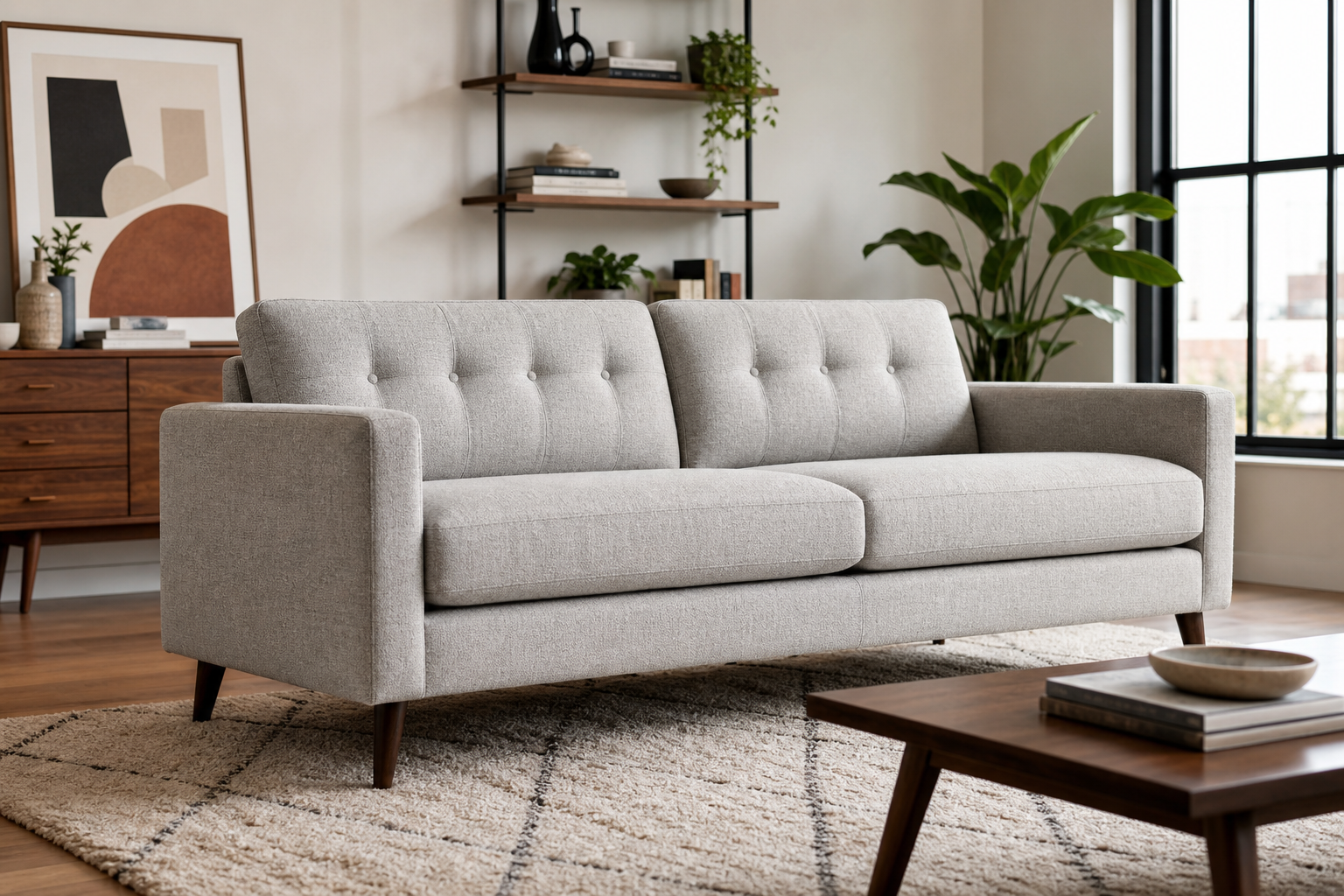
Joybird tends to be the stronger starting point for shoppers who want a broad choice of upholstery and a more configurable, expressive mid-century look. Article tends to appeal to buyers who prefer a more edited selection, restrained styling, and a comparatively direct path from product page to finished room. These are tendencies, not guarantees: inspect the specifications and fabric options for each actual model.
The Quick Verdict
Choose Joybird if upholstery choice is central to the purchase. Its model families have commonly been offered in many fabrics and colors, making it easier to coordinate an unusual palette or select performance characteristics. Configuration options may also help when you want a particular sectional orientation or a recognizable retro silhouette. More choice, however, creates more decisions and may affect production and return terms.
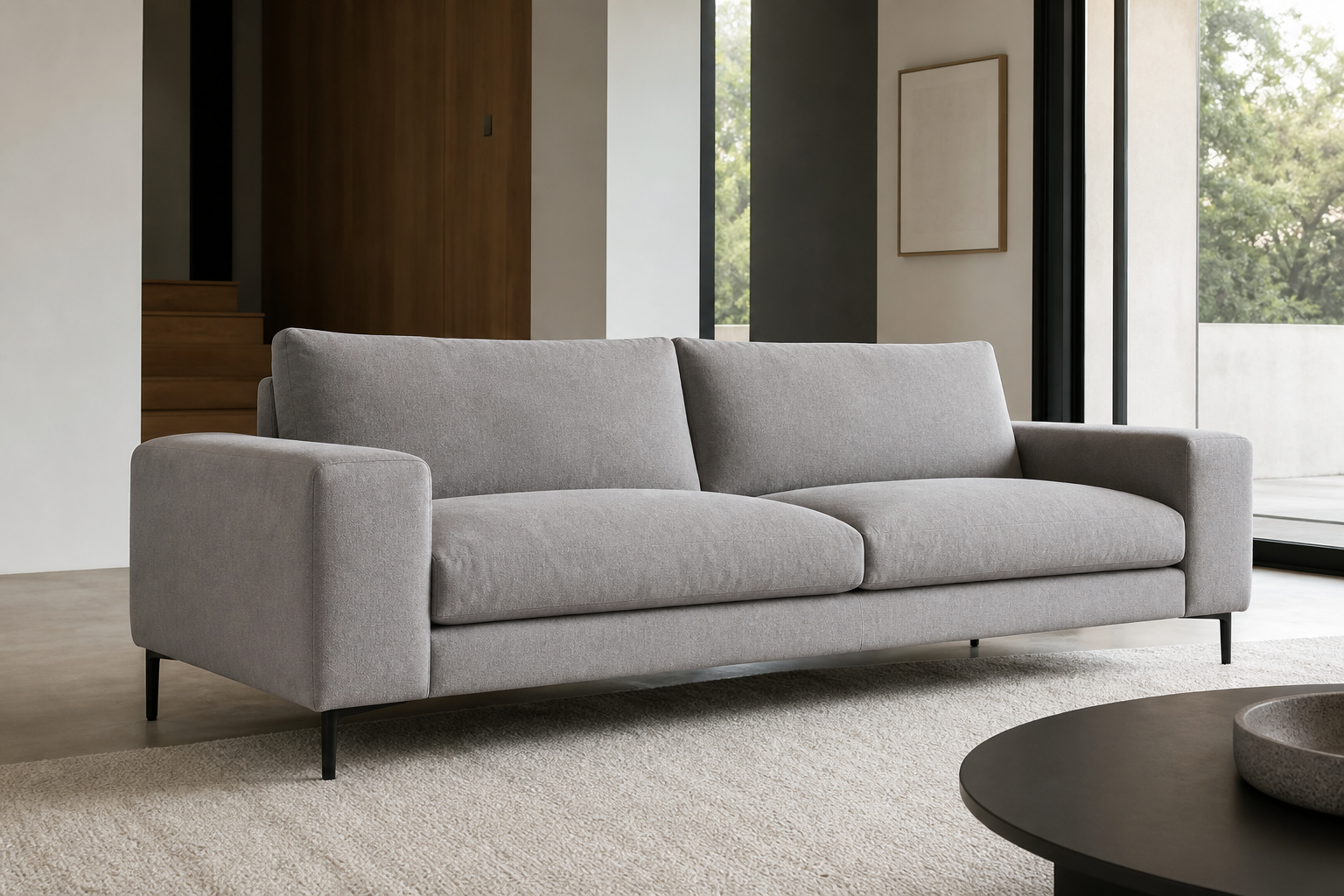
Choose Article if you want to shop from a curated range with fewer customization branches. The brand’s aesthetic spans modern, Scandinavian-influenced, and relaxed contemporary forms, often with straightforward material combinations. A stocked configuration may suit buyers who value a simpler selection process, but availability and delivery timing still vary by item and location.
Do not choose either brand at the category level. Compare two named sofas in the right dimensions, upholstery, and configuration. Product lines change; save the specification page and policy that apply when you order.
Joybird vs. Article at a Glance
This table highlights common shopping differences rather than fixed specifications.
| Decision factor | Joybird tendency | Article tendency |
|---|---|---|
| Upholstery selection | Often broad, with many color and fabric choices | More edited choices tied to each model |
| Design personality | Expressive mid-century and configurable looks | Curated modern and relaxed silhouettes |
| Shopping process | More customization decisions | Often a more direct configuration path |
| Lead-time logic | Custom choices can affect timing | Stock status can strongly affect timing |
| Best for | Color-specific rooms and configuration needs | Buyers who like an existing model as shown |
| Main risk to check | Custom-order return restrictions and swatch accuracy | Seat feel and material variation across collections |
| Essential measurement | Full frame, arm, seat, and sectional dimensions | Full frame, arm, seat, and sectional dimensions |
The table does not establish quality or value. A well-suited sofa from either brand can outperform a poorly selected one from the other. Start with room fit and use pattern, then evaluate construction, fabric, comfort evidence, service, and total delivered cost.
Style and Customization
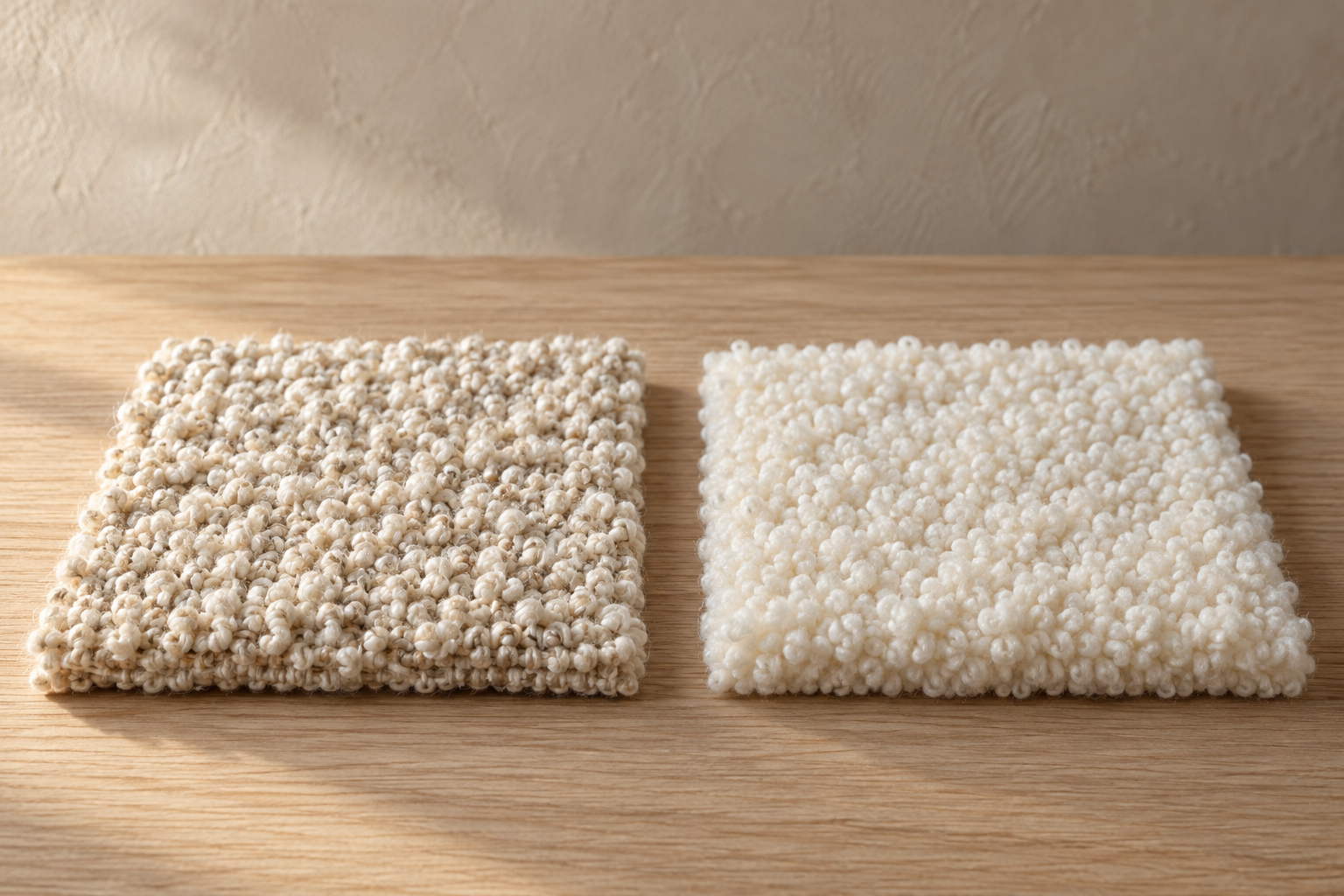
Joybird is attractive when the sofa has to carry a precise design plan. Saturated colors, textured neutrals, channel details, tapered legs, and modular or sectional options can make the piece feel personalized. Ordering swatches is essential because screen color, pile direction, weave, and ambient light can change how upholstery appears. View samples vertically and horizontally in daylight and at night.
Article’s edited approach can reduce decision fatigue. Instead of applying dozens of fabrics to every silhouette, a model may be presented in a smaller set of combinations chosen to suit its shape. That is helpful when you already like the photographed result. It is limiting if you need an exact undertone, specialized performance attribute, or matching fabric across multiple pieces.
Customization also affects reversibility. A special fabric or nonstandard sectional orientation may be harder to return, resell, or adapt to another room. Before placing a configurable order, draw the layout with the chaise on the intended side while standing at the front of the sofa. Retail “left” and “right” conventions can be misunderstood, so use the product diagram rather than conversational shorthand.
Dimensions and Room Fit
Overall width is only the beginning. Compare outside depth, frame height, arm height, seat width, seat depth, seat height, leg clearance, and diagonal depth. A deep sofa can feel luxurious for lounging but uncomfortable for shorter sitters who want feet on the floor. A shallow upright seat can work for conversation yet feel restrictive during movie night.
Tape the complete footprint on the floor, including chaise or ottoman. Leave realistic walking routes and space for side tables, floor lamps, vents, doors, and recliners. Then model the height using painter’s tape on the wall. A low back may preserve a view across an open room, while a tall back can provide support and visual separation.
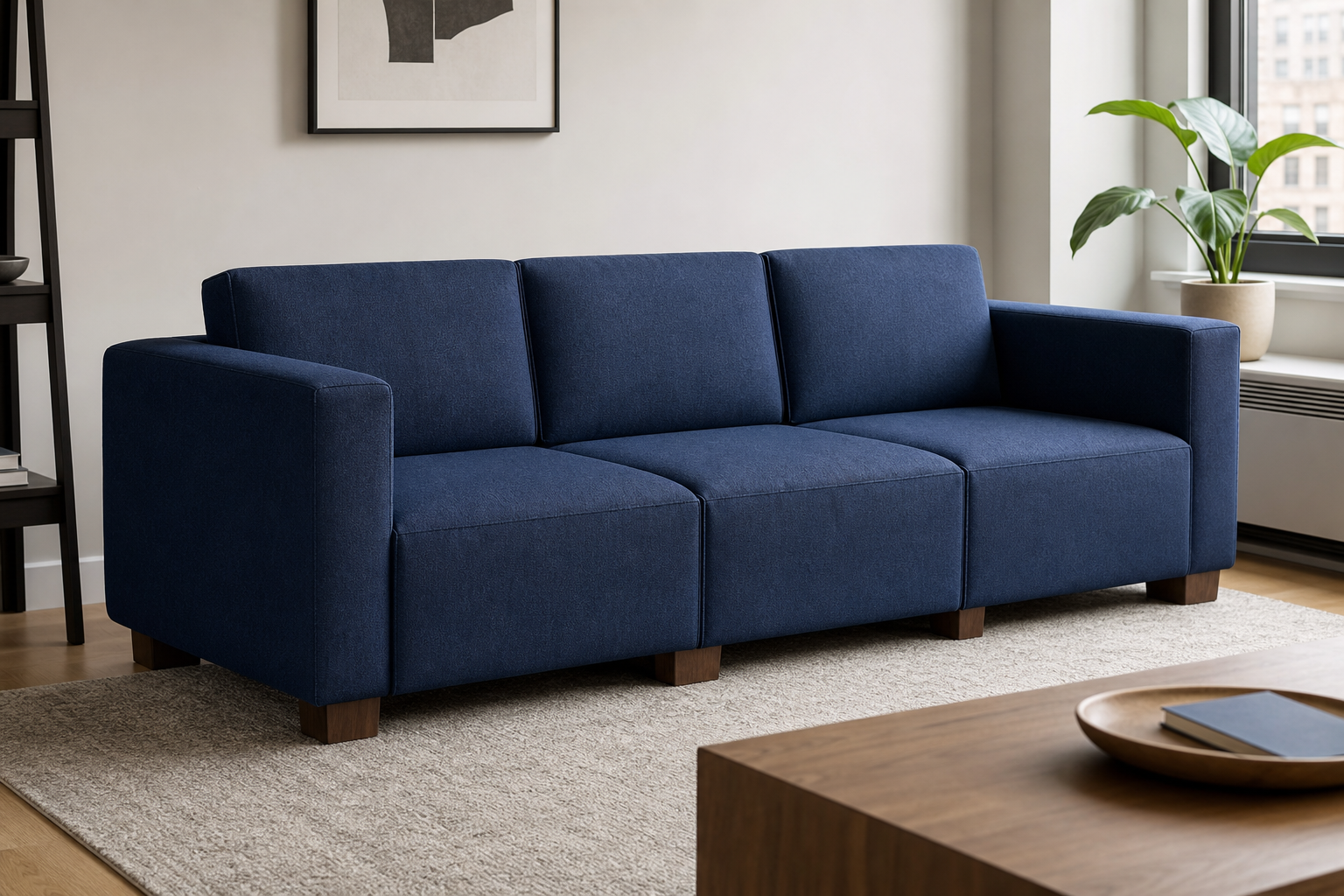
Delivery fit is separate from room fit. Measure every doorway, corridor, stair landing, elevator, and tight turn from the entrance to the final location. Compare those clear openings with package dimensions, removable legs, and the sofa’s diagonal depth. Ask the seller what components detach; never assume arms or backs come off because a photograph shows seams.
Seat Comfort Without a Showroom Test
Online comfort descriptions such as “soft,” “medium,” or “firm” are relative. Look for cushion composition, suspension type, seat depth, back angle, and whether back cushions are loose or fixed. Foam density and fiber wraps can influence support and appearance, but a specification alone does not tell you how the complete sofa will feel to your body.
Use reviews strategically. Filter for the exact model and upholstery, then look for consistent observations from people with similar height and use patterns. Comments made after a year are more informative about cushion maintenance than reactions on delivery day. Distinguish “firm” as a preference from structural complaints such as a support that can be felt through the cushion.
Consider how you actually sit. Upright readers may prefer shallower seats and supportive backs. Loungers may value depth, broad arms, or a chaise. Households with different body sizes might benefit from a moderate depth plus movable pillows rather than an extreme lounge profile. If you cannot test the sofa, recreate the listed seat height and depth with chairs, boxes, and cushions—stable and safely arranged—to understand the geometry.
Frame, Suspension, and Cushion Construction
Brand reputation cannot replace model-level construction details. Ask what materials form the load-bearing frame, how corners are reinforced, what suspension supports the seat, and whether cushion covers or inserts can be replaced. Terms like “solid wood,” “kiln-dried,” or “engineered wood” need context; many durable frames use more than one material in appropriate locations.
Inspect how the sofa handles long spans, sectional connectors, and removable legs. A wide bench seat has different maintenance demands from separate cushions. Webbing, springs, and platform supports each produce distinct feel and wear patterns. No single method is automatically superior without considering execution, load rating, and repairability.
On delivery, check that the frame sits level without rocking. Verify legs and connectors are fully installed according to instructions. Listen for unusual cracking, inspect seams and zippers, and photograph concealed damage before discarding packaging. Do not use a sofa with a broken frame, loose leg mount, or disengaging sectional connector; contact the seller.
Fabric, Leather, Pets, and Children
Fabric choice can matter more than logo. Request current swatches and read cleaning codes and care instructions before ordering. A pale bouclé, smooth velvet, coarse weave, and tightly woven performance fabric will respond differently to spills, abrasion, snagging, and lint. “Performance” is not a universal standard, so ask which stains, liquids, or cleaning methods the claim covers.
For pets, inspect weave tightness and texture. Loops and nubby surfaces may invite snagging, while very smooth fabrics can show scratches or hair depending on color. No upholstery is claw-proof. Removable covers can help with maintenance, but confirm whether they are machine washable, dry-clean only, or intended only for professional upholstery cleaning.
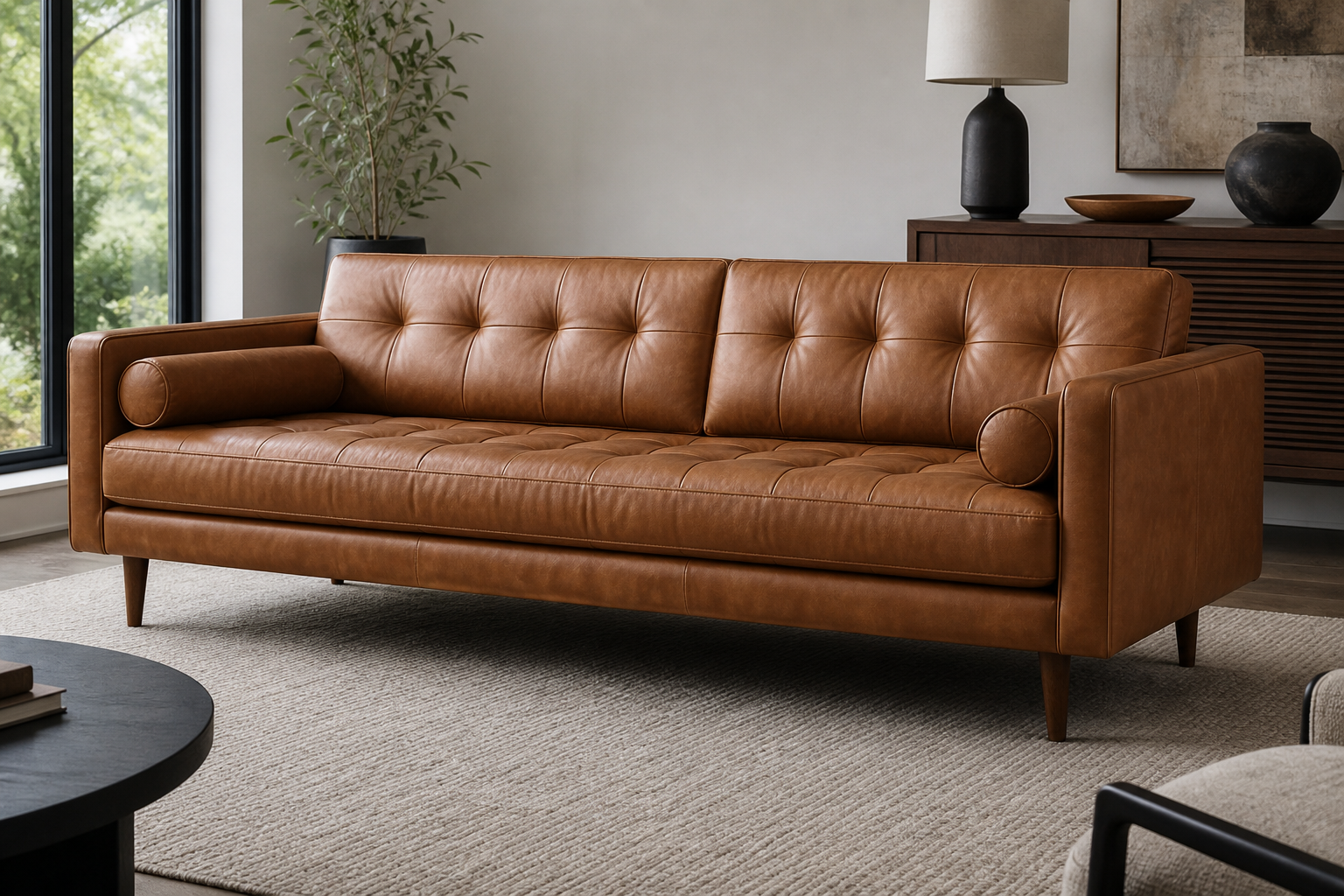
Leather varies by type, finish, grain treatment, and panel variation. Natural markings and patina may be desirable to one buyer and unacceptable to another. Ask whether product photography represents the likely range. Keep any sofa away from intense heat and follow care guidance. Do not use unapproved household cleaners, which can create rings, discoloration, or coating damage.
Cushion Maintenance and Everyday Durability
Loose back cushions often need fluffing and rotation to retain an even appearance. Bench cushions eliminate gaps but can concentrate wear in favorite sitting positions. Reversible cushions may extend aesthetic life, but some designs use a nonupholstered underside and cannot be flipped. Confirm before relying on that feature.
A softer, fiber-rich cushion can develop a relaxed, rumpled look quickly; that is not necessarily a defect. A structured foam cushion may hold straighter edges but feel firmer. Compare the product’s styled appearance with customer photos to decide whether you like the way it ages. If a catalog-perfect surface is essential, understand the maintenance needed to sustain it.
Ask whether cushion inserts, covers, legs, and connectors are sold separately. Replaceable wear components can matter more over ten years than a small difference in initial price. Follow stated weight limits and distribute loads normally; arms and backs should not be used as seats unless designed for that purpose.
Delivery and Assembly Experience
Current delivery options may include doorstep, room-of-choice, or enhanced setup services depending on item and region. Read exactly what removal, assembly, packaging disposal, stair carries, and appointment windows include. A service called “in-room” may not include difficult access or furniture removal. Confirm before delivery day.
Prepare a clear route, protect floors, secure pets elsewhere, and remove doors only if you know how to reinstall and align them safely. Large sofas can injure people and damage walls. Do not ask an unprepared friend to pivot a heavy sectional on a staircase; use an appropriate delivery service when access is difficult.
Inspect the piece while delivery personnel are present when the service allows it. Record crushed cartons, tears, frame damage, missing hardware, or color discrepancies. Follow the seller’s reporting process promptly. Keep packaging until you know the sofa is accepted, especially if the policy requires original materials for return.
Returns, Warranties, and Customer Service
Policies change and may differ for custom upholstery, final-sale items, clearance pieces, or particular locations. Before ordering, note the return window, fees, pickup method, condition requirements, and whether delivery charges are refundable. A generous-sounding window can still be expensive if the buyer pays large-item freight.
A warranty should be read by component. Frame, suspension, fabric, leather, cushions, and labor may have different terms. Normal softening, pilling, fading, comfort preference, natural material variation, and damage from cleaning or moving may be excluded. Save the receipt, order details, swatches, product page, and care instructions.
Customer-service anecdotes are useful for identifying questions, not predicting your outcome. Look for recent patterns involving the exact delivery network or product. Before buying, test the support channel with a specific question about access, replacement parts, or cleaning. The clarity and documentation of the reply can be informative.
Price and Long-Term Value
Compare complete delivered totals in equivalent upholstery and size. Include tax, delivery tier, setup, fabric upgrade, sectional modules, matching ottoman, and likely maintenance supplies. A temporary sale should not push you into the wrong dimensions or material. The cost of returning an unsuitable sofa can erase a promotional discount.
Value is cost over useful ownership, not simply purchase price. A sofa that fits through the next apartment doorway, has serviceable cushions, and suits daily posture may remain useful longer. A highly customized color can be emotionally rewarding but harder to place after a move. An edited neutral can be versatile but may not deliver the personality you want.
Set a replacement and repair threshold in advance. Find out whether an upholsterer can access the frame, whether covers can be replaced, and whether proprietary legs or connectors remain available. Local upholstery repair may be worthwhile for a sound frame, though complex reupholstery can approach the price of replacement.
Indoor Air, Fire Safety, and Household Risks
Review current material and compliance disclosures, particularly if someone in the household has chemical sensitivities. New foam, adhesives, textiles, and packaging can produce odors. Ventilate the room and follow manufacturer guidance. If anyone experiences irritation, stop use and seek appropriate medical advice rather than masking odor with fragrance.
Keep upholstered furniture away from open flames, smoking materials, and heat sources. Verify required clearances for radiators, heaters, and fireplaces. Fire-related labeling and chemical requirements differ by jurisdiction and product date, so direct questions about the exact sofa to the manufacturer.
Address child safety in the whole room. Sofas themselves are low, but nearby dressers, shelving, and media units can tip and should be anchored according to instructions and wall type. Watch for sharp leg corners, reclining mechanisms, sectional gaps, and loose hardware. Do not let children climb on backs or jump across modules.
Common Shopping Mistakes
The first mistake is buying by width and color alone. Two equally wide sofas can have very different usable seat space because of arm thickness. Deep seats, low backs, and soft cushions can change posture more than exterior styling suggests. Build a dimensional checklist before comparing aesthetics.
The second is treating all models from one brand as equivalent. Construction, cushion fill, leather, fabric, leg design, and delivery status can vary within both catalogs. A review of one Joybird or Article sofa does not establish how another collection behaves. Match every claim to the named product.
The third is ignoring the exit plan. Measure not only the current entry but likely moving constraints, and check return logistics before customization. A beautiful sofa that cannot clear the stair turn—or cannot be returned economically—is not a bargain.
Frequently Asked Questions
Is Joybird or Article better for fabric choice?
Joybird is often the stronger place to begin when broad upholstery selection is a priority. Still, count the current eligible fabrics for the exact model and verify performance and return terms.
Which brand is better for fast delivery?
Delivery depends on inventory, configuration, location, and season. A stocked Article item may have a simpler timeline, while a customized Joybird order may require production, but only current checkout estimates are relevant.
Are these sofas good for pets?
Either brand may offer suitable options, but choose by upholstery, weave, color, cleaning method, and cushion construction. Order swatches and test how easily hair and minor debris release without damaging them.
Can I return a sofa if it is uncomfortable?
Possibly, subject to the current policy, condition, timing, fees, and custom-order exclusions. Read the terms before purchase and preserve packaging if required.
How can I judge comfort online?
Compare seat height and depth with a sofa you know, study cushion and suspension details, read exact-model reviews, order swatches, and ensure the return cost is acceptable if the feel is wrong.