Hunting note
Start with the decision, then inspect the details.
A practical guide for homeowners and renters researching furniture purchases online on best bedside table lamp, covering the best next steps, tradeoffs, and when to call a pro.
The best bedside table lamp is not simply the brightest or most decorative model. It puts comfortable light where you need it, fits the table without crowding essentials, switches on easily from bed, and remains stable during everyday use. Shade height, bulb position, dimming behavior, and cord management influence comfort more than a fashionable finish alone.
Start with the room and the task. Someone who reads printed books needs controlled, useful illumination; someone who mainly wants a nighttime guide may prefer a low dimming range. In a shared bed, each side can require a different solution. Measure first, then compare lamps by proportions, light quality, controls, safety certification, and replaceable components.
Match the lamp to what happens at the bedside
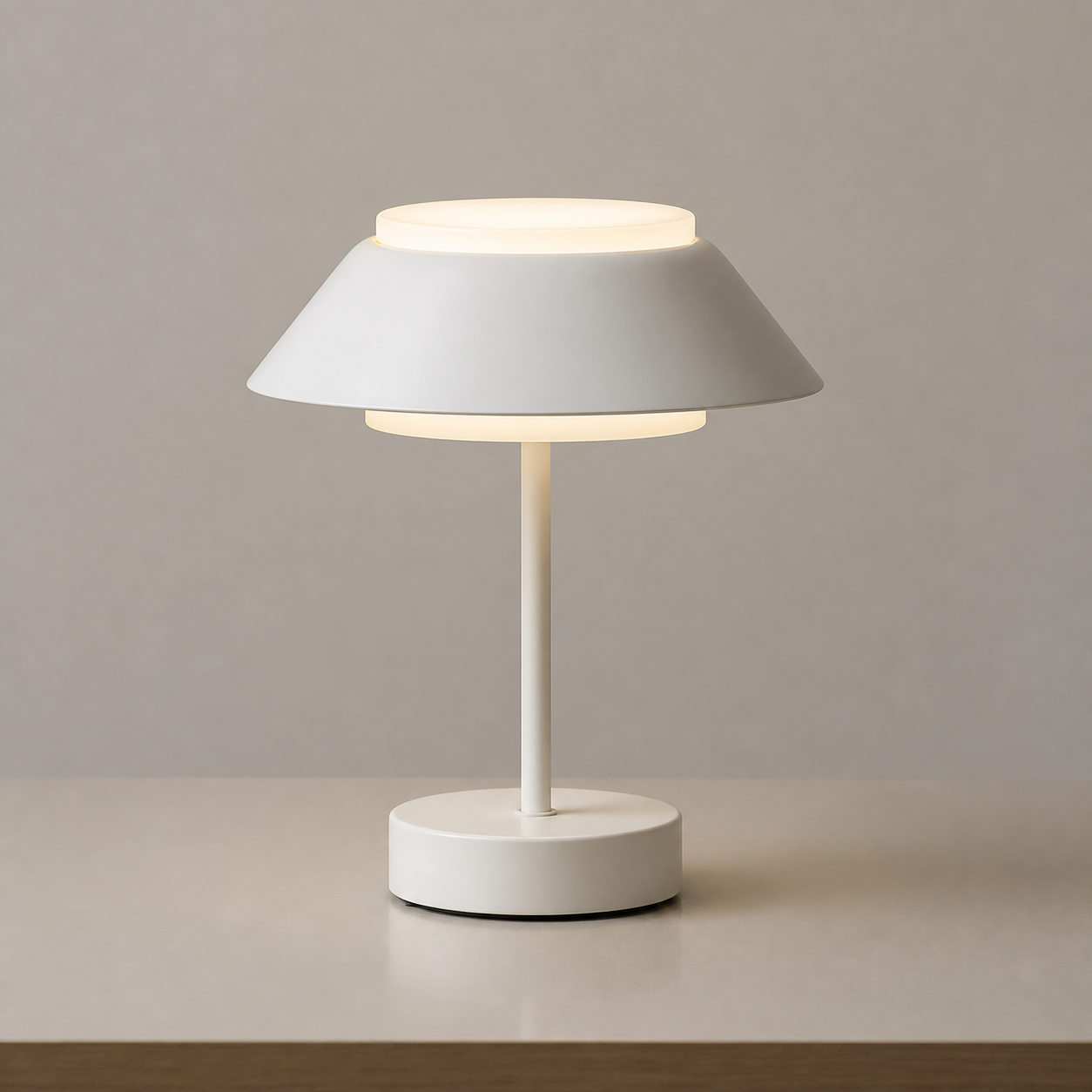
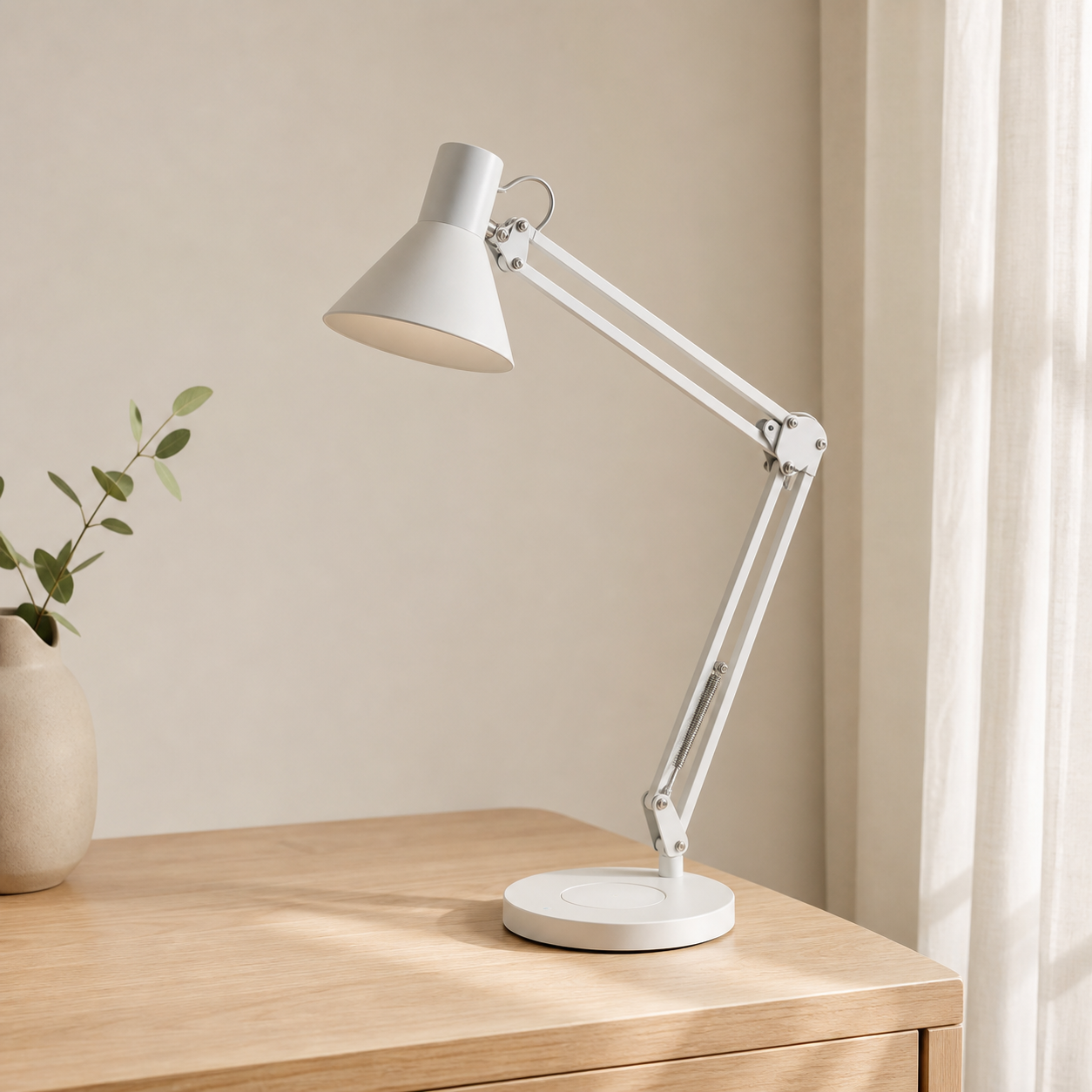
List the actual tasks: reading, checking the time, taking medication, moving safely at night, or creating ambient light before sleep. A translucent shade distributes a soft glow but may send less focused light onto a page. An opaque metal shade can control spill but may create a harsh pool if the bulb is exposed from normal viewing angles. An adjustable arm is useful when reading position changes.
Consider the other sleeper. A highly directional lamp or one with a low, smooth dimming range limits disturbance. If both people read, two independently controlled lamps are usually more practical than one strong central source. A lamp should complement, not replace, safe general lighting for cleaning, dressing, and finding dropped objects.
Get the height and scale right
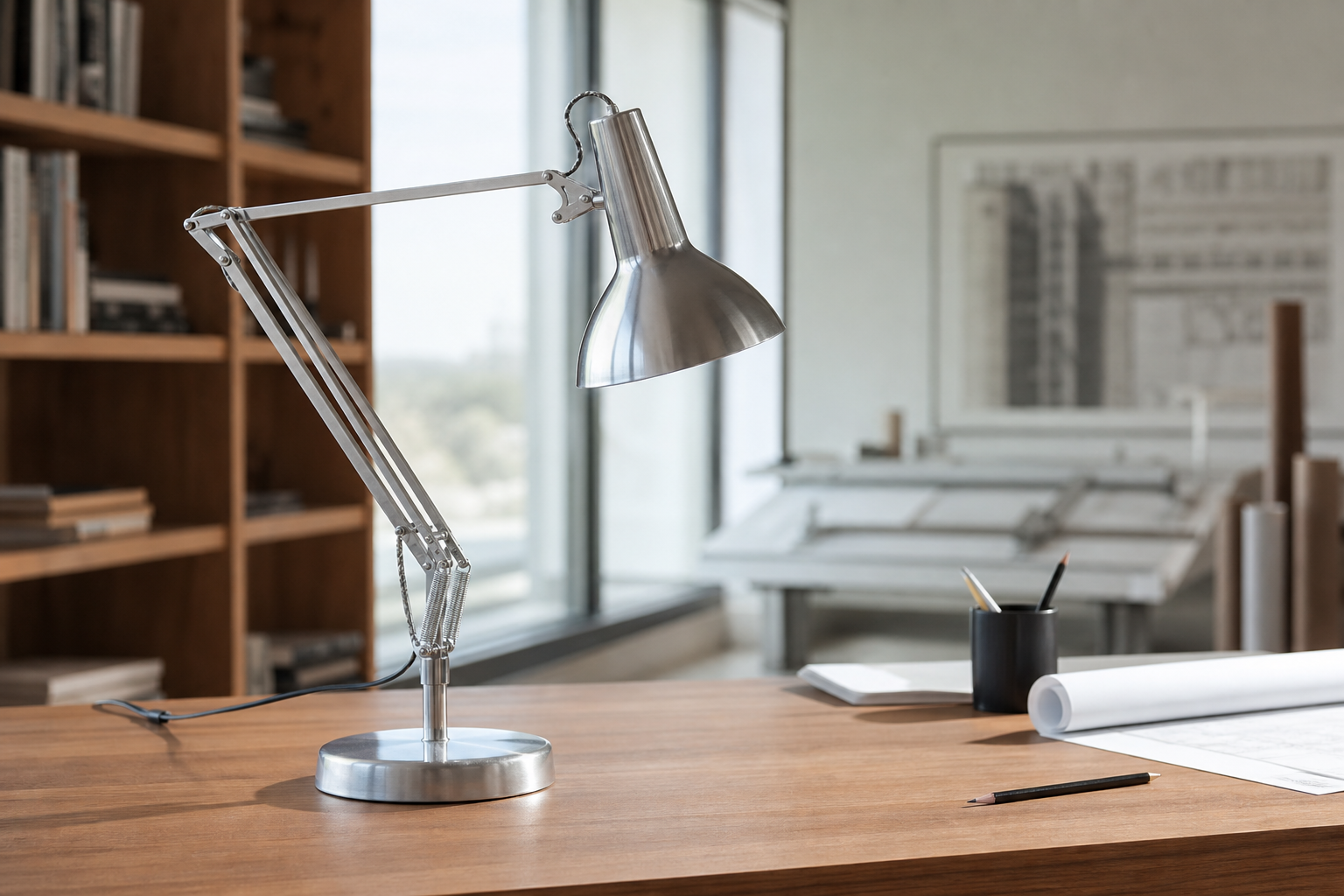
Bed, mattress, table, and lamp work as one composition. When seated or reclined, the bottom of the shade should generally shield the bright bulb from direct view while allowing light to reach the page. Because bodies and furniture vary, test this rather than relying on one universal measurement. Stack boxes to simulate the <a href="/products/artemide-tolomeo-classic-table-lamp-aluminum/" class="product-inline-link">lamp base</a> and shade, then view it from normal sleeping and reading positions.
A large lamp can overwhelm a small table and leave nowhere for a glass or book. A tiny lamp on a tall chest may illuminate the wall rather than the reader. Check the complete diameter, not just the base, and leave clearance around the shade so it does not touch curtains, bedding, or wall art. On a narrow table, a compact base with a taller stem often preserves more usable surface.
| Bedside need | Useful lamp feature | Check before buying |
|---|---|---|
| Reading in bed | Adjustable head or well-placed shade | Bulb hidden from normal eye line |
| Shared room | Directional beam and low dimming | Controls operate independently |
| Tiny table | Narrow stable base | Shade does not overhang dangerously |
| Easy nighttime use | Large switch, touch control, or cord switch | Control works reliably in the dark |
| Warm ambiance | Dimmable warm-white source | Lamp and bulb dimmer compatibility |
| Long ownership | Standard replaceable bulb | Maximum wattage and socket type |
Understand brightness and light color
Lumens describe light output more usefully than old watt comparisons. A reading lamp needs enough output at the page, but distance and shade design determine how much arrives there. A modest bulb close to the book can outperform a brighter bulb trapped behind a dark shade. Look for a lamp that accepts a range of appropriate bulbs so output can be tuned within its maximum rating.
Warm-white light often feels comfortable before sleep, while very cool light can look clinical in a bedroom. Color rendering also matters if fabrics and skin tones should appear natural. Product descriptions may list correlated color temperature and color-rendering information, but specifications can be incomplete. For an integrated LED lamp, verify both because the light source may not be replaceable.
Decide between a replaceable bulb and integrated LED
A standard socket allows the bulb to be replaced, brightness or color temperature to be adjusted, and the shade or base to remain useful after a lamp failure. Confirm the socket, bulb shape, and lamp’s maximum rating. An LED bulb that draws low power can still be physically wrong for an enclosed shade, so follow both lamp and bulb instructions.
Integrated LED lamps can offer slim forms, smooth adjustment, and directional heads that conventional bulbs cannot. The tradeoff is serviceability: if the driver, touch control, or LED module fails, the whole lamp may become waste. Check the stated warranty, expected support, and whether the manufacturer supplies replaceable drivers. Avoid treating an optimistic life claim as a guarantee for every electronic component.
Evaluate dimming and controls before purchase
A bedside control should be reachable without stretching behind furniture. Rotary switches are simple; pull chains are easy to locate; touch controls can be convenient but sometimes react unpredictably to nearby devices or grounding conditions. Inline cord switches need to stay in a consistent reachable location rather than falling behind the table. Smart controls add schedules and voice operation but should still have a usable manual fallback.
Dimming quality varies. Some lamps jump from off to too bright, flicker at low levels, hum, or remember an unwanted setting after power loss. An integrated lamp’s specification should describe its dimming steps or range. For a socketed lamp, use a dimmable bulb compatible with the lamp or plug-in controller. Never place a non-dimmable bulb on a dimmer.
Choose a shade that controls glare
The shade is an optical component, not just decoration. Pale fabric spreads light through the sides and can create balanced ambient illumination. Dense fabric or metal sends more light through the openings. A deep shade shields the bulb better, provided its lower edge aligns correctly with the user’s eyes. Glossy inner surfaces can intensify light, while matte surfaces soften reflections.
Inspect product photos from seated height when possible. If the bulb extends below the shade or is visible from bed, expect glare. A diffuser can hide the source, but it also reduces output and may collect dust. Check that the shade is securely attached, proportionate to the base, and rated for the lamp. Keep every shade and bulb clear of bedding, curtains, and papers.
Look for stability, materials, and electrical safety
A bedside lamp should resist tipping when its switch is used or its cord is nudged. A broad weighted base is reassuring, but confirm that protective pads grip without staining the tabletop. Tall narrow lamps need particular scrutiny. In a child-accessible room, route cords securely, keep the lamp away from edges, and consider whether a wall-mounted alternative installed correctly would reduce risk.
Buy products carrying appropriate certification from a recognized testing organization for your market, and follow all ratings. Inspect plugs and cords on arrival. Do not use a lamp with damaged insulation, loose sockets, scorch marks, flickering connections, or excessive heat. Lamps are not suitable places for improvised wiring repairs. Have questionable outlets or hardwired sconces assessed by a licensed electrician.
Compare useful extras without overbuying
USB-A, USB-C, or <a href="/products/ikea-nymane-work-lamp-wireless-charging-white/" class="product-inline-link">wireless charging</a> can clear adapters from the table, but output specifications matter. A low-powered port may charge slowly, and an integrated charging component may become obsolete before the lamp does. Wireless pads need precise phone placement and can create heat. Keep devices uncovered and follow charging instructions; do not place a phone under bedding.
A built-in clock, speaker, or app sounds convenient but increases complexity and visual clutter. Ask whether the lamp remains fully functional if an app is discontinued or Wi-Fi fails. For many rooms, a reliable dimmer and an accessible switch are more valuable than a bundle of electronics. If choosing smart features, review privacy, update policy, standby lights, and manual control.
Coordinate style without sacrificing function
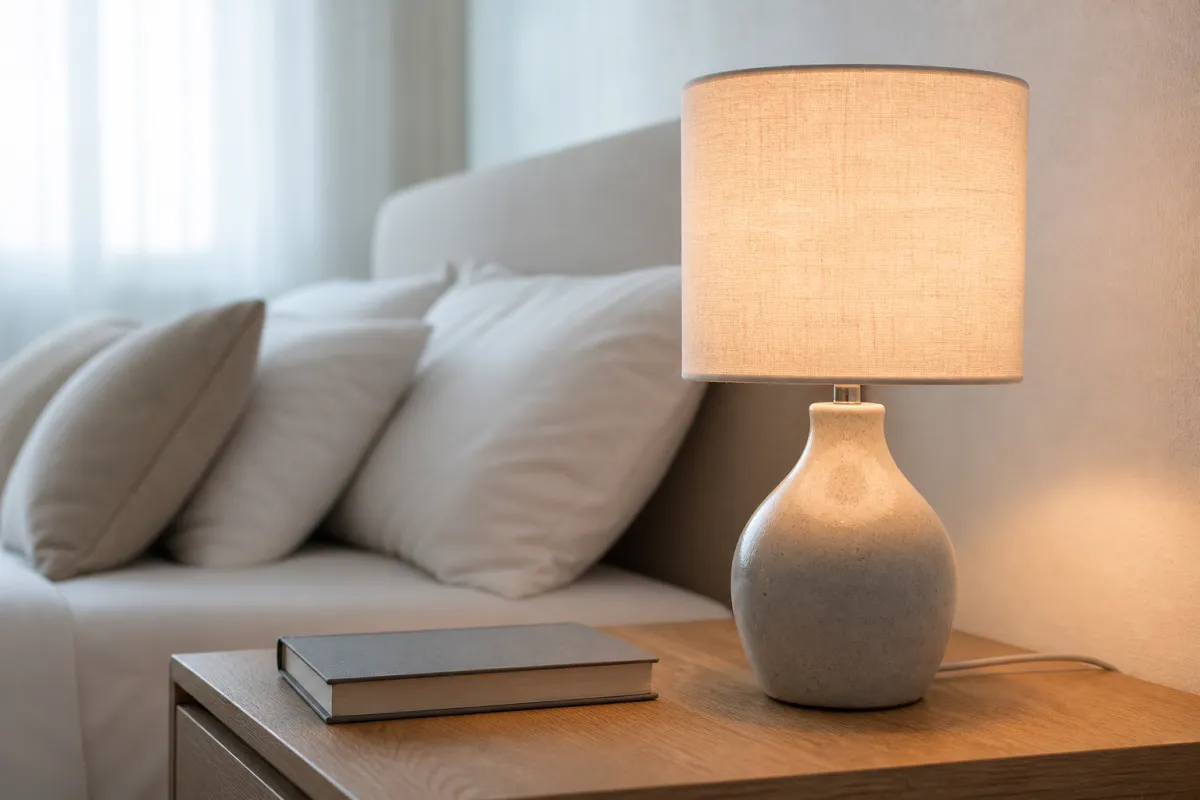
Finish should relate to nearby hardware or contrast deliberately. A matte ceramic base softens a modern room, while metal can echo handles or bed-frame details. The lamp does not need to match its partner exactly. Two models with similar visual weight and shade color can accommodate different reading needs while still making the room coherent.
Texture and color affect perceived size. A pale shade blends into a light wall; a dark shade creates a stronger silhouette. Keep patterns away from the opening if they cause distracting shadows. If the table is already busy, choose a quiet base. If the bedroom is restrained, the lamp can provide one sculptural shape without adding fragile projections or sharp edges.
Avoid common shopping mistakes
Do not buy from one styled photograph without checking dimensions. Product images often show furniture at an ambiguous scale. Read the complete measurement diagram, cord length, switch location, bulb requirements, return policy, and assembled weight. Verify whether a bulb is included and whether an integrated LED has a replaceable component.
Avoid exceeding the maximum wattage to compensate for a dark shade. Do not use an unstable lamp on a tray table, route cords under rugs, trap adapters behind furniture, or let fabric touch the bulb. Be skeptical of vague “eye-safe” claims without useful optical specifications. Comfort comes from shielding glare, appropriate output, stable light, and good placement.
A bedside lamp buying checklist
1. Measure table width, depth, and distance from mattress top.
2. Simulate the shade position from normal reading posture.
3. Choose ambient, reading, or dual-purpose light distribution.
4. Confirm lumens, color temperature, socket, and maximum rating.
5. Test or review low-level dimming and switch accessibility.
6. Check base stability, shade attachment, cord route, and certification.
7. Compare replaceable-bulb longevity with integrated-LED features.
8. Keep clearances from curtains, bedding, water, and table edges.
9. Retain receipts and inspect the lamp during the return window.
This checklist turns a style purchase into a fitting decision. A lamp that works effortlessly each evening is better value than a more dramatic design that glares, wobbles, or crowds the table.
Frequently asked questions
How tall should a bedside lamp be?
There is no single correct height. The shade should hide the bulb from your normal eye line and direct useful light where needed. Evaluate the combined bed, mattress, table, and seated position.
Is warm or cool light better for a bedroom?
Many people prefer warm-white light for evening comfort. Reading clarity also depends on brightness, color rendering, and placement. Avoid choosing by color temperature alone.
Are touch lamps reliable?
Good models can be convenient, but performance varies. Check low-light operation, dimming steps, standby lights, and whether the lamp has a manual fallback after a power interruption.
Can I use a smart bulb in any table lamp?
Only if its base, dimensions, electrical rating, enclosure suitability, and control method are compatible. A wall dimmer may conflict with some smart bulbs; follow both manufacturers’ instructions.
When is a wall sconce better?
A sconce frees a tiny table and can place directional light well, but hardwired installation requires correct positioning and a licensed electrician. Plug-in models still need secure mounting and safe cord routing.