Hunting note
Start with the decision, then inspect the details.
A practical guide for homeowners and renters researching furniture purchases online on leather types for furniture full grain vs bonded, covering the best next steps, tradeoffs, and when to call a pro.
Full-grain and bonded leather may share the word “leather,” but they are fundamentally different upholstery materials. Full-grain leather is a hide with its natural grain surface retained. Bonded leather is a manufactured sheet that combines leather fibers or scraps with binders and a coated surface. The difference affects appearance, aging, repairability, price, and expected service life.
For buyers who want leather that develops character and can justify a higher upfront cost, well-made full-grain furniture is often the stronger long-term option. Bonded leather can deliver a leather-like appearance at a lower purchase price, but its surface may peel or crack as the coating and backing age. Construction quality still matters: excellent upholstery cannot compensate for a weak frame or poor cushions.
The Main Leather Labels Explained
Full-grain leather retains the outer grain layer and is not sanded to remove natural marks. It can receive transparent dyes, waxes, oils, or protective finishes, so “full grain” does not describe one uniform look. Some hides appear rugged and varied; others are finished more evenly. Natural grain does not mean unfinished, and visible variation is not automatically a defect.
Top-grain leather is a broader category involving the upper part of the hide. Its surface may be lightly corrected or sanded, then pigmented for consistent color and stain resistance. “Genuine leather” generally indicates real leather but says little about grade or durability. Split leather comes from lower layers and may be coated or embossed. Bonded leather is different again: leather content is reconstituted with other materials rather than remaining an intact hide surface.
Full-Grain and Bonded Leather at a Glance
| Feature | Full-grain leather | Bonded leather |
|---|---|---|
| Structure | Intact natural grain layer | Leather fibers/scraps with binders and coating |
| Appearance | Natural variation; develops patina | Uniform embossed surface |
| Typical aging | Softens and changes character | Coating may crack, flake, or peel |
| Repair potential | Often conditionable and professionally repairable | Peeling surface is difficult to restore durably |
| Price | Usually higher | Usually lower |
| Care | Product-specific cleaning and conditioning | Gentle cleaning; avoid products not approved by maker |
| Consistency | Marks and color variation are common | Color and texture are highly consistent |
These tendencies do not establish a guaranteed lifespan. Sun exposure, body oils, cleaning products, pets, climate, coating quality, frame design, cushion construction, and use patterns all affect furniture. Ask for written material specifications and warranty terms rather than relying on a salesperson’s shorthand.
How Full-Grain Leather Looks and Ages
Full-grain leather shows pores, wrinkles, healed marks, and tonal variation more readily than heavily corrected upholstery. Those characteristics can give a sofa depth and individuality, but buyers expecting a perfectly uniform surface may view them differently. Samples are useful, though a small swatch cannot show the full variation across several hides.
With use, many full-grain leathers soften and develop patina in high-contact areas. Aniline leather, colored with transparent dyes and little surface protection, can feel rich and natural but absorbs spills and fades more readily. Semi-aniline leather adds a light protective finish and offers a middle ground. Pigmented leather has a more protective coating and uniform appearance; it can still be good-quality leather even if it lacks the open feel of aniline upholstery.
How Bonded Leather Is Made and Why It Peels
Bonded leather uses leather remnants or fibers combined with polyurethane or other binders and applied to a fabric backing, then coated and embossed. The exact leather percentage and terminology vary by market, so request the composition label. It can look convincing when new because manufacturers control color and grain pattern closely.
Peeling occurs when the surface layer or bonded structure breaks down under flexing, friction, heat, skin oils, cleaning chemicals, or age. Once the top film separates, conditioners cannot rejoin it to the backing. Patch products may improve appearance temporarily, but broad delamination is usually not economically reversible. This is why initial appearance alone is a poor basis for comparing bonded upholstery with intact-hide leather.
Comfort and Everyday Use
Full-grain leather can become supple and comfortable, but feel varies with finish, hide thickness, cushioning, and room temperature. A heavily protected full-grain surface may feel different from a lightly finished aniline one. Perforation, seam placement, cushion fill, and suspension have as much influence on sitting comfort as the leather label.
Bonded leather often feels smooth and consistent when new. Its coated surface may be less breathable and can feel warmer or stickier in some conditions. Because buying online makes texture difficult to judge, obtain a sample when possible and read the return policy carefully. If the piece is for a workspace, assess seat geometry and support with the same care used when choosing an ergonomic desk chair for a home office.
Durability Depends on More Than Upholstery
Inspect the frame, joints, suspension, cushion cores, stitching, seams, and replaceable parts. Kiln-dried hardwood and well-designed engineered wood can both be appropriate when specifications are clear. Look for reinforced joints, even stitching, removable cushions where useful, and access to replacement inserts. A vague “solid wood” claim does not describe species, moisture control, or joint construction.
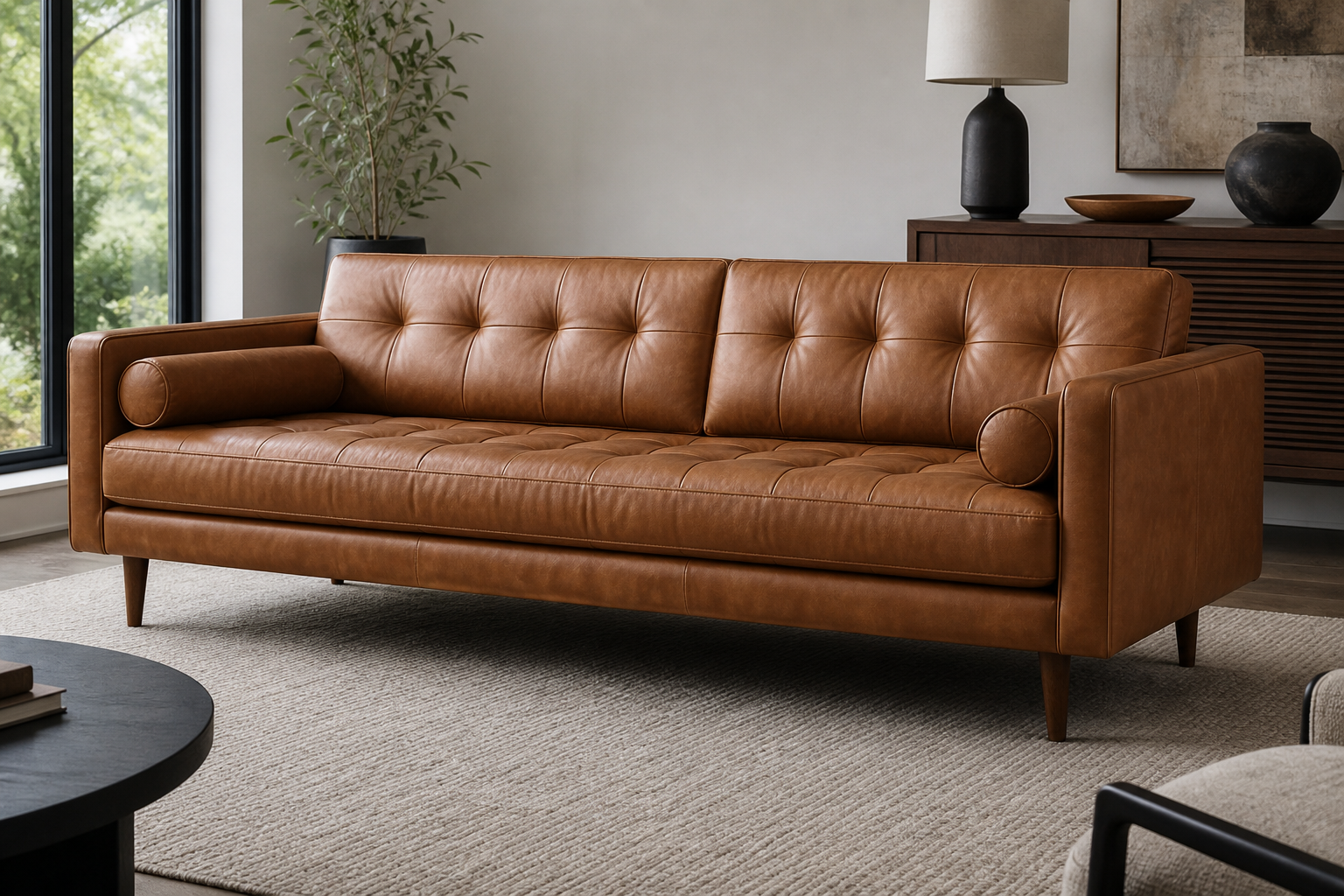
Ask where each material is used. Some furniture places real leather on seating surfaces and vinyl or polyurethane on sides and backs; that may be described as “leather match.” The transition can age unevenly. A full-grain seating panel attached to weak backing or low-density cushions does not make the whole sofa durable. Request a complete upholstery map and warranty coverage for both material and labor.
Price and Total Cost of Ownership
Full-grain furniture generally costs more because suitable hides, selection, cutting, skilled upholstery, and waste add expense. The value case is strongest when the frame and cushions are serviceable and the design is something you intend to keep. Paying for premium hide on a disposable frame is poor value.
Bonded leather lowers the initial price and may suit a lightly used room or a short-term furnishing plan. However, replacement can make it more expensive over time, particularly when peeling begins after the warranty. Compare delivered price, return freight, warranty exclusions, repair options, and expected use. This total-space approach is also useful when coordinating a sofa with a <a href="/products/article-amoeba-42-5-coffee-table-walnut/" class="product-inline-link">coffee table</a> for a small space rather than purchasing each item in isolation.
What to Ask Before Buying
Request the exact upholstery term in writing: full grain, top grain, corrected grain, split, bonded, polyurethane, vinyl, or leather match. Ask whether the finish is aniline, semi-aniline, or pigmented; whether all visible panels use the same material; and what percentage of leather fiber a bonded product contains. Verify where natural variations, scars, and color differences may appear.
Read the cleaning instructions and warranty before ordering. Look specifically for exclusions involving sunlight, body oils, perspiration, denim transfer, pets, commercial use, peeling, cracking, and use of unauthorized cleaners. Ask whether replacement cushion covers or panels are available. For online purchases, confirm that a color difference from the screen is not automatically excluded from returns.
Care for Full-Grain Leather
Vacuum seams with a soft attachment and remove grit that can abrade the surface. Wipe spills promptly using the maker’s method—often blotting rather than rubbing. Use only a cleaner and conditioner approved for the specific finish. Too much conditioner can darken aniline leather, attract soil, or affect coatings; household oils and all-purpose sprays can cause permanent damage.
Position furniture away from intense direct sunlight, radiators, fireplaces, and HVAC blasts. Rotate loose cushions to distribute wear when the design allows. Test any product on a hidden area and allow it to dry before judging the result. Valuable aniline leather, ink marks, dye transfer, deep scratches, or widespread fading are reasons to consult a leather-care specialist rather than escalating home remedies.
Care for Bonded Leather
Use a soft dry or lightly damp cloth and follow the manufacturer’s instructions. Avoid saturating seams, aggressive scrubbing, alcohol, solvents, abrasive pads, and unapproved leather conditioners. Products intended to nourish intact hide may not help a polymer-coated bonded surface and can create residue or damage.
Reduce heat, direct sun, and friction. Once peeling starts, collect warranty documentation before applying repair coatings that might void coverage. Small cosmetic kits can mask limited damage, but they rarely recreate the original flexible factory layer across an entire cushion. Slipcovers or replacement may be more practical when delamination is extensive.
Safety, Indoor Air, and Placement
New furniture can emit odors from adhesives, foams, finishes, packaging, and upholstery components. Ventilate the room according to product guidance, especially if occupants are sensitive. An odor does not identify a specific chemical or prove safety; seek manufacturer emissions information or relevant certifications when that is a priority.
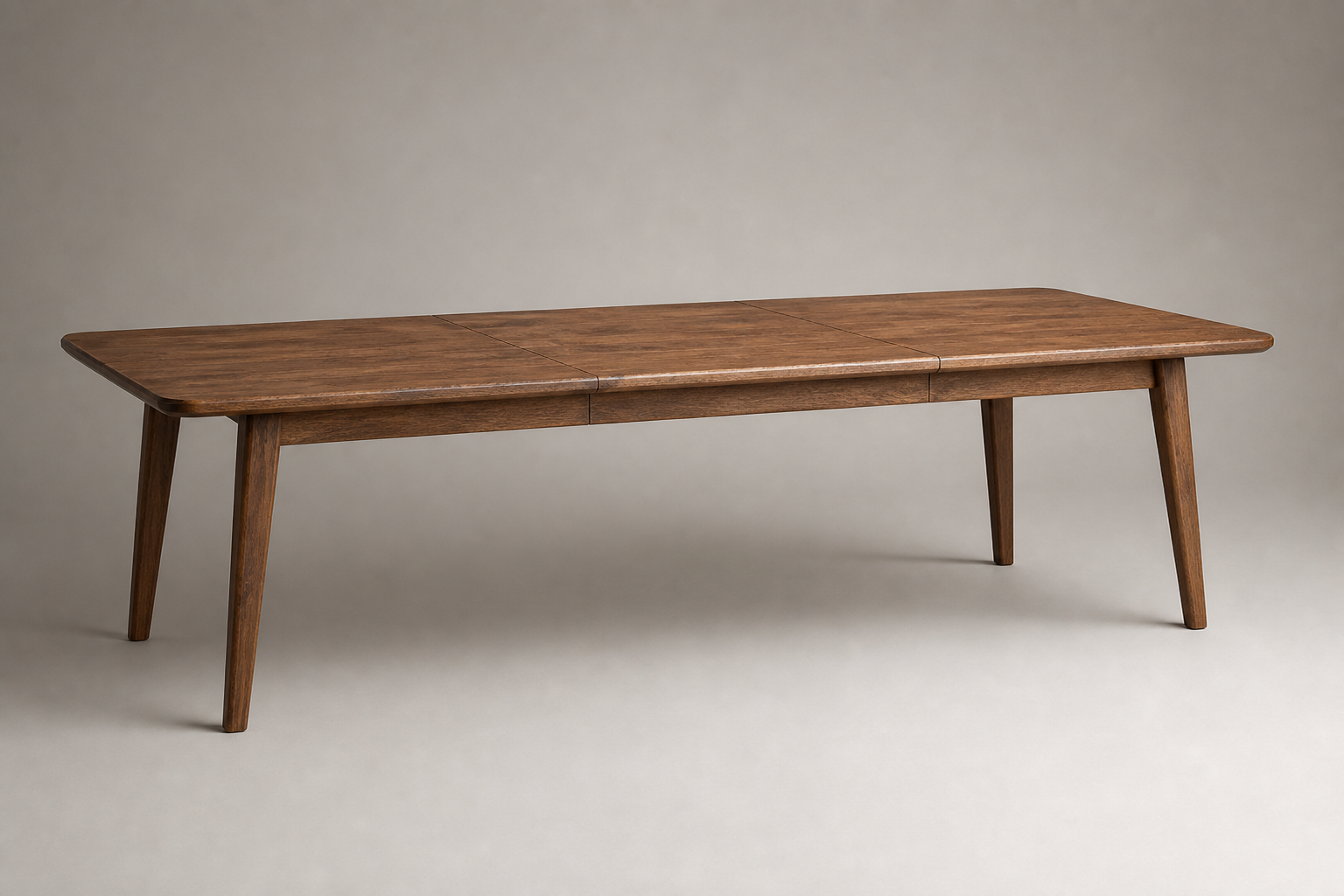
Keep upholstered furniture a safe distance from heaters, fireplaces, and open flames, and follow local fire-safety requirements. Do not remove regulatory labels. Check that recliner mechanisms cannot trap cords or fingers, and keep pathways clear. Large sectionals should not block exits, vents, or access to outlets. Planning the room around actual dimensions—similar to sizing a <a href="/products/article-seno-71-dining-table-walnut/" class="product-inline-link">dining table</a> for six people—prevents an expensive piece from becoming a circulation hazard.
Common Shopping Mistakes
Do not assume “genuine leather” means full grain, or that “Italian leather” alone identifies grade, tannery, hide origin, or construction. Avoid judging durability by softness: coatings and processing can create many textures. A very uniform embossed grain may be intentional and practical, but it is not evidence of full-grain material.
Another mistake is comparing only sofa prices while ignoring frame, cushions, delivery access, return cost, and warranty. Do not use an online photograph to evaluate color under your home’s lighting. Finally, avoid treating every scratch as damage: natural marks and developing patina may be part of full-grain leather’s appeal, while peeling film on bonded upholstery is a different process.
Which Leather Type Fits Your Home?
Choose full grain when you value natural variation, expect heavy long-term use, accept maintenance, and are buying a frame worthy of reupholstery or repair. Semi-aniline or protected top-grain leather may be a better compromise for a busy family that wants real hide with greater stain resistance. The correct finish can matter more to daily practicality than winning a terminology contest.
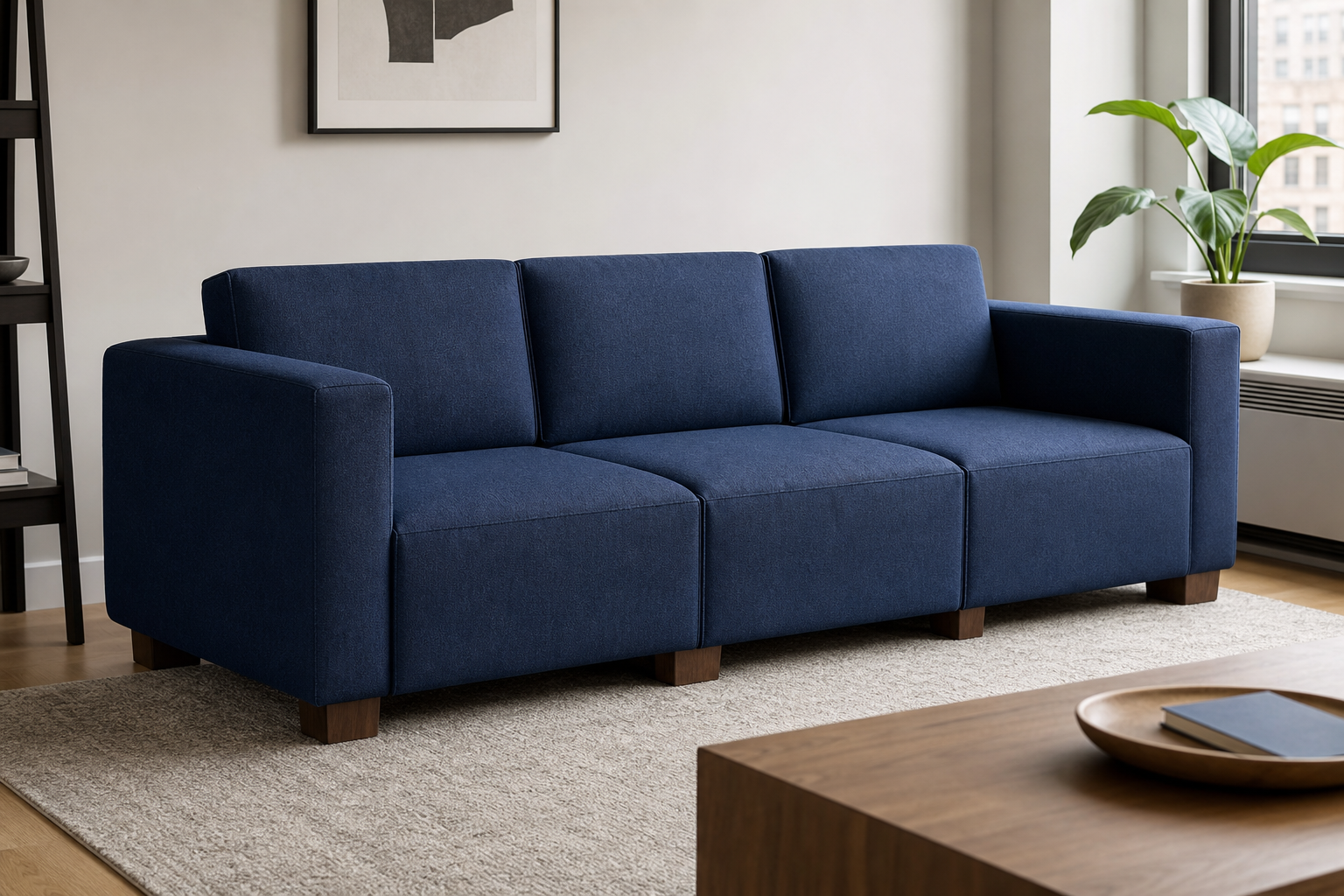
Choose bonded leather when the lower upfront price and uniform appearance outweigh longevity concerns, and the furniture is for lighter or shorter-term use. Enter the purchase knowing that peeling may not be repairable like a scratch in intact leather. If neither tradeoff works, a high-quality performance fabric or clearly specified polyurethane upholstery may be a more honest fit for budget and lifestyle.
Frequently Asked Questions
Is top-grain leather worse than full grain?
Not necessarily. Top-grain is a broad category, and a lightly corrected, well-finished leather can be durable and easier to maintain. Full grain retains more natural surface character, but finish and furniture construction remain crucial.
Can bonded leather be conditioned?
Only use products explicitly approved by the furniture maker. Traditional leather conditioner cannot restore a delaminating synthetic coating, and unapproved oils may make the problem worse.
How can I tell what I am buying online?
Request the material specification, composition label, upholstery map, finish type, sample, and warranty in writing. If the seller provides only “leather” without details, treat the grade as unknown.
Does full-grain leather scratch easily?
Some lightly finished aniline leathers mark readily, while protected finishes resist marks better. Ask for a sample and perform only maker-approved testing. Buyers who dislike patina may prefer a more protected leather.
Is bonded leather the same as faux leather?
No. Bonded leather includes leather fibers or remnants combined with binders, while faux leather generally uses a synthetic coated textile without leather content. Labeling rules vary, so composition disclosure is more useful than the marketing name.