Hunting note
Start with the decision, then inspect the details.
A practical guide for homeowners and renters researching furniture purchases online on best bar stools for kitchen island, covering the best next steps, tradeoffs, and when to call a pro.
The kitchen island has become the heart of modern homes—a place not only for cooking but also for casual dining, socializing, and homework sessions. Choosing the best bar stools for your kitchen island can transform the space, making it more comfortable, stylish, and functional. But with so many styles, materials, heights, and safety considerations, this decision can feel overwhelming.
This guide will walk you through the essential factors to consider before buying bar stools, the best options available, common mistakes to avoid, safety tips, and when to seek professional help. Whether you’re a homeowner or renter, this comprehensive article will help you make an informed, practical choice that suits your space and lifestyle.
Why Choosing the Right Bar Stools for Your Kitchen Island Matters
Picking the right bar stools is about more than just style—it’s about comfort, safety, and maximizing your kitchen’s usability. The wrong stools can lead to discomfort during meals, create clutter, or even pose safety hazards, especially in homes with children or pets.
Bar stools that fit well with your kitchen island height, design aesthetic, and daily use will encourage family and guests to gather around, enhancing the social atmosphere. Additionally, investing in durable, easy-to-clean materials can save money and hassle over time.
In short, the best bar stools for your kitchen island blend form and function, supporting your lifestyle while elevating your kitchen’s look.
What to Check First Before Buying Bar Stools
Measure Your Kitchen Island Height and Depth
The first and most critical step is measuring your kitchen island’s height and overhang. Bar stools come in different seat heights, and matching these to your island ensures comfortable seating.
- Counter-height islands typically measure about 36 inches tall. For these, stools with a seat height of 24 to 26 inches are ideal.
- Bar-height islands are usually around 42 inches tall; stools with seat heights of 28 to 30 inches work best.
Also, check the depth of the island’s overhang—the part where stools will slide under. A minimum of 12 inches is recommended for comfortable legroom. If your island has a shallow overhang, consider stools without backs or with slim profiles to avoid crowding.
Consider Your Space and Layout
Measure the available floor space around your island to determine how many stools can fit without overcrowding. A general rule is to allow 24 to 30 inches of width per stool for elbow room.
Think about the flow of traffic around the island. Stools that swivel or have a smaller footprint can help in tighter spaces.
Identify Your Primary Use
Will your bar stools be used mainly for quick breakfasts, long dinners, or as occasional seating? This affects the type of seat and backrest you should look for. For example, if you plan to sit for extended periods, padded or ergonomically designed stools with backs and footrests are better.
Best Bar Stool Options and What to Expect
1. Adjustable Height Bar Stools
Adjustable stools offer flexibility if you have a multi-height kitchen island or want to accommodate different users. These often have a gas lift or screw mechanism.
Tradeoffs: They tend to be more expensive and may have mechanical parts that wear out over time. Also, check the weight capacity to ensure durability.
2. Backless Bar Stools
Backless stools are minimalist and easy to tuck under the island, saving space.
Tradeoffs: They offer less support, which can be uncomfortable for long sitting periods. They’re ideal for casual or occasional use.
3. Bar Stools with Backs and Armrests
These provide more comfort and support, ideal for longer meals or working at the island.
Tradeoffs: They take up more space and may not fit under the island as neatly, requiring more floor space.
4. Swivel Bar Stools
Swivel stools add convenience by allowing easy turning without moving the stool base.
Tradeoffs: Swivel mechanisms can add cost and complexity. They may also pose a safety risk for small children if not properly balanced.
5. Materials: Wood, Metal, Upholstered, and Plastic
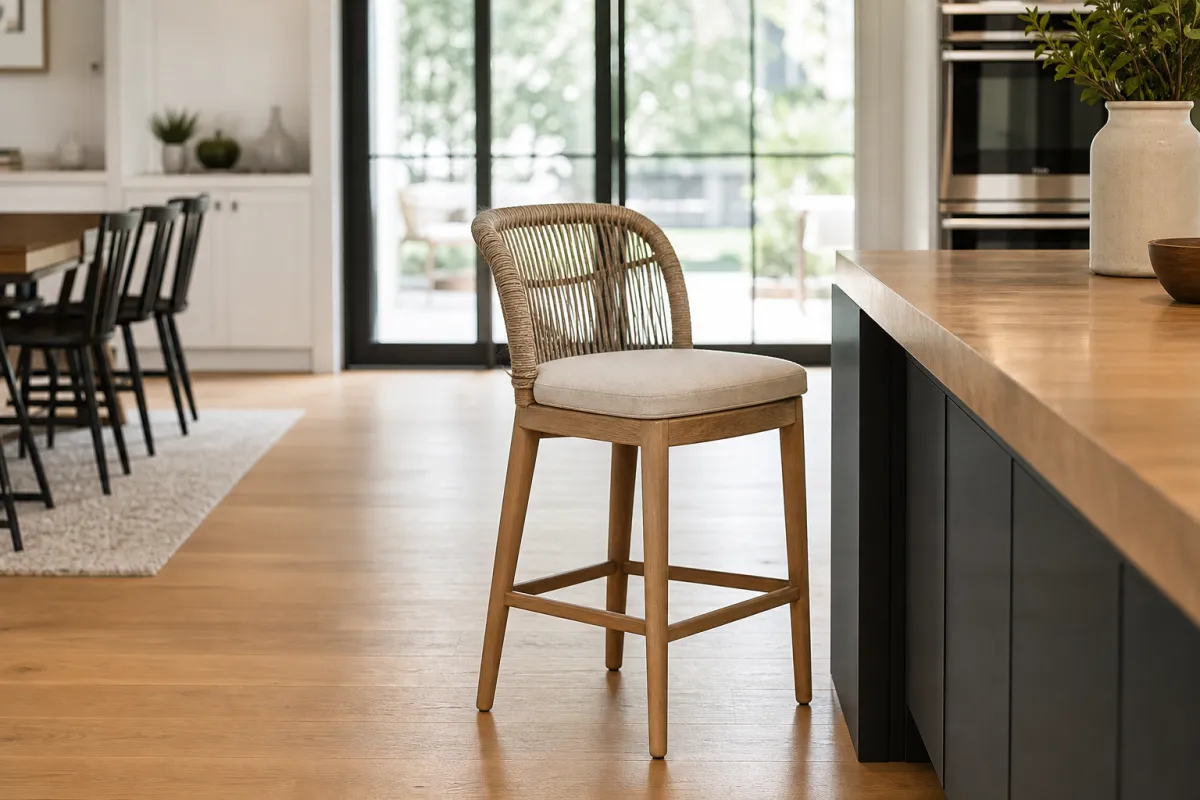
- Wood: Classic and warm, wood stools are durable but may require cushions for comfort.
- Metal: Sleek and industrial, metal stools are sturdy and easy to clean but can be cold or hard.
- Upholstered: Offer maximum comfort but may require more maintenance and have VOC off-gassing concerns—look for low-VOC or natural fabrics.
- Plastic: Lightweight and colorful, plastic stools are easy to move but may not be as durable.
6. Footrests and Stability
Look for stools with built-in footrests to reduce leg fatigue. Also, check the base design—four-legged stools tend to be more stable than single pedestal bases, reducing tip-over risk.
Common Mistakes to Avoid When Buying Bar Stools
Ignoring Height Compatibility
Buying stools that don’t match your island height is the most common error. Too low, and users will slouch; too high, and seating will be uncomfortable and unsafe.
Overcrowding the Seating Area
Trying to squeeze in too many stools can make the space unusable and cramped. Stick to spacing guidelines: 24 to 30 inches per stool.
Neglecting Safety Features
Especially in homes with kids, avoid stools with sharp edges or unstable designs. Also, consider stools with wall anchoring options if your stools are heavy and the floor is slippery.
Overlooking Maintenance and Material Durability
If you have kids or pets, avoid delicate materials or fabrics that stain easily. Opt for wipeable surfaces and easy-to-clean upholstery.
Forgetting About Weight Capacity
Check manufacturer specs for weight limits, especially if you anticipate heavy use or guests of varying sizes.
When to Call a Pro: Installation and Safety Considerations
While most bar stools are straightforward to buy and place, there are situations where professional advice or installation is wise:
- Custom Islands or Non-Standard Heights: If your island height is unusual or custom-built, a professional can help recommend or build stools that fit perfectly.
- Wall Anchoring for Safety: If you choose tall or heavy stools in a household with children, a professional can help anchor stools or nearby shelving to prevent tip-over accidents.
- Upholstery and VOC Concerns: For upholstered stools, an interior designer or furniture specialist can recommend low-VOC fabrics and finishes to reduce indoor air pollution risks.
- Floor Protection: Professionals can install protective pads or rugs to prevent floor damage from stool legs.
- Ergonomic Advice: Occupational therapists or ergonomic consultants can help if you plan to use stools for long work sessions at the island.
FAQ About Bar Stools for Kitchen Islands
Q1: How do I measure the right height for bar stools?
Measure from the floor to the underside of your kitchen island’s countertop and subtract 10 to 12 inches. This gives the ideal seat height for comfortable legroom.
Q2: Can I mix and match bar stools around my kitchen island?
Yes, mixing styles can add visual interest, but try to keep some unifying element like color or material to maintain cohesion.
Q3: Are swivel bar stools safe for homes with kids?
Swivel stools can pose tipping risks if children lean too far. If you have small kids, consider fixed-base stools with sturdy construction.
Q4: What is the best material for easy cleaning?
Metal and plastic stools are easiest to wipe down, while upholstered stools require more maintenance. Choose fabrics with stain-resistant treatments if you prefer upholstery.
Q5: How many bar stools can I fit around my kitchen island?
Allow 24 to 30 inches of width per stool. Divide the total length of your island’s seating side by this number to estimate maximum stools.
Quick Reference Checklist for Buying Bar Stools
| Factor | What to Check | Recommended Action |
|---|---|---|
| Island Height | Measure floor to countertop underside | Choose stools with 10-12" less seat height |
| Overhang Depth | Measure island countertop overhang | Minimum 12" for comfortable legroom |
| Space per Stool | Measure available seating length | Allow 24-30" per stool |
| Stool Height | Match stool seat height to island height | Counter stools 24-26", bar stools 28-30" |
| Material | Consider durability, cleaning, and style | Metal/plastic for easy cleaning, upholstery for comfort |
| Safety | Check stability, weight capacity, and edges | Avoid sharp corners, ensure weight limits |
| Functionality | Decide on swivel, backrest, armrests, and padding | Match to use case (short vs long seating) |
| Maintenance | Assess fabric care and cleaning needs | Opt for stain-resistant or wipeable surfaces |
Final Thoughts
Choosing the best bar stools for your kitchen island is a blend of practical measurements, lifestyle needs, and aesthetic preferences. Taking the time to measure carefully, consider materials and safety, and match stools to your daily use will ensure your kitchen island becomes a welcoming and functional hub.
Avoid common pitfalls like ignoring height compatibility or overcrowding your space, and don’t hesitate to call in professionals when safety or custom needs arise. With thoughtful selection, your bar stools will not only complement your kitchen’s design but also provide comfort and durability for years to come.