Hunting note
Start with the decision, then inspect the details.
A practical guide for homeowners and renters researching furniture purchases online on scandinavian vs minimalist interior difference, covering the best next steps, tradeoffs, and when to call a pro.
Scandinavian and minimalist interiors can look similar at first glance. Both tend to favor uncluttered rooms, functional furniture, restrained color palettes, and a “less but better” approach to buying. The main difference is emotional: Scandinavian design usually aims to make simplicity feel warm, comfortable, and connected to nature, while minimalist design treats simplicity as a form of visual discipline.
A Scandinavian room might include pale wood, a wool rug, soft lighting, ceramics, and several layers of neutral textiles. A minimalist version of the same room may use fewer materials, sharper lines, more concealed storage, and larger areas of uninterrupted space. Neither approach is automatically more practical or affordable. The better choice depends on how you live, what you need to store, how much maintenance you will tolerate, and whether you want your home to feel cozy or deliberately spare.
The Quickest Way to Distinguish the Two Styles
The clearest Scandinavian vs minimalist interior difference is that Scandinavian design permits—and often depends on—visible comfort. A sofa may have a textured throw, a reading chair may sit beside a warm pool of light, and useful objects can remain on display if they contribute character. The room is edited, but it is not expected to look empty. Pale oak, ash, birch, wool, linen, paper shades, and matte ceramics help prevent the restrained palette from feeling sterile.
Minimalist interiors place more emphasis on reduction. Furniture is often chosen for visual quiet: slim profiles, concealed handles, continuous surfaces, and colors that blend into the architecture. Decoration may be limited to one sculptural lamp, one artwork, or one carefully placed object. This does not mean a minimalist room must be white or uncomfortable, but every visible item generally has to justify its presence more rigorously.
A useful test is to imagine the room on a gray winter evening. If the design relies on lamplight, wood grain, tactile fabrics, and a sense of shelter, it probably leans Scandinavian. If its strongest feature is the clarity of its lines and the amount of open visual space, it probably leans minimalist.

Origins, Values, and Why the Labels Overlap
Scandinavian design grew from the social, climatic, and manufacturing traditions of Nordic countries. Long, dark winters made light, warmth, and functional domestic comfort particularly valuable. Designers developed furniture and household objects that could be useful, durable, and visually approachable without depending on excessive ornament. Natural materials and good craftsmanship became central, but the goal was not austerity for its own sake.
Minimalism has broader roots in art, architecture, and design movements that prioritized reduction, geometry, and the removal of nonessential elements. In interiors, this can produce rooms organized around proportion, negative space, and architectural continuity. A minimalist cabinet may be designed to disappear into a wall, whereas a Scandinavian cabinet may remain visibly recognizable as a crafted wooden object.
The overlap comes from shared resistance to clutter and unnecessary decoration. Online retailers also use both labels loosely, sometimes applying “Scandinavian minimalist” to almost any pale, simple product. Rather than relying on category names, inspect the actual materials, proportions, storage design, comfort, and construction. Those qualities tell you far more than a product title.
Color, Materials, and Texture
Scandinavian palettes commonly begin with soft whites, warm grays, muted greens, dusty blues, or subdued earth tones. Pale timber introduces natural variation, while black or dark gray may be used sparingly for contrast. The important detail is not simply that the colors are light; it is that the palette supports brightness while still feeling relaxed and forgiving.
Minimalist interiors may also use neutrals, but they often reduce the number of visible finishes. A room might repeat the same off-white across walls and cabinetry, or use one dark wood throughout. Stone, glass, steel, plaster, and lacquered surfaces can create a more monolithic effect. Texture is not forbidden, but it is usually controlled so that the room reads as a coherent composition rather than a collection of tactile layers.
When shopping online, zoom in on material photographs and request samples when available. “Oak effect” may mean printed foil over particleboard rather than solid oak or oak veneer. Bouclé, brushed fabric, and open-grain timber can give a sparse room warmth, but they also add cleaning requirements. If you want a softer accent without committing to an entire textured sofa, an option from a guide to the best affordable bouclé chairs may provide a manageable focal point.
Furniture Shapes and Layout Priorities
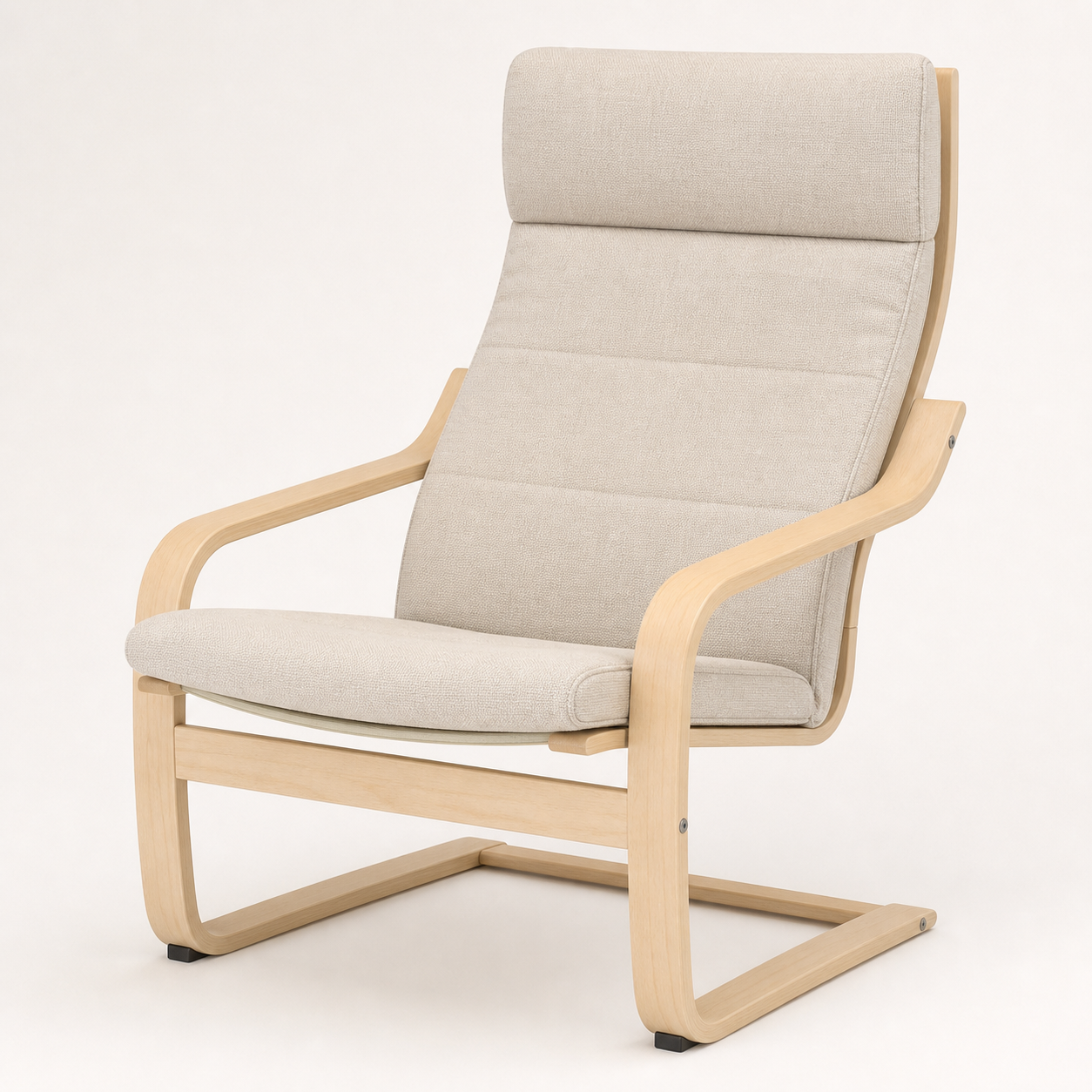
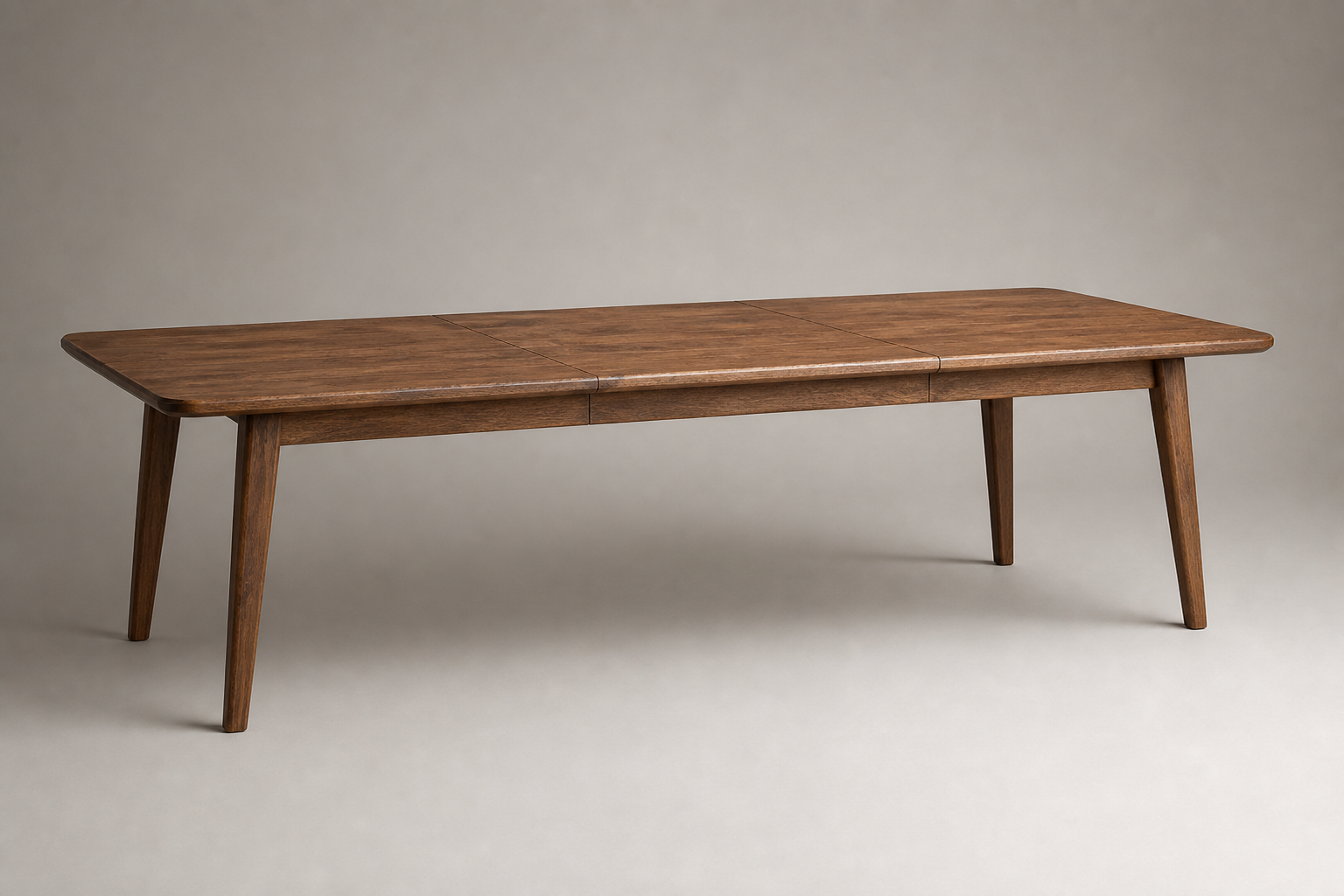
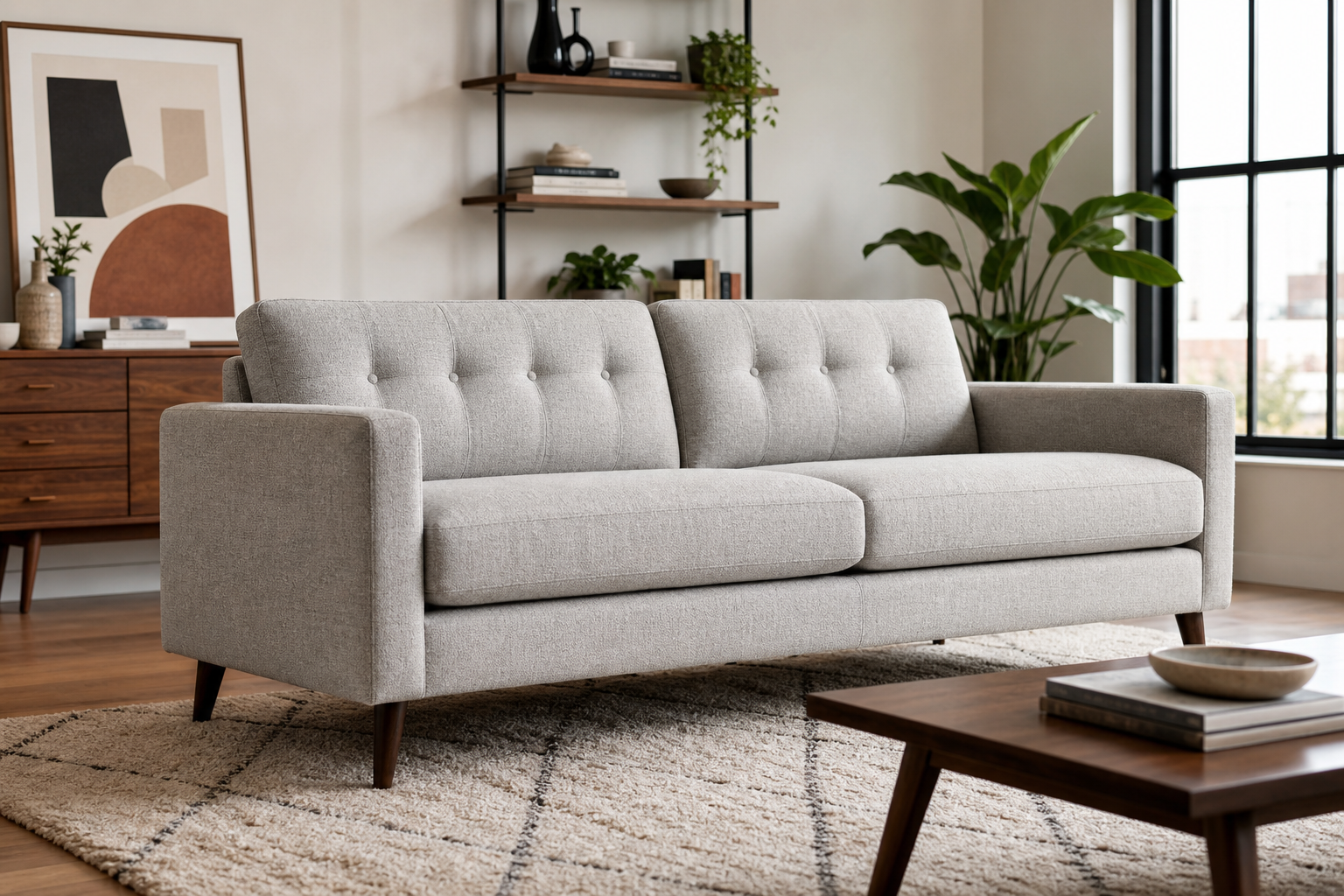
Scandinavian furniture often has visible legs, rounded edges, tapered supports, and human-scaled proportions. Sofas and lounge chairs are designed to look light enough for modest rooms while still offering usable comfort. Dining tables tend to celebrate wood grain and joinery rather than hiding the structure completely. The layout supports ordinary routines: reading, eating, talking, storing blankets, and moving easily between zones.
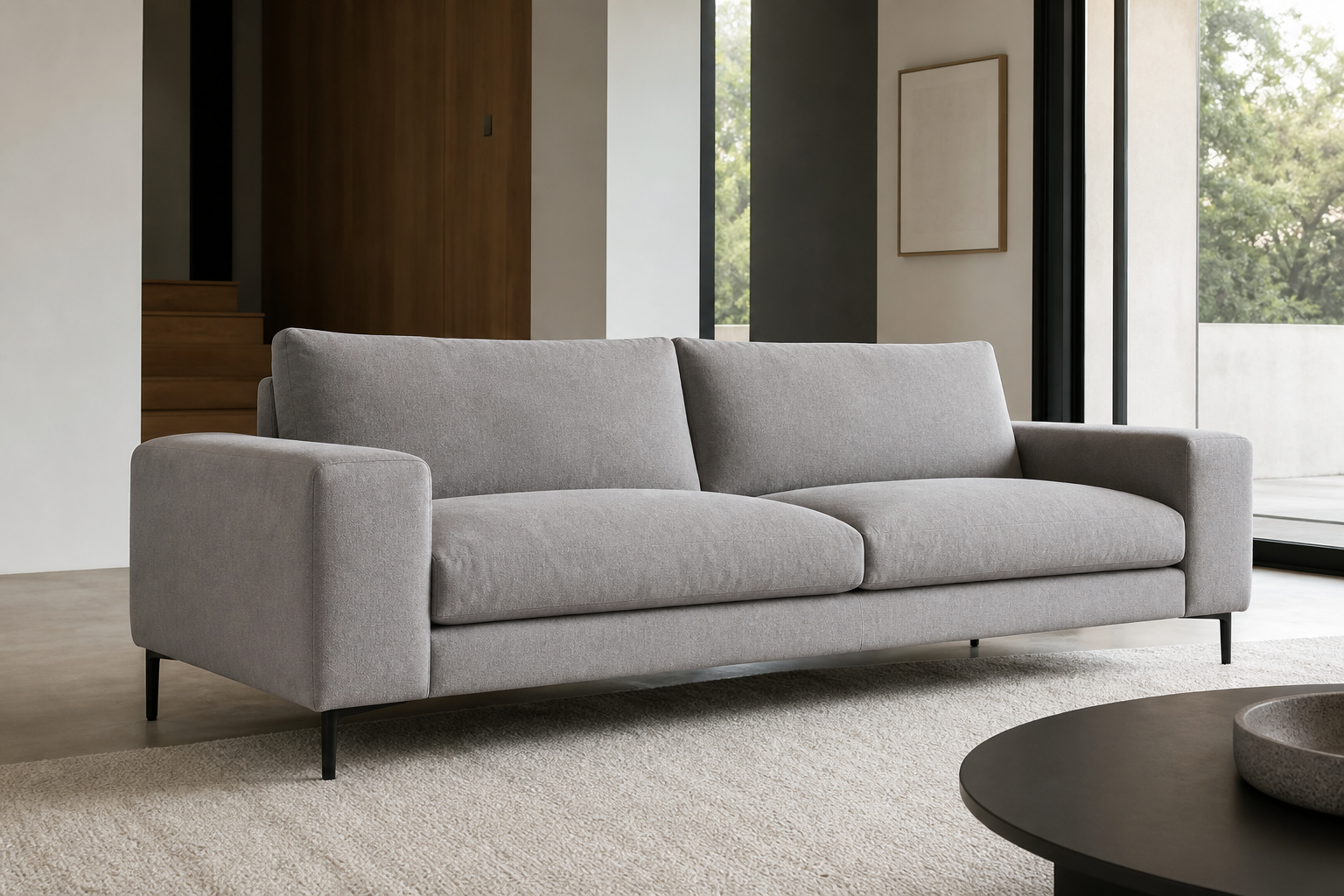
Minimalist furniture can be lower, more linear, and more closely integrated with the architecture. A low platform bed, handleless cabinet, slab-front sideboard, or wall-mounted console preserves long horizontal lines. The layout may use fewer but larger pieces, with open floor around each one. This can look calm, but undersized furniture chosen merely to create empty space may make a room less functional.
Measure circulation routes before ordering. Mark furniture footprints with painter’s tape and leave room for drawers, doors, and dining chairs to open. A table for six must accommodate both the tabletop and the occupied chair zone; our guide to the best dining tables for six people can help compare realistic dimensions. In either style, correct scale matters more than whether a table has rounded Scandinavian legs or a minimalist pedestal base.

Storage: Curated Display Versus Visual Concealment
Scandinavian rooms often combine closed cabinets with limited open display. A bookshelf may hold books, a ceramic bowl, and a small lamp without being packed from edge to edge. Everyday objects can remain visible when they are useful or personally meaningful. Baskets, peg rails, and freestanding cabinets provide flexible storage that suits renters because these solutions do not require major built-in work.
Minimalist interiors typically depend more heavily on concealed storage. Flat-front cabinets, under-bed drawers, appliance garages, cable channels, and full-height wardrobes keep visual noise out of sight. This approach works only when the storage capacity matches the household. A room with too little concealed storage does not remain minimalist; it simply accumulates bags and paperwork on its few exposed surfaces.
Inventory your belongings before buying storage. Count books, measure media equipment, and identify objects that need ventilation or frequent access. For books and display items, compare shelf depth, adjustability, and weight limits rather than choosing by appearance alone. A guide to the best bookshelves for a living room is a useful starting point, but always verify the manufacturer’s load rating and anchoring instructions for the exact model.
Lighting and the Experience of Warmth
Lighting is one of the strongest dividing lines between the styles. Scandinavian schemes often use several modest light sources instead of one harsh ceiling fixture. A pendant over the <a href="/products/article-seno-71-dining-table-walnut/" class="product-inline-link">dining table</a>, a shaded <a href="/products/muuto-leaf-floor-lamp-black/" class="product-inline-link">floor lamp</a> beside a chair, and a small <a href="/products/ikea-nymane-table-lamp-white/" class="product-inline-link">table lamp</a> can create warm pools of light at different heights. Paper, opal glass, fabric, and painted metal shades soften glare.
Minimalist lighting may be more architectural. Recessed fixtures, linear pendants, track systems, concealed LEDs, and sculptural lamps preserve clean surfaces or reinforce geometry. The danger is designing for photographs rather than daily use. A single dramatic pendant may look impressive but still leave a desk, reading chair, or kitchen counter inadequately illuminated.
Whichever direction you choose, plan ambient, task, and accent lighting separately. Check bulb type, replaceability, dimmer compatibility, color temperature, and cord placement before ordering. Renters can use plug-in sconces and floor lamps instead of hardwired fixtures. Stop DIY and call a licensed electrician when new circuits, junction boxes, fixed wiring, or uncertain existing wiring are involved.
Comfort, Maintenance, and Everyday Practicality
Scandinavian interiors generally tolerate signs of ordinary life better. Natural wood develops variation, washable textiles can be changed seasonally, and a mix of matte textures is less likely to show every fingerprint. The tradeoff is maintenance across several materials: wool may require careful spot cleaning, pale upholstery can stain, and unfinished or lightly finished timber may react to moisture.
Minimalist rooms reduce the number of visible objects, but their uninterrupted surfaces can be surprisingly demanding. Glossy cabinets reveal smudges, dark finishes show dust, and precisely aligned doors make hardware problems conspicuous. Concealed storage also requires discipline inside the cabinets. If every cupboard is overfilled, daily retrieval becomes frustrating even though the room looks calm when the doors are closed.
Choose finishes according to your household rather than an idealized photograph. Request upholstery cleaning codes, ask whether cushion covers are removable, and confirm whether replacement parts are available. For rental homes, prioritize pieces that can move through doorways and be disassembled without damaging connectors. Modular furniture may cost more initially but can adapt better to future rooms.
Safety Checks That Matter in Either Style
A restrained room is not automatically a safe one. Tall dressers, bookcases, and narrow cabinets can tip when drawers are opened, children climb, or weight is concentrated high on the unit. Follow the manufacturer’s anchoring instructions and use hardware appropriate to the wall construction. If you cannot identify studs, masonry, pipes, or wiring—or if a rental agreement limits drilling—ask the landlord or hire a qualified installer rather than improvising.
Check stated weight capacities for shelves, desks, wall-mounted cabinets, and floating consoles. Books, records, stone objects, and large monitors become heavy quickly. Distribute loads evenly and never assume a thin shelf can support dense collections merely because the product photograph shows them. Wall-mounted pieces need suitable fasteners and sound wall material; drywall anchors are not interchangeable, and damaged plaster may require professional assessment.
For upholstered furniture, review the fire-safety labeling and legal requirements applicable in your region, especially when buying secondhand or from an overseas marketplace. Do not spray unverified chemical treatments onto furniture. Ask manufacturers about upholstery composition and compliance rather than assuming that “natural” means safer. New furniture can also release odors and volatile organic compounds, so ventilate the room, follow care guidance, and consider lower-emission finishes when that information is available. Persistent strong odors, headaches, or respiratory irritation are reasons to stop using the room or item and seek appropriate medical or indoor-air advice.
Homes with young children need additional checks. Prefer rounded edges where possible, add properly fitted corner protectors to unavoidable sharp corners, secure loose cords, and keep climbable furniture away from windows. Avoid placing heavy decorative objects on high open shelves. These precautions apply just as much to a softly styled Scandinavian room as to a highly edited minimalist one.

How to Choose the Right Direction for Your Home
Start with function rather than mood boards. Write down what happens in the room, what must be stored, and which surfaces are used every day. A household that reads, crafts, entertains, or rotates children’s supplies may benefit from Scandinavian flexibility and accessible storage. Someone who owns fewer objects and strongly values visual quiet may be comfortable with a more rigorous minimalist plan.
Next, decide how much contrast and texture you enjoy. If a room of smooth cabinetry and wide empty surfaces feels calming, lean minimalist. If it feels unfinished, add Scandinavian elements such as timber, woven textiles, warm lamps, and a few useful objects. You do not have to choose a pure style. A minimalist architectural base with Scandinavian furniture is often practical because the storage remains visually quiet while movable pieces provide warmth.
Finally, buy slowly. Begin with the largest functional pieces, live with them, and then add lighting, rugs, and smaller objects. Avoid purchasing a coordinated “Scandinavian room set” in one order; matching finishes can make a home feel like a showroom, and quality may vary across the set. A measured mix usually produces a more durable, personal result.
Common Mistakes and Budget Traps
One common mistake is equating either style with buying everything in white. White furniture can visually expand a small room, but poorly matched whites may clash, and inexpensive painted surfaces can chip at high-contact edges. Material samples and close-up product photographs are more useful than lifestyle images with heavily controlled lighting.
Another mistake is removing useful furniture to achieve a sparse appearance. A living room without adequate tables, task lighting, or storage may photograph well but function badly. Similarly, buying many small “cozy” accessories does not create Scandinavian design if the room becomes crowded. Edit by category: keep the lighting, textiles, and objects that perform clear roles, then remove duplicates.
Budget for delivery, assembly, wall anchoring, electrical work, and returns—not only the advertised price. Large minimalist cabinets may require professional installation to achieve level reveals, while solid-wood Scandinavian pieces can be expensive to ship. Read return conditions before opening flat-pack furniture, measure elevators and stair turns, and never force an oversized item through a doorway. If installation involves heavy wall-mounted units, uncertain wiring, masonry drilling, or unstable floors and walls, hiring an appropriate professional is safer than attempting to preserve the budget through risky DIY.
Frequently Asked Questions
Can Scandinavian and minimalist design be combined?
Yes. A practical combination uses minimalist planning—clear circulation, concealed storage, and fewer objects—with Scandinavian materials such as pale timber, wool, linen, and warm diffused lighting. Keep the palette consistent so that the added texture feels intentional rather than busy.
Is Scandinavian interior design always cheaper?
No. Simple-looking furniture can still involve high-quality timber, durable upholstery, skilled joinery, or responsible manufacturing. Affordable flat-pack options exist, but price does not define the style. Compare construction, warranties, replacement parts, and material specifications before assuming a pale wood product offers good value.
Which style is better for a small apartment?
Either can work. Minimalism can make a small apartment feel visually open, provided there is enough concealed storage. Scandinavian design can make the same space feel warmer and more livable, especially with lightweight furniture on visible legs. In both cases, accurate measurements and multifunctional pieces are more important than the label.
Does minimalist design have to feel cold?
No. Minimalism becomes cold when reduction removes comfort, useful lighting, and material variation. Warm whites, timber, textured upholstery, and dimmable lamps can soften a minimalist room without filling it with decoration. The key is choosing a few warm elements rather than layering many unrelated accessories.
What should I buy first when changing styles?
Start with the room’s largest functional weakness. That may be inadequate storage, an uncomfortable sofa, a wrongly sized <a href="/products/article-conan-75-oval-dining-table-walnut/" class="product-inline-link">dining table</a>, or poor lighting. Correcting that problem gives the room a sound foundation. Paint, decorative objects, and small accessories should come later, once the furniture layout and everyday routines work.
Quick Reference: Scandinavian Versus Minimalist Interiors
| Feature | Scandinavian approach | Minimalist approach |
|---|---|---|
| Overall feeling | Warm, relaxed, functional | Quiet, controlled, spacious |
| Common materials | Pale wood, wool, linen, paper, ceramics | Plaster, stone, glass, steel, uniform wood finishes |
| Furniture form | Light-looking, tactile, often rounded | Linear, low-profile, often visually integrated |
| Storage | Mix of closed storage and curated display | Predominantly concealed storage |
| Lighting | Multiple warm, diffused light sources | Architectural or sculptural lighting with clean lines |
| Decoration | A few useful or personal objects | Very limited, highly intentional objects |
| Maintenance | More materials to care for, but often forgiving | Fewer visible items, but surfaces and alignment show flaws |
| Best fit | People who want simplicity with visible comfort | People who value strong visual order and own fewer objects |
| Main risk | Accumulating too many “cozy” accessories | Sacrificing comfort or storage for emptiness |
| Essential safety check | Anchor tall furniture and verify shelf loads | Secure integrated units and verify mounting systems |
The most useful conclusion is not that one style is better. Scandinavian design treats comfort, nature, and everyday utility as part of simplicity; minimalism treats reduction and visual clarity as the path to simplicity. Choose the balance that supports your routines, storage needs, maintenance tolerance, and safety requirements. A home that works well will remain appealing long after a particular design label stops trending.