Hunting note
Start with the decision, then inspect the details.
A practical guide for homeowners and renters researching furniture purchases online on modern farmhouse furniture elements, covering the best next steps, tradeoffs, and when to call a pro.
Modern farmhouse furniture combines the usefulness and familiar materials of rural interiors with cleaner proportions and less ornament. The look depends on sturdy wood, comfortable upholstery, practical storage, simple metal details, and a restrained palette—not on filling a room with signs, distressed paint, and themed accessories.
To use modern farmhouse furniture elements successfully, begin with scale, construction, and function. Choose a few substantial pieces with honest materials or convincing finishes, then balance their visual weight with lighter forms and open space. The result should feel warm and current, with enough texture to avoid sterility and enough editing to avoid rustic clutter.
Start With the Defining Principles
Traditional farmhouse rooms developed around work, family, and materials that were locally available. Modern farmhouse borrows that straightforward character but removes much of the visual busyness. Furniture tends to have simple rectangular or gently turned forms, matte or low-sheen finishes, and construction details that look credible. Comfort is generous, but silhouettes are usually tailored rather than overstuffed.
The most convincing rooms mix rather than copy. A plank-style <a href="/products/article-seno-71-dining-table-walnut/" class="product-inline-link">dining table</a> can sit beneath a streamlined pendant, while a slipcovered sofa faces a black metal <a href="/products/article-amoeba-42-5-coffee-table-walnut/" class="product-inline-link">coffee table</a>. Contrast keeps the style from becoming a period set. Avoid applying the same distressed finish to every item. If wood, paint, upholstery, and metal all appear artificially aged, the room loses hierarchy and can feel like a themed retail display.
Choose Wood for Grain, Tone, and Construction
Wood is the visual foundation. Oak, pine, maple, ash, and reclaimed lumber can all suit the style, but species matters less than a coherent undertone and appropriate construction. Warm medium oak feels grounded; pale natural wood is airier; dark-stained wood adds formality. One room can contain multiple tones if they share warmth or repeat in more than one location.
Read online specifications carefully. “Solid wood” may describe only part of a piece, while veneer over stable engineered material can be a sensible choice for broad panels. Look for information about joinery, drawer boxes, backing, hardware, and surface protection. Reclaimed wood should be dry, stable, and free from active pests or unsafe residue. Natural knots and checking can add character, but structural cracks, splinters, and loose joints are defects rather than charm.

Anchor the Living Room With Comfortable Upholstery
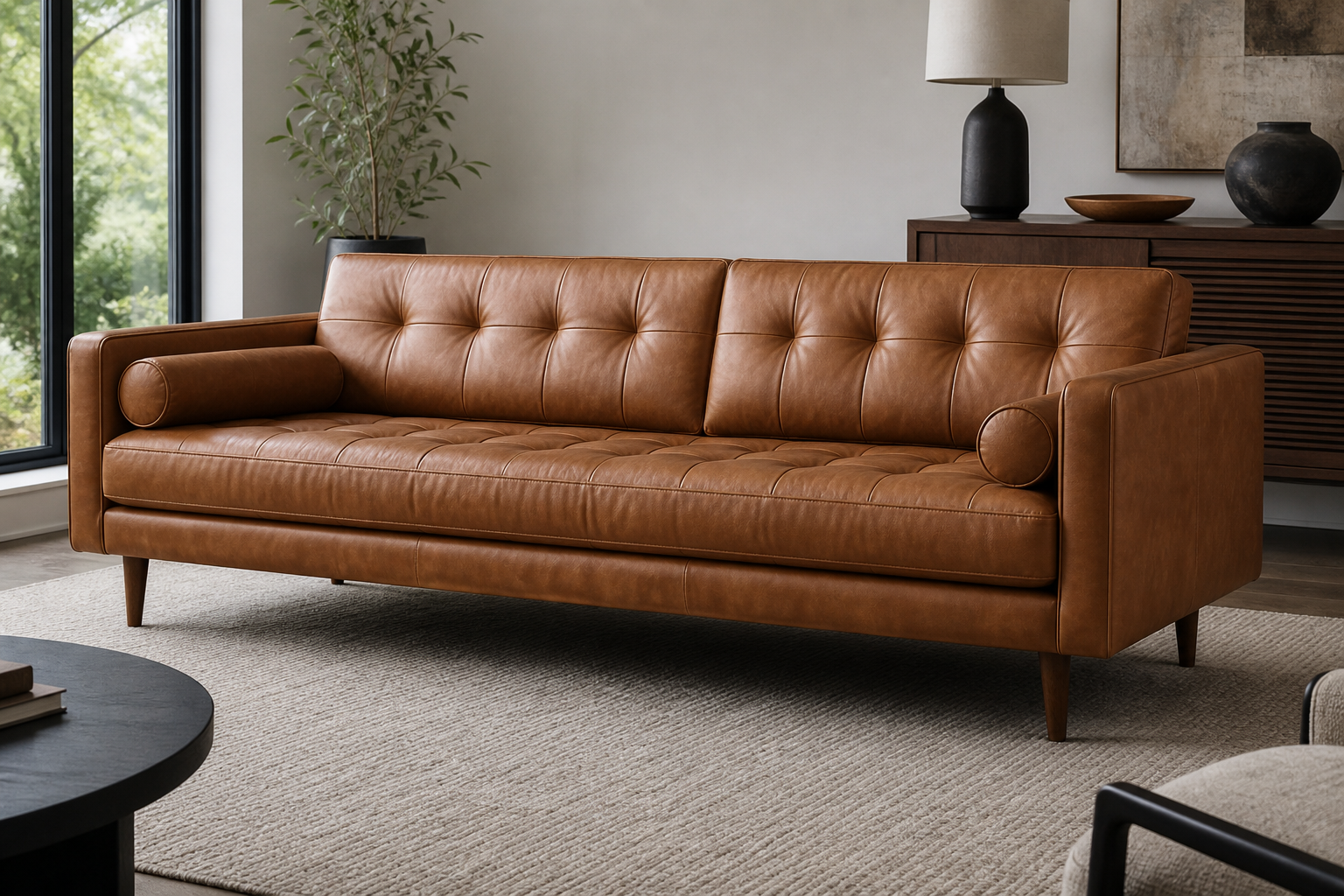
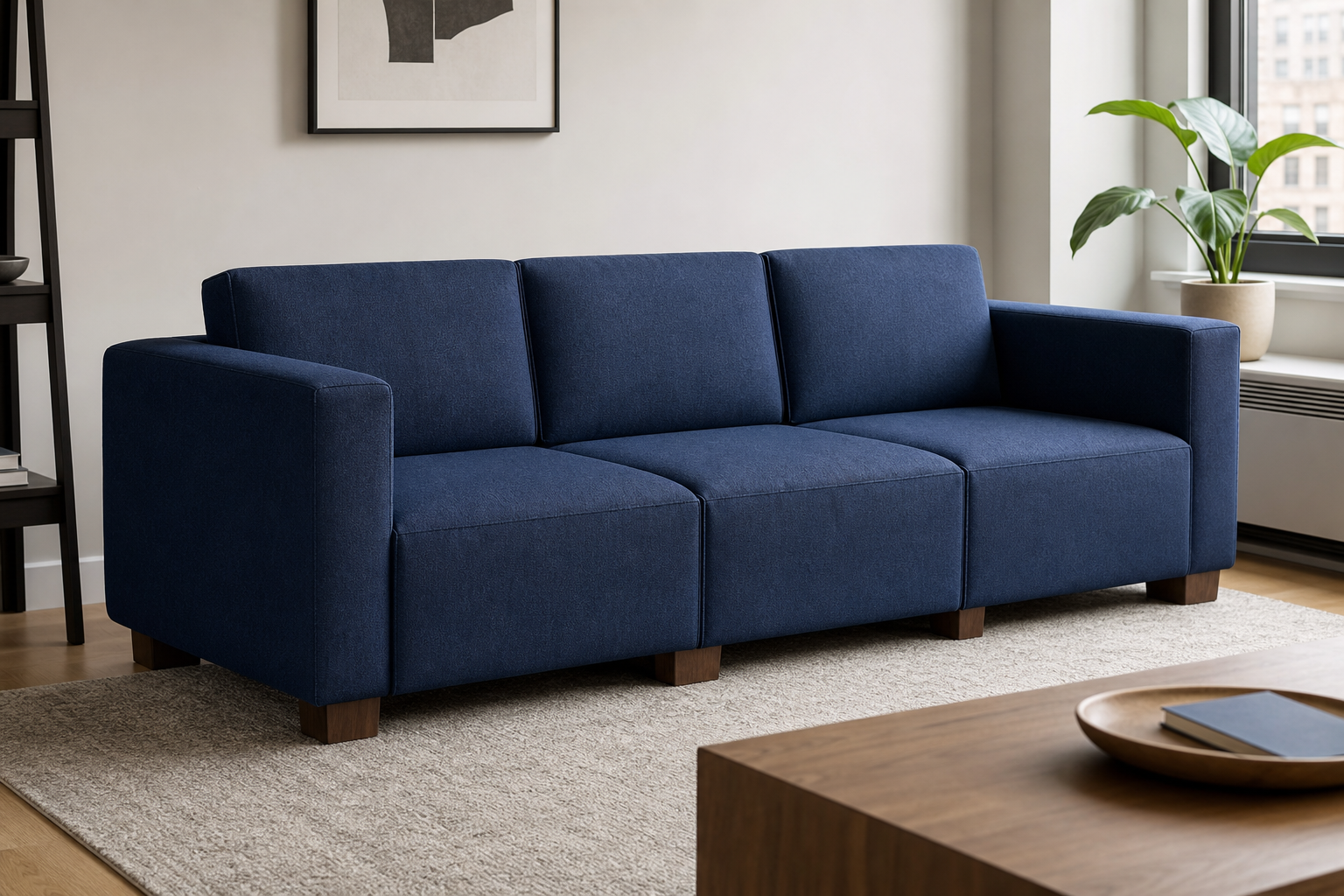
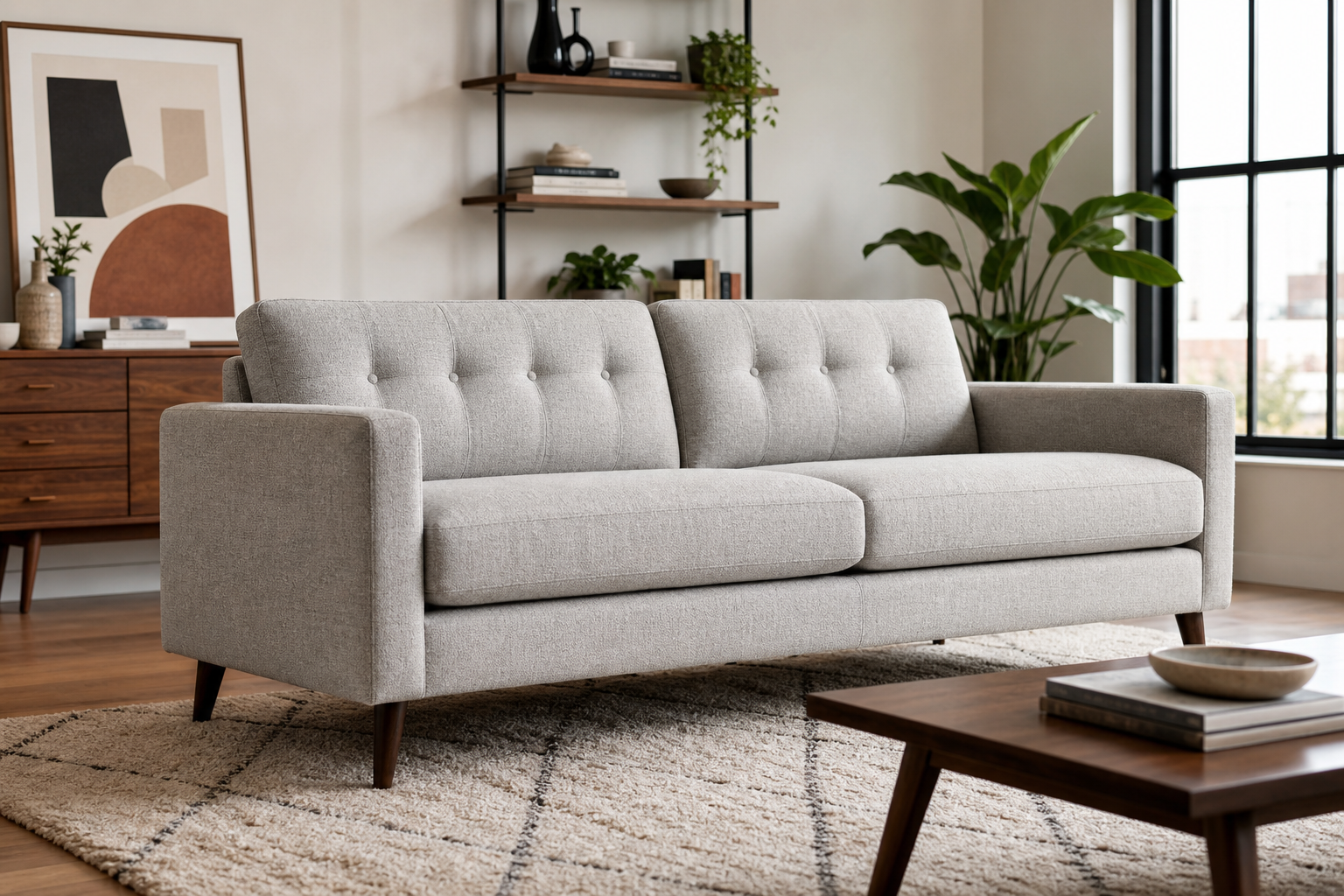
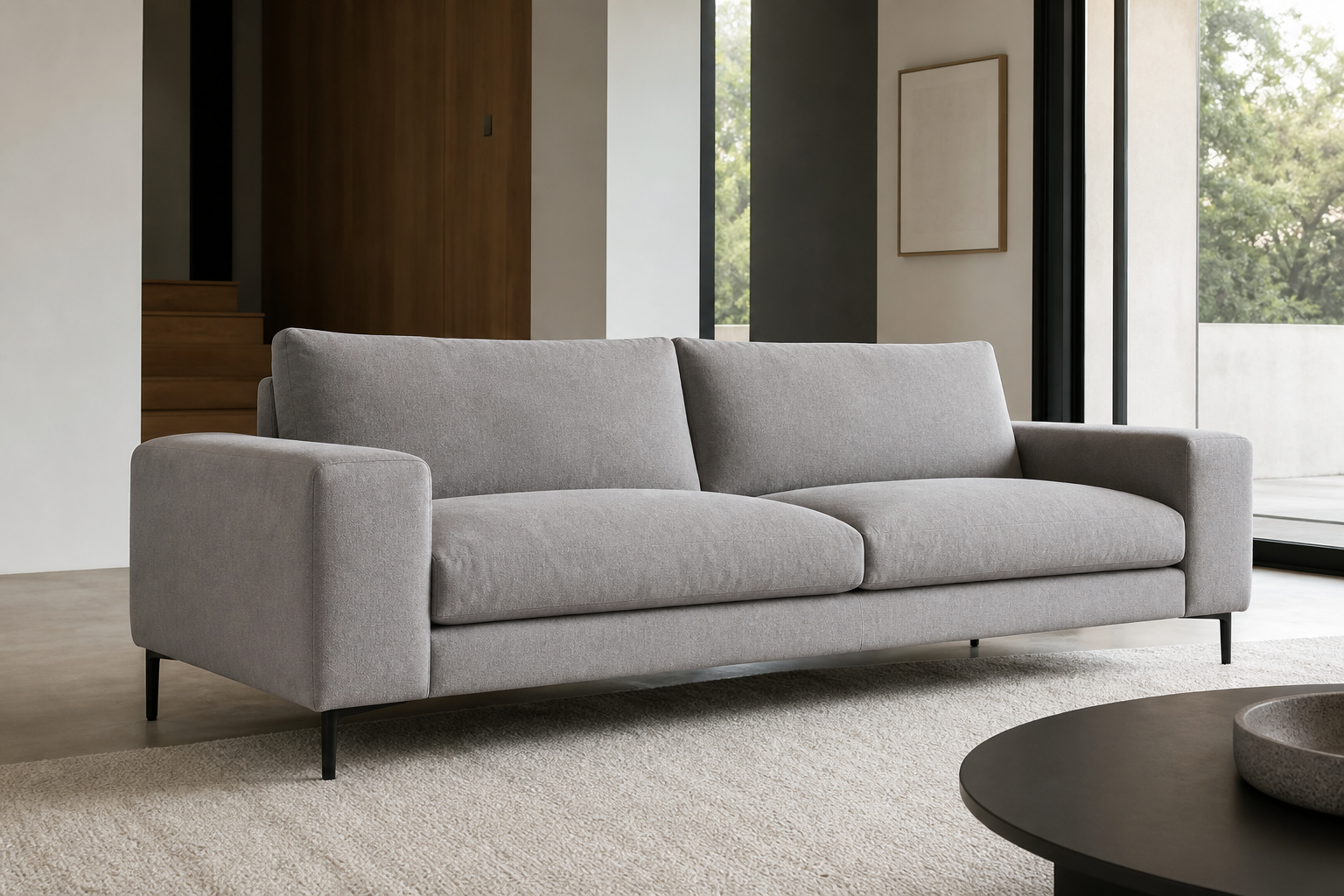
A modern farmhouse sofa is often covered in a neutral woven fabric, linen blend, performance textile, or washable slipcover. Look for squared or softly rolled arms, supportive cushions, and a frame scaled to the room. Cream and oatmeal are common, but warm gray, muted olive, tobacco leather, or deep navy can be equally suitable and more forgiving in active households.
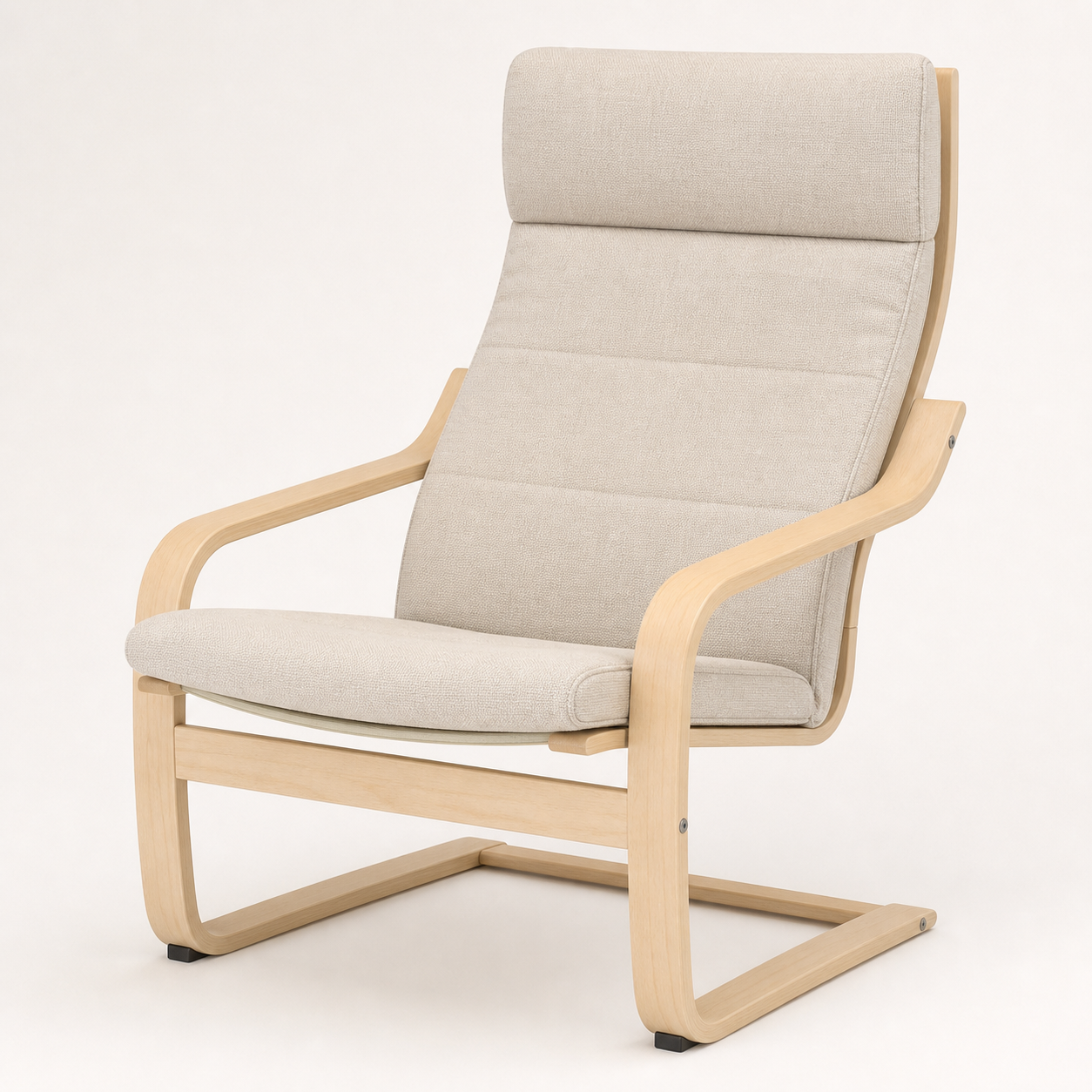
Construction and care matter more than the label. Compare seat depth, cushion fill, frame description, suspension, rub-test information when provided, cleaning code, and warranty. Request a swatch because online whites vary dramatically. Check fire-safety compliance and allow new upholstery to air out according to manufacturer guidance if odor or VOCs are a concern. A textured accent such as an affordable boucle chair can work, but use it sparingly so the room retains material contrast.
Use Tables With Simple, Substantial Profiles
Farmhouse tables traditionally look capable of daily work. Trestle bases, apron details, turned legs, and plank-like tops all fit, but the modern version benefits from cleaner edges and less decorative distressing. Measure chair clearance around an apron or trestle before buying. A beautiful base can interfere with knees or prevent end chairs from sliding in, especially when the table includes extension leaves.
For a dining room, tape the fully extended footprint on the floor and preserve comfortable circulation around occupied chairs. Consider the number of everyday seats rather than shopping by a lifestyle photograph. A guide to the best dining table for six people can help compare dimensions, extension mechanisms, and materials. Use coasters and trivets, and follow the finish maker's care instructions; harsh cleaners can cloud matte topcoats.
Add Storage That Looks Built for Use
Sideboards, hutches, consoles, and bookcases bring the practical side of farmhouse design into a modern room. Flat-panel or restrained Shaker-style doors, simple knobs, and mixed open-and-closed storage feel appropriate. Closed cabinets hide electronics and household supplies, while limited open shelving provides space for everyday ceramics, books, or serving pieces.
Tall or top-heavy furniture should be anchored to suitable wall structure with the supplied or properly rated hardware. Check shelf weight limits and distribute heavy objects low. Glass-front cabinets need intact safety glass and secure hinges, particularly in homes with children. When comparing the best bookshelf for a living room, prioritize stability, usable shelf depth, cable access, and anchoring over decorative ladder rails or distressed finishes.

Introduce Black Metal With Restraint
Matte black or dark bronze metal gives modern farmhouse interiors definition. Common applications include table bases, cabinet pulls, curtain rods, lamp frames, and slim shelving supports. The dark line creates contrast against warm wood and light upholstery. It also connects newer pieces to traditional ironwork without requiring ornate scrolls or heavy hardware.
Repeat the finish two or three times, but do not make every metal element identical. A room filled with black window frames, black lights, black tables, black chairs, and black hardware can feel graphic and cold. Mix in aged brass, pewter, or stainless steel where function calls for it, while keeping undertones compatible. Check welded joints, sharp edges, floor protectors, and powder-coat durability on frequently handled pieces.
Build a Calm, Warm Palette
Modern farmhouse palettes often begin with warm white, cream, putty, taupe, charcoal, or soft greige. Natural wood contributes another major color. Muted green, dusty blue, rust, or ochre can appear in upholstery and textiles without turning the room into a high-contrast theme. The objective is warmth and continuity, not a rule that every surface must be white.
Test paint and fabric samples beside flooring at different times of day. A cool gray sofa against orange-toned oak may look disconnected, while a greige with a compatible warm undertone can bridge them. Use true black as punctuation rather than a dominant field. Darker farmhouse schemes also work: deep olive cabinetry and walnut furniture can feel grounded when ceilings, textiles, and lighting provide enough relief.
Layer Natural and Durable Textures
Texture prevents a neutral room from feeling flat. Combine flat-woven wool, linen-like upholstery, cotton canvas, leather, cane, stone, matte ceramic, and wood grain. Vary the scale: a broad jute-like weave, fine linen texture, and smooth ceramic read as distinct layers. Avoid placing several coarse beige materials together without contrast, which can make the room look dusty rather than relaxed.
Match material to use. Natural-fiber rugs can stain or shed in dining areas, while washable synthetic blends may be more practical for pets or children. Cane panels need protection from impact and excessive dryness. Stone tops can etch or stain depending on the material and sealer. Ask for care requirements before purchasing so “natural” does not become a maintenance surprise.
Quick Reference: Essential Elements and Better Choices
| Element | Modern farmhouse direction | Avoid relying on |
|---|---|---|
| Wood furniture | Visible grain, simple construction, coherent undertones | Uniform fake distressing |
| Upholstery | Comfortable, tailored, practical neutral or muted color | Oversized pieces selected only for appearance |
| Dining table | Functional trestle or clean leg base with proper clearance | A thick apron that traps knees |
| Storage | Shaker-like fronts, useful drawers, anchored tall pieces | Decorative barn doors with poor access |
| Metal | Limited black or dark accents, repeated thoughtfully | Black on every fixture and frame |
| Textile | Layered weaves with washable options where needed | Many identical beige textures |
| Decor | Useful ceramics, baskets, art, and edited collections | Word signs and mass-produced themes |
Use the table as a shopping filter rather than a checklist requiring every element. A room can read as modern farmhouse with a simple oak table, comfortable sofa, useful cabinet, warm palette, and a few dark accents. It does not need a sliding barn door, shiplap, or a windmill motif. Architecture should not be forced to imitate a farmhouse when furniture and material choices can establish the mood more quietly.
Balance Old and New Pieces
One or two vintage or antique items can keep the style from feeling generic. A repaired worktable, Windsor chair, crock, or old chest introduces wear that cannot be convincingly printed onto new furniture. Pair it with cleaner contemporary forms so its age becomes visible. Check old painted surfaces for lead risk, verify structural stability, and have vintage electrical items rewired before use.
New pieces provide predictable dimensions, warranties, and performance fabrics. Let them handle demanding jobs while older objects add character where appropriate. Match through color or material rather than age. A new sofa and old <a href="/products/article-portima-c-side-table-walnut/" class="product-inline-link">side table</a> can relate through warm wood feet; a modern cabinet and antique chair can share a black accent. Do not strip or repaint a valuable old piece without understanding what may be lost.
Plan Lighting as Furniture, Not an Afterthought
Farmhouse lighting can become oversized quickly. Lanterns, metal domes, simple chandeliers, ceramic lamps, and swing-arm sconces fit the vocabulary, but fixtures must suit ceiling height and table size. A dining pendant should illuminate the surface without blocking views or hanging where people can strike it. Use manufacturer guidance and an electrician for hardwired installation.
Layer ambient, task, and accent light. Table lamps add pools of warmth beside wood furniture; a <a href="/products/muuto-leaf-floor-lamp-black/" class="product-inline-link">floor lamp</a> makes a reading chair useful; dimmable overhead light adapts to meals and cleaning. Choose compatible bulb color temperatures so white paint and wood tones remain consistent after dark. Keep cords out of circulation routes and observe rated wattage limits and clearances from curtains or upholstery.
Common Buying Mistakes
The biggest mistake is shopping by style name instead of specifications. “Farmhouse” can be attached to flimsy particleboard, awkward proportions, or impractical mechanisms. Read dimensions, materials, assembly requirements, return terms, and weight limits. Mark footprints on the floor and measure delivery doors, stairs, and elevators. A large hutch that cannot reach the room is not a bargain.
Another mistake is purchasing the entire room at once from one collection. Matching sets flatten the layered quality that makes the style appealing. Buy essential pieces first, live with them, then add contrast. Avoid over-distressing, excessive signs, and too many small baskets. Finally, do not ignore safety: anchor tall cabinets, secure televisions, childproof sharp corners, and never overload shelves or extension leaves.
When Custom or Professional Help Makes Sense
Custom furniture can be worthwhile for an unusually shaped dining area, a built-in storage wall, or a table that must meet precise seating and access needs. Ask for drawings, material samples, finish details, hardware specifications, lead time, delivery terms, and care instructions. Confirm whether reclaimed materials have been dried, cleaned, and checked for embedded metal or contamination.
An interior designer can coordinate scale and finishes when several rooms connect visually. A carpenter can securely install built-ins and address uneven walls, while an electrician should handle new fixtures or concealed wiring. Professional input is especially valuable for heavy wall-mounted cabinets, stone tops, and alterations that affect structure. The objective is safe, lasting work—not simply a more elaborate version of the trend.
Frequently Asked Questions
Is modern farmhouse furniture going out of style?
Specific motifs and heavily distressed finishes may date quickly, but sturdy wood furniture, comfortable upholstery, useful storage, and simple forms have lasting value. Choose quality and proportion over trend-specific decoration.
Can I use dark wood in a modern farmhouse room?
Yes. Walnut, dark oak, or espresso-toned pieces add depth, especially against warm light walls. Repeat the dark tone in another element and balance it with lighter textiles or open space.
Does all the furniture need to match?
No. Matching every wood and fabric makes the room feel like a set. Coordinate undertones, scale, or repeated details while allowing variation in age, silhouette, and material.
What is the best first purchase?
Start with the item most central to daily use: usually a sofa, dining table, or bed. Confirm comfort, construction, and dimensions, then choose storage, lighting, and accents in response to it.
How do I make farmhouse style work in a rental?
Use movable furniture, rugs, lamps, curtains, and removable hardware where permitted. Avoid structural imitations. A wood table, tailored neutral seating, a stable cabinet, and restrained black accents can establish the style without permanent changes.