Hunting note
Start with the decision, then inspect the details.
A practical guide for homeowners and renters researching furniture purchases online on nursery furniture must haves, covering the best next steps, tradeoffs, and when to call a pro.
The true nursery furniture must-haves are fewer than most registries imply: a safety-compliant sleep space, a stable changing setup, accessible storage, and a supportive seat for feeding or soothing. Everything else should earn its floor space. A compact room may work better with a crib, anchored dresser that doubles as a changing surface, and comfortable chair than with a large matching suite.
Start with safety and room measurements, not a style board. Check current product information, recall status, assembly instructions, weight limits, and anchoring requirements before buying. Avoid used sleep furniture with missing hardware, unknown modifications, or uncertain compliance. Plan for cords, outlets, windows, heaters, and walking paths, then compare materials and finishes. The result should be easy to clean, difficult to tip, and useful beyond the first year.
Start With a Measured Nursery Plan
Measure every wall, doorway, closet swing, radiator, baseboard, and window before shopping. Mark outlets and note where cords would run. Use painter’s tape to outline the crib, dresser, and chair on the floor, including the space needed to open drawers and recline or rock. A piece that technically fits can still block a closet or create a narrow nighttime path.
Keep the crib away from window-covering cords, reachable shelves, unstable wall decor, and heat sources. Allow clear access to the door and preserve ventilation around heating equipment. Renters should identify wall construction and discuss approved anchoring methods with the property owner, because anti-tip protection is not optional simply because drilling is inconvenient. A measured plan also prevents paying for a “nursery set” whose largest piece cannot turn through the doorway.
Make a Compliant Crib the First Priority
Choose a crib sold for your market with clear manufacturer information, intact labeling, all original hardware, and straightforward assembly instructions. The mattress should match the crib’s specified dimensions and fit tightly, without improvised gap fillers. Use the crib exactly as directed: a firm, flat sleep surface with the fitted sheet intended for that mattress. Do not add bumpers, pillows, loose blankets, positioners, or decorative objects to the sleep space.
Convertible cribs can become toddler or full-size beds, but calculate the complete cost. Conversion rails may be separate, can go out of stock, and require storage for years. A simple standard crib may offer better value if the room will later serve another child. Mini cribs save floor area but have smaller mattresses and may be outgrown sooner. Whichever format you choose, register the product, check recalls, and stop use if hardware loosens or the frame is damaged.
Use a Dresser as the Changing Station
A separate changing table is convenient but not always necessary. A broad, sturdy dresser can hold clothing now and remain useful later, provided the manufacturer permits the intended setup and the changing pad is secured as directed. Confirm that the surface height is comfortable, the pad fits without hanging over edges, and drawers can open without colliding with nearby furniture. Keep daily supplies reachable without placing hazards where a child can grab them.
Anchor the dresser to suitable wall structure with the supplied or manufacturer-approved anti-tip system, even if it feels heavy. Open drawers shift the center of gravity, and children eventually pull, climb, and explore. Do not rely on drywall alone unless the hardware is specifically rated for that installation. If you cannot identify studs, wall material, or suitable fasteners, use a qualified installer. Keep a hand on the child during changes; straps and raised edges do not make an elevated surface unattended-safe.
Choose Storage That Stays Safe as the Child Grows
Closed drawers reduce visual clutter and keep small objects out of reach, while open bins make frequently used linens easy to access. Low, stable storage is generally easier to manage than a tall bookcase, but any casework with tip-over potential should be anchored according to its instructions. Verify shelf and drawer weight limits, and avoid loading upper shelves with heavy items. Secure freestanding bookcases and place heavier objects low.
Plan storage by task rather than category. Keep diapers, wipes, and spare clothing near the changing area; extra linens can live in a closet. Avoid toy chests with heavy, free-falling lids or pinch points. As mobility increases, reassess every handle, corner, basket, and accessible object. Furniture that is safe for an infant who stays where placed may need latches, corner protection, or relocation when pulling up and climbing begin.
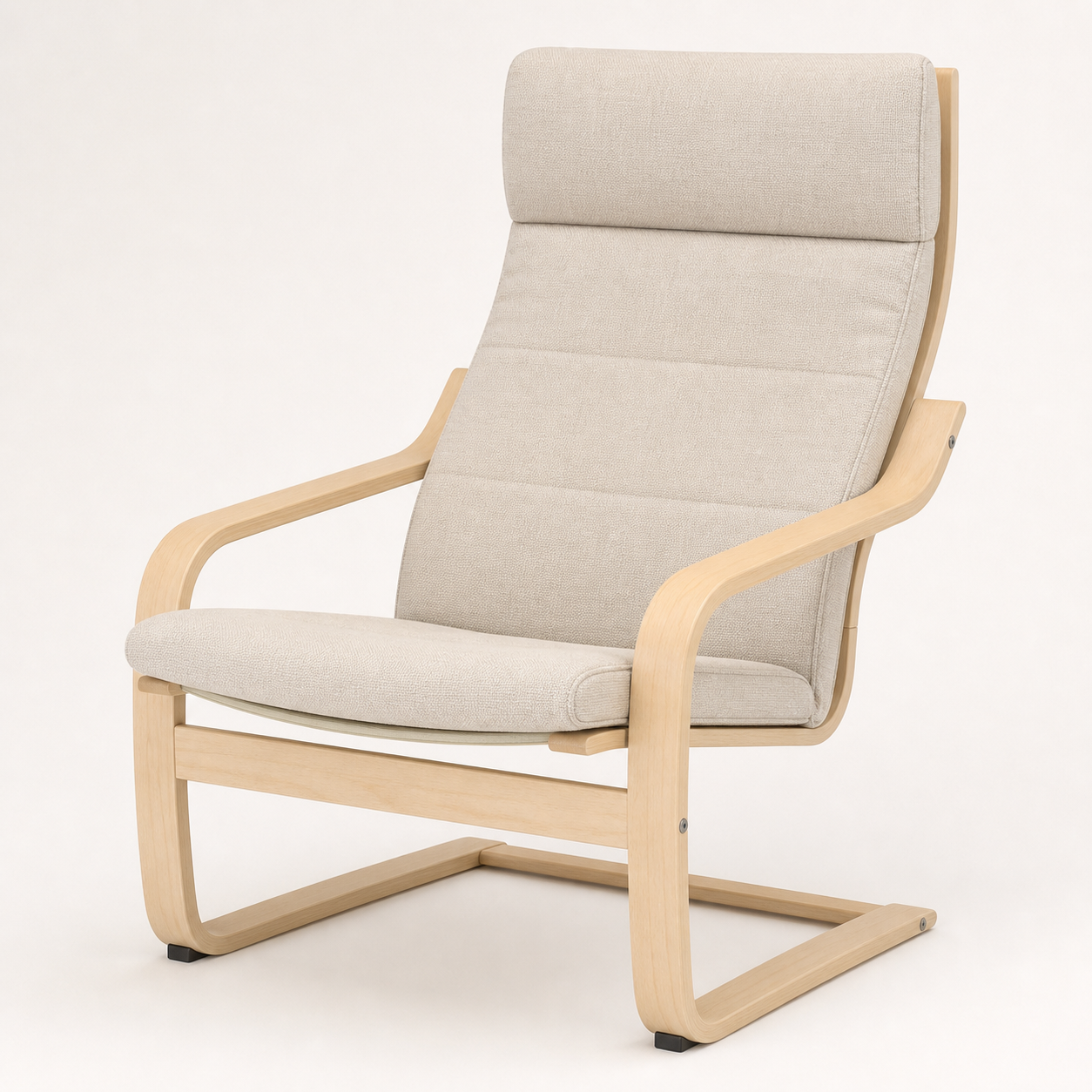
Pick a Feeding Chair for Support, Not Just Looks
A nursery chair should support the lower back, shoulders, and arms through long, repetitive sitting. Test seat depth, back height, arm position, and the effort required to stand while holding weight close to the body. A chair that is too deep may require extra pillows that constantly slip; one that is too low can strain knees. Smooth gliding or rocking should not create pinch points or allow the base to walk across the floor.
Compare upholstery for cleanability, seam quality, cushion recovery, and manufacturer care instructions. If chemical sensitivity or indoor-air concerns matter, review available emissions and material disclosures rather than relying on vague “natural” marketing. Upholstered products should meet applicable fire-safety requirements without adding loose aftermarket covers that interfere with function. Position the chair away from crib access, heater clearance zones, and curtain cords, with any lamp cable secured and inaccessible.
Add Lighting That Supports Nighttime Tasks
Use layered lighting: general room light for cleaning, plus a dimmable task or ambient source for nighttime care. A wall-mounted or stable <a href="/products/ikea-nymane-table-lamp-white/" class="product-inline-link">table lamp</a> can work if cords remain secured and out of reach. Avoid tall, lightweight floor lamps where they can be pulled or knocked into a walking path. Check that bulbs and shades do not create hot accessible surfaces.
Light placement matters more than decorative brightness. Aim for enough illumination to see supplies and move safely without shining a harsh source directly toward the crib. Plug-in night-lights should not obstruct adjacent outlets or invite dangling extensions. Smart lights can be convenient, but the room should remain usable if an app or network fails. Confirm compatibility with dimmers and follow electrical ratings rather than mixing unsupported bulbs and fixtures.
Compare Materials, Finishes, and Indoor-Air Factors
Solid wood, plywood, fiberboard, metal, and upholstery can all be appropriate when construction is sound and product information is transparent. Inspect joinery, drawer stops, edge finishing, and hardware availability. Veneer is not automatically poor quality; a well-applied veneer over stable substrate may outperform inexpensive solid wood that warps. Likewise, a heavy piece is not automatically safer unless it is stable and anchored.
New furniture can have an odor from finishes, adhesives, foam, or packaging. Review emissions certifications and manufacturer disclosures if VOC exposure is a concern, unpack in a well-ventilated unoccupied area when feasible, and follow instructions before use. Do not attempt to “seal in” odors with an unapproved coating. Persistent strong odor, eye irritation, damaged finish, or incomplete labeling is a reason to contact the seller and reconsider the product.
Use This Nursery Furniture Checklist
The most useful comparison sheet combines fit, longevity, and safety instead of scoring appearance alone.
| Item | Must-check details | Space-saving option | Safety boundary |
|---|---|---|---|
| Crib and mattress | Compliance, intact hardware, exact mattress fit | Mini crib if appropriate | Bare, firm, flat sleep space; no modifications |
| Dresser/changing surface | Stable build, usable height, drawer clearance | One piece serving both roles | Anchor to wall; secure pad as directed |
| Storage | Capacity, access, weight ratings | Closet bins and low shelving | Anchor tip-prone pieces; heavy items low |
| Feeding chair | Back and arm support, cleanable fabric | Compact stationary chair | Avoid pinch points, cords, and heaters |
| Lighting | Dimmability, stable base, correct bulb | Wall-mounted fixture | Secure cords and keep hot parts inaccessible |
| <a href="/products/article-portima-c-side-table-walnut/" class="product-inline-link">Side table</a> | Easy-clean top, stable footprint | Small wall shelf if properly installed | No sharp unstable pedestal within reach |
Before ordering, record packaged dimensions, assembled dimensions, delivery route, return window, restocking fees, and whether assembly is included. Save hardware lists and instructions after installation.
Decide What to Buy New, Used, or Later
Buying a new crib and mattress offers clearer product history, current instructions, and easier registration. Used dressers, chairs, and shelves can provide value if they are structurally sound, free of recalls, complete, cleanable, and compatible with proper anchoring. Avoid furniture with loose joints, peeling coatings, smoke or mold odor, missing labels, makeshift repairs, or inaccessible replacement hardware.
Delay items whose value is uncertain. A child may outgrow a bassinet quickly; a large wardrobe may duplicate closet storage; a footstool may crowd the walking path. Start with the sleep surface, changing storage, and chair, then live with the room before filling every wall. Staged purchasing protects the budget and leaves space for actual routines rather than imagined ones.
Avoid Matching-Set and Budget Traps
Matching sets simplify style decisions but can include the wrong sizes and encourage buying pieces that serve no real function. Coordination does not require identical finishes: repeating a wood tone, hardware color, or simple shape can make a mixed room feel intentional. Compare each item on safety, scale, construction, and usefulness before accepting a package discount.
Watch the total ownership cost. Add delivery, assembly, anchoring, conversion rails, specialized sheets, replacement covers, and return shipping. A low-priced dresser that arrives unassembled may be poor value if the fasteners strip or professional installation is required. Conversely, an expensive nursery label does not guarantee better drawer construction or upholstery. Read specifications and care instructions, not only lifestyle photography and star averages.
Know When to Use Professional Help
Use a qualified furniture installer or carpenter when wall materials are unknown, baseboards prevent furniture from sitting correctly, supplied anchors do not suit the structure, or heavy casework must be secured in a difficult location. Do not improvise by skipping anchors, using random fasteners, or attaching furniture to decorative trim. Landlords and property managers can help identify approved methods, but the final installation still needs to resist tip-over forces.
Consult an electrician for new outlets, hardwired sconces, overloaded circuits, damaged receptacles, or cords that cannot be routed safely. Stop using any crib or chair with structural cracking, missing hardware, uncontrolled movement, or a recall. Product manufacturers are the best source for approved replacement parts; do not substitute generic bolts in critical sleep furniture unless explicitly authorized.
Frequently Asked Questions
Do I need both a changing table and a dresser?
Usually not. A stable, correctly sized dresser can serve as a changing surface if the product and pad instructions support that use. Anchor it and maintain hands-on supervision during every change.
Is a convertible crib worth it?
It can be if you expect to use every configuration and can buy or store the required rails. Compare the complete cost and room needs with a standard crib plus a later bed.
Can I buy nursery furniture secondhand?
Case goods and seating may be suitable after careful recall, condition, odor, hardware, and stability checks. Be more conservative with cribs and sleep products when history or compliance cannot be verified.
What furniture should be anchored?
Anchor dressers, bookcases, wardrobes, and other items with tip-over potential according to manufacturer instructions. Do not assume a low or heavy piece cannot tip when drawers are open or climbed.
How early should furniture be assembled?
Allow enough time to verify parts, resolve damage, anchor casework, ventilate new products, and arrange the room without rushing. Follow current safe-sleep guidance when the space begins being used.