Hunting note
Start with the decision, then inspect the details.
A practical guide for homeowners and renters researching furniture purchases online on mid century modern design characteristics, covering the best next steps, tradeoffs, and when to call a pro.
Mid-century modern design is easy to recognize in a styled room and surprisingly easy to misidentify while shopping. A walnut-colored cabinet with tapered legs may borrow from the look, but color and leg shape alone do not make it a convincing example. The most useful mid century modern design characteristics involve proportion, construction, materials, function, and the relationship between an object and the space around it.
For homeowners and renters, knowing those characteristics makes online furniture shopping less risky. You can judge whether a piece will work beyond the product photos, avoid paying a design premium for superficial details, and combine modern reproductions with furniture you already own. You can also make better safety decisions about stability, wall anchoring, weight limits, upholstery, and materials.
The goal is not to recreate a period showroom. A comfortable home can reference mid-century design without becoming a museum or filling every room with tapered wooden legs. Start with the principles, then choose the pieces that suit your space and daily routine.
Where mid-century modern design came from
Mid-century modern generally describes furniture, interiors, architecture, and product design associated with the middle decades of the twentieth century. Exact date ranges vary, but the term commonly covers work produced from the 1940s through the 1960s, with some designs extending into the 1970s. Postwar manufacturing, new household expectations, and experimentation with plywood, fiberglass, aluminum, plastics, and foam all influenced the period.
Designers were interested in making objects that looked modern but still worked in ordinary homes. Furniture often became lighter in appearance, easier to move, and less ornamented than the heavy case goods popular in earlier periods. Manufacturers explored repeatable production methods, while architects favored open plans, large windows, and stronger connections between indoor and outdoor spaces.
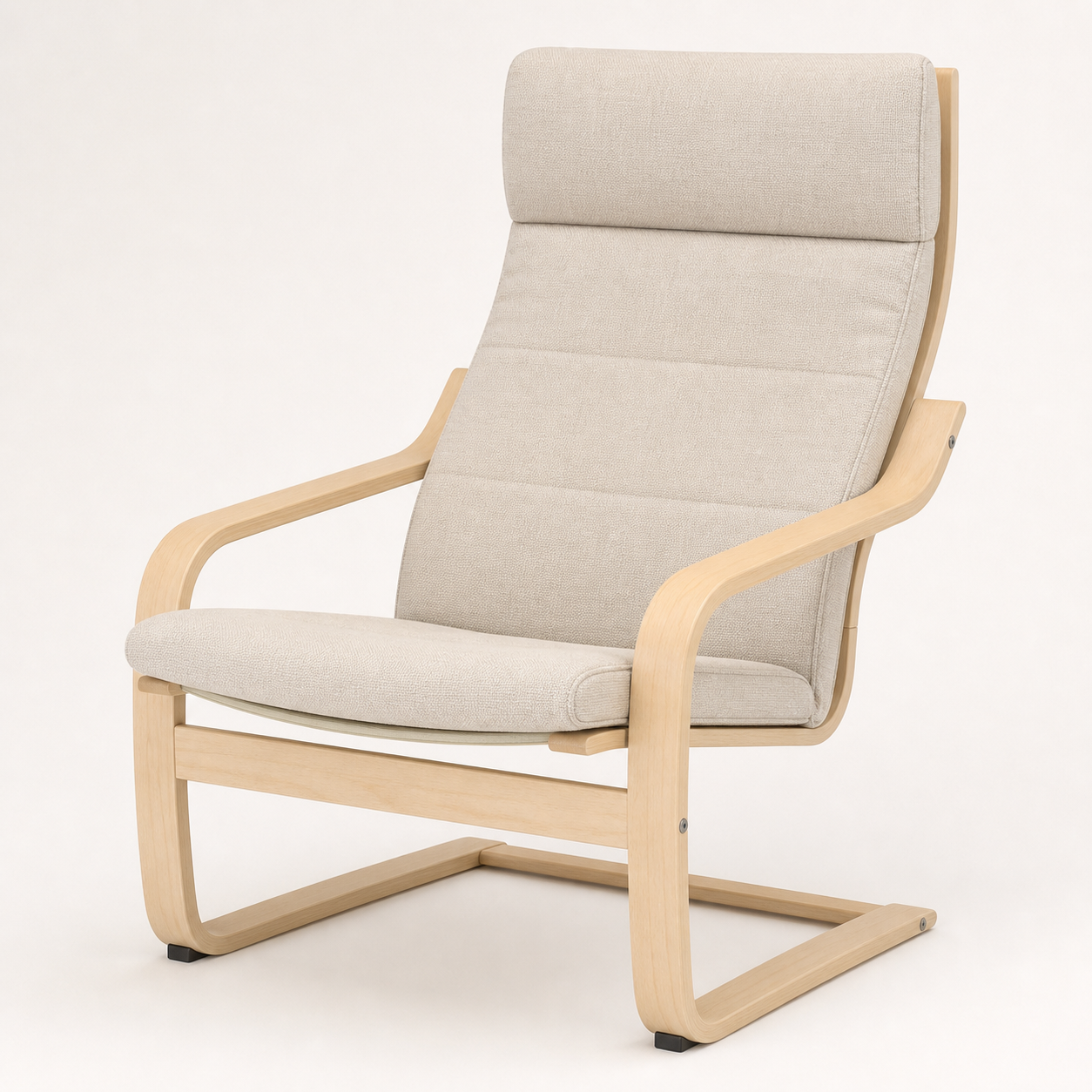
That history matters when you shop because authentic mid-century furniture was not defined by one silhouette. A molded plastic chair, a restrained walnut credenza, and a sculptural plywood <a href="/products/article-gabriola-34-lounge-chair-ivory-boucle/" class="product-inline-link">lounge chair</a> can all belong to the same broad movement. Their shared qualities are usually clearer in the way they use materials and solve practical problems than in any single decorative feature.
The defining forms and proportions
Clean lines are among the most recognizable mid century modern design characteristics, but "clean" does not always mean straight. Rectangular storage cabinets and slim desks often use crisp horizontal lines, while chairs and lighting may have pronounced curves. The common thread is visual clarity. You can usually understand how the piece is supported, where its main volumes begin and end, and what each part is doing.
Many case goods use long, low proportions. Credenzas, media cabinets, dressers, and benches stretch horizontally rather than appearing tall and imposing. Legs lift the main body off the floor, leaving visible space underneath. This reduces visual weight and can help a compact room feel less crowded. A low profile does have practical consequences: it may provide less storage than a taller cabinet, and a low sofa can be uncomfortable for people who find deep knee bending difficult.
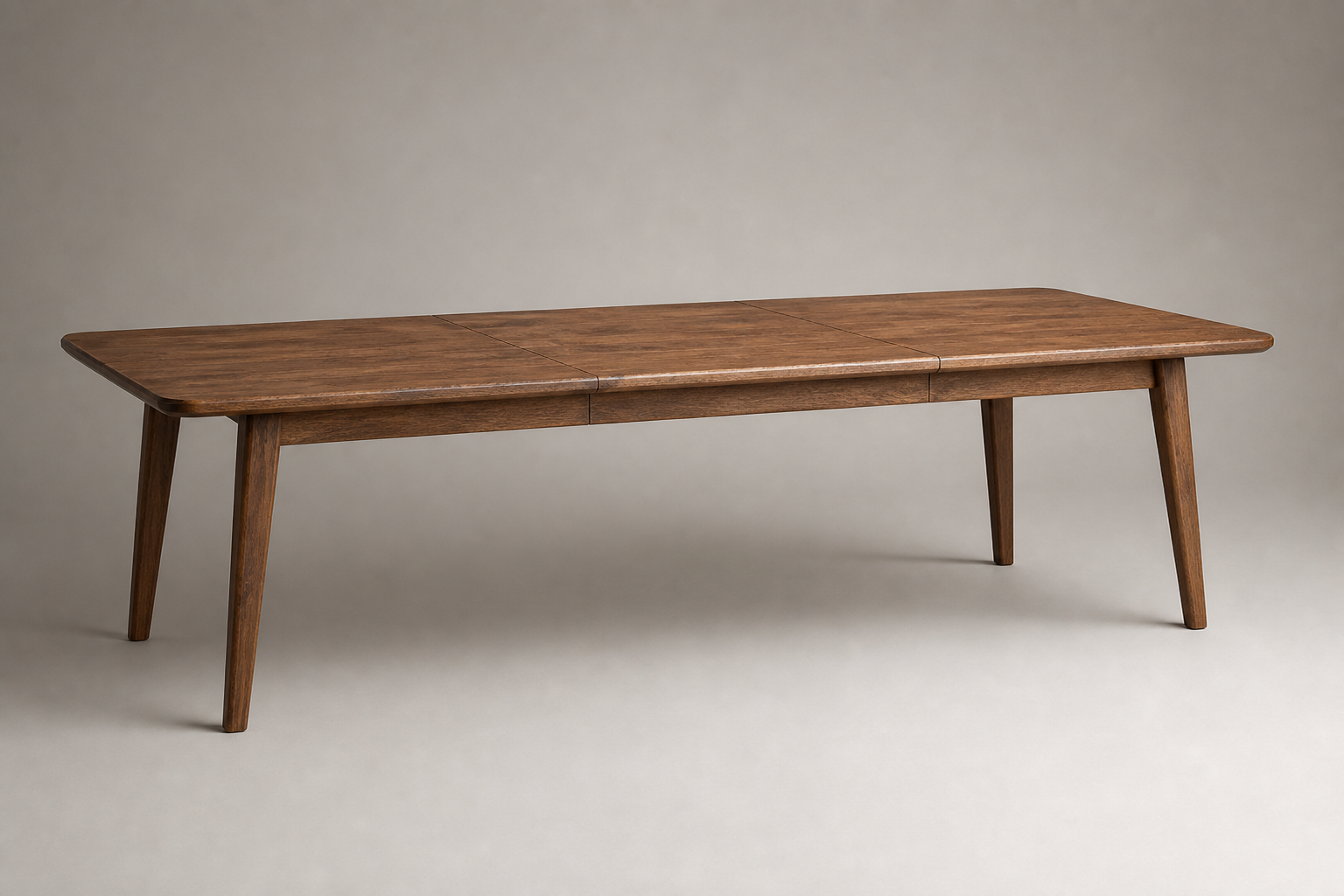
Good proportions are more important than decorative shorthand. Before ordering, compare the piece's full dimensions with the room, nearby furniture, doorways, and circulation paths. Mark its footprint on the floor with painter's tape. If it is a table or desk, also mark the chair pullout area. A compact-looking product photo can disguise a cabinet that is too deep for a narrow room or a <a href="/products/article-amoeba-42-5-coffee-table-walnut/" class="product-inline-link">coffee table</a> that leaves no comfortable path to the sofa.
Tapered legs, exposed structures, and visual lightness
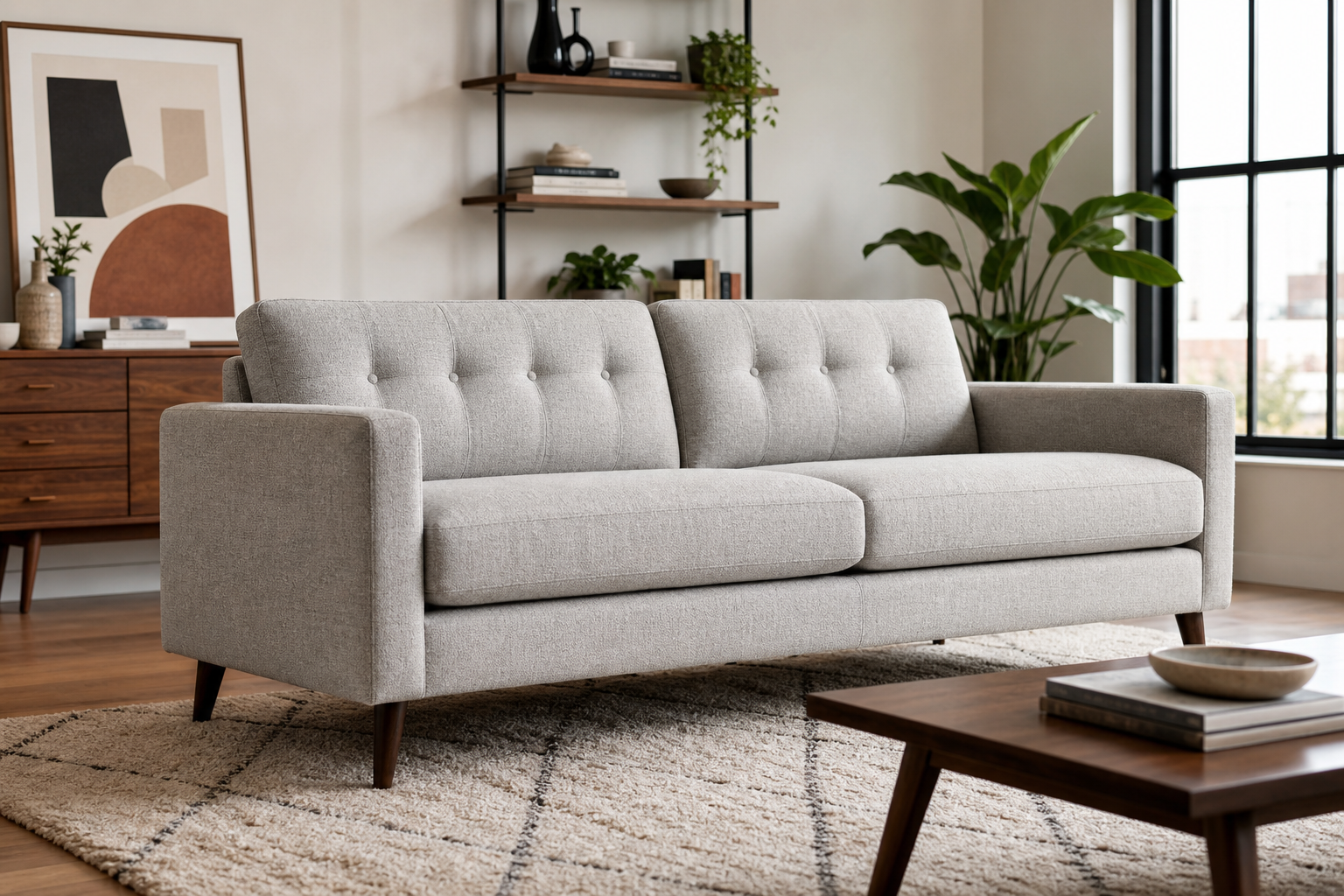
Tapered legs are strongly associated with mid-century furniture. They are often set at a slight angle and become narrower toward the floor. This detail appears on sofas, dining tables, desks, nightstands, and storage cabinets. The legs create open space below the furniture, making the body appear to float rather than sit heavily on the floor.
Not every tapered leg is structurally equal. Check whether the legs attach directly to a strong frame, bolt into metal plates, or screw into small inserts in particleboard. On a <a href="/products/article-seno-71-dining-table-walnut/" class="product-inline-link">dining table</a> or desk, widely splayed legs may look appealing but reduce usable knee space. Thin legs can also wobble if the joints are poorly made or the floor is uneven. Product photos rarely show this clearly, so look for assembly diagrams, underside images, customer photos, and details about frame construction.
Exposed structure is another period trait. A chair may reveal its wooden rails, a table may make its joinery part of the design, and a lamp may use a visible metal arm rather than hiding the mechanism. This honesty can help you evaluate quality online. If a listing avoids showing the back, underside, drawer interiors, or attachment points, assume those areas deserve closer scrutiny before purchase.
Wood, metal, glass, and early plastics
Warm wood is central to many mid-century interiors. Walnut, teak, oak, rosewood, and birch were used in solid form as well as veneers. Walnut and teak are especially associated with the look because their grain and color work well with simple shapes. Veneer is not automatically inferior. Well-made vintage and new furniture often uses a thin decorative wood layer over stable sheet material, allowing broad, consistent surfaces without the movement found in wide solid-wood panels.
The underlying material still matters. Plywood, medium-density fiberboard, and particleboard perform differently under load, around moisture, and after repeated disassembly. A veneered plywood cabinet can be durable, while a poorly sealed particleboard unit may swell if exposed to water. Ask what the structural panels are made from rather than relying on phrases such as "walnut finish" or "wood construction." Those descriptions may refer only to color or to a small amount of real wood.
Metal, glass, molded plywood, fiberglass, and early plastics also belong to the vocabulary. Chrome or painted steel bases can create a lighter profile than thick wood supports. Glass tops expose the structure below, though they require careful edge placement in homes with children. New molded chairs often use polypropylene instead of historical fiberglass. That can make them lighter and easier to clean, but you should still check the stated weight capacity and whether the material is suitable for sunlight, outdoor use, or frequent temperature changes.
Color, pattern, and the role of restraint
Mid-century rooms are often presented with mustard yellow, olive green, burnt orange, teal, and deep brown. Those colors are useful references, but the underlying palette was broader. Neutral walls, natural wood, black accents, cream upholstery, muted blues, and brick red can all support the style. The period's interiors often allowed materials and shapes to carry more of the visual interest than applied decoration.
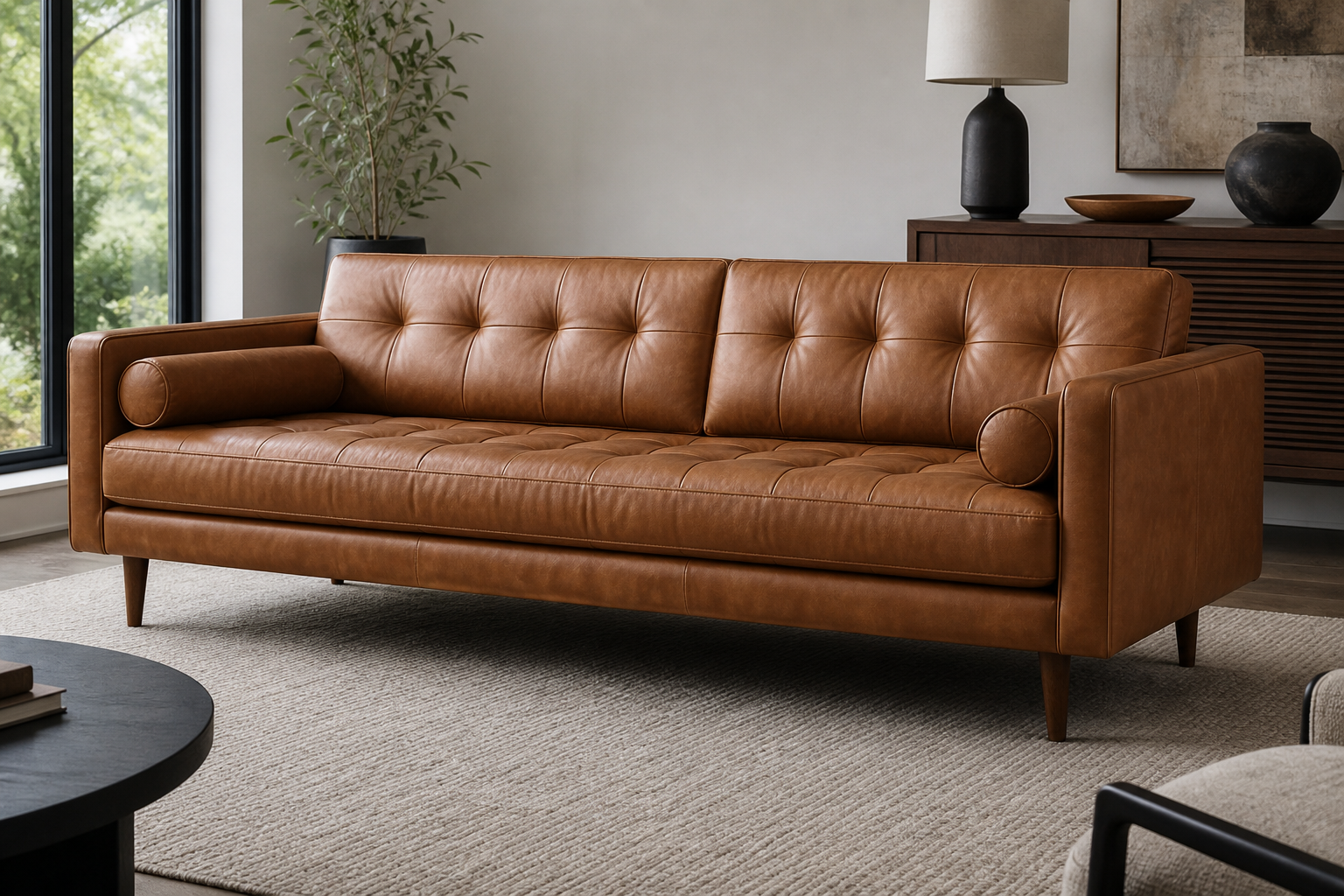
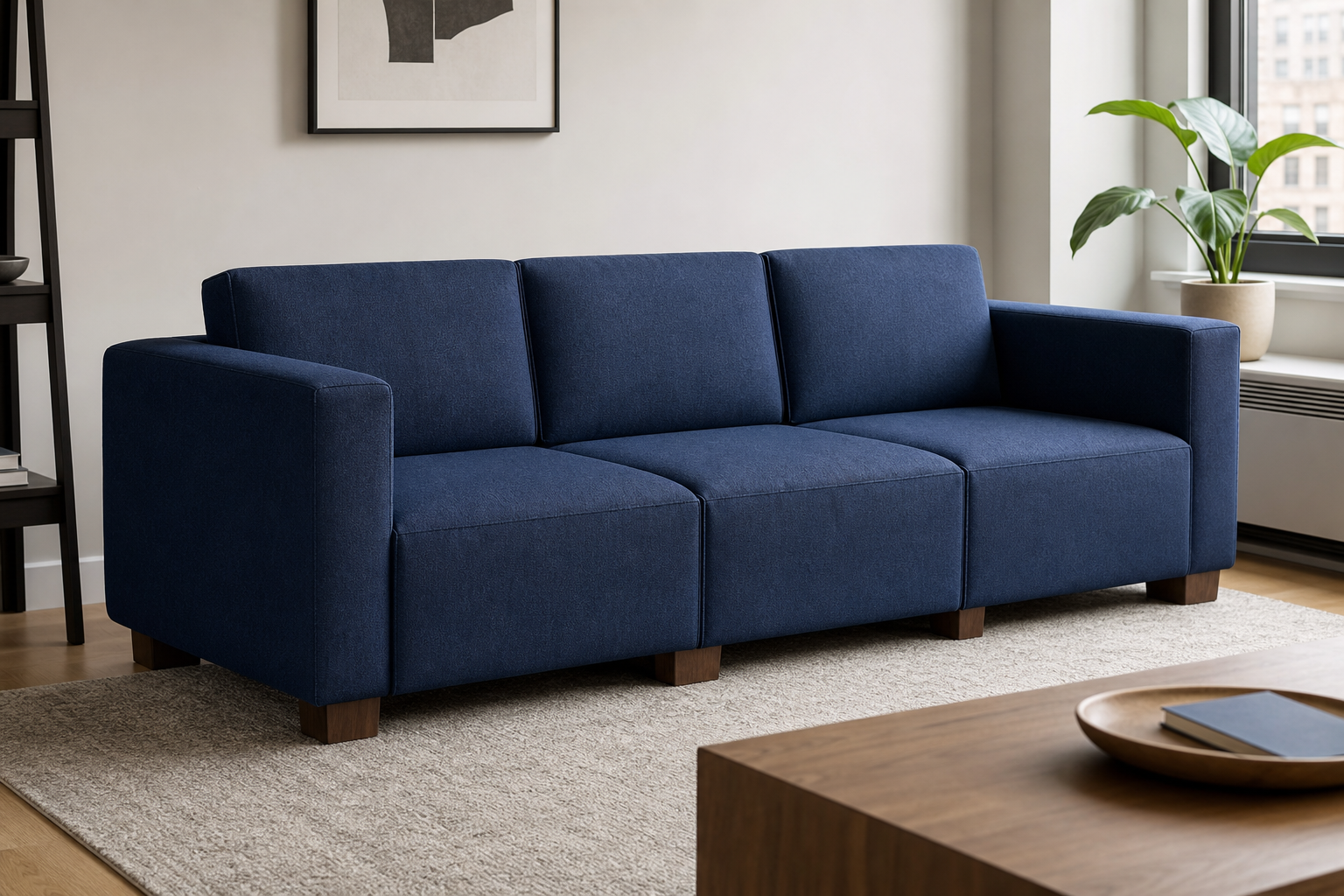
This is good news if you already own neutral furniture. You do not need to replace everything with orange upholstery. A walnut cabinet, a compact globe lamp, and one patterned textile may establish the direction more convincingly than a room full of products marketed as "retro." Keeping the larger purchases restrained also makes the room easier to update. A sofa in a durable neutral fabric will usually outlast enthusiasm for a very specific color.
Patterns tend to work best as accents. Geometric rugs, abstract prints, and textured fabrics can add period character, but stacking several bold motifs can make a small room feel hectic. Use one pattern at a large scale or two quieter patterns with clearly different scales. If a rug carries a strong design, let the <a href="/products/ikea-lack-coffee-table-black-brown/" class="product-inline-link">coffee table</a> and upholstery remain simpler. Renters can achieve much of this effect through removable pieces rather than paint or permanent architectural changes.
Function, flexibility, and furniture that earns its space
Mid-century modern furniture is often attractive because it looks purposeful. Drawers, sliding doors, drop leaves, modular shelves, and compact footprints respond to daily needs rather than hiding them under ornament. This practical emphasis suits modern apartments, provided you judge each piece by what it actually stores or supports.
A <a href="/products/article-conan-75-oval-dining-table-walnut/" class="product-inline-link">dining table</a> with an extension leaf can remain compact most of the week and expand for guests. If you regularly host, compare extension mechanisms, leg positions, and chair clearances when choosing the best dining table for six people. A narrow credenza can hold tableware or office equipment without occupying as much visual space as a tall cabinet. In a living room, the best <a href="/products/article-baarlo-46-coffee-table-oak/" class="product-inline-link">coffee table</a> for small spaces may have a modest footprint, rounded corners, and a shelf rather than an oversized sculptural base.
Do not confuse visual simplicity with practical simplicity. A slim desk may not have enough depth for a monitor and keyboard. A low media unit may lack ventilation or cable access. Open shelving can make a room feel lighter, but it exposes clutter and requires more cleaning. List what the piece must hold, measure those objects, and add room for cords, hinges, drawer travel, and airflow before comparing styles.
A quick-reference buying checklist
The table below can help separate a well-considered piece from one that relies on a few fashionable details. No item needs to satisfy every row. A convincing chair may use molded plastic rather than wood, while a substantial storage cabinet may not look especially light. What matters is whether the form, material, construction, and function agree with one another.
| What to inspect | Promising signs | Reasons to pause |
|---|---|---|
| Overall form | Clear silhouette, balanced proportions, limited ornament | Decorative details added without functional purpose |
| Legs and base | Secure attachment, cross-bracing where needed, stable stance | Thin screw-in legs attached to weak panels |
| Wood description | Species, veneer, core, and finish named clearly | "Wood look" or "walnut tone" with no material details |
| Storage | Useful internal dimensions and working door clearance | Exterior dimensions listed without usable capacity |
| Upholstery | Fabric composition, care instructions, cushion details | No information about foam, lining, or cleaning |
| Load capacity | Stated limits for shelves, seating, and desks | No weight rating for a load-bearing product |
| Safety | Anchor hardware, rounded edges, replacement parts | Tall or top-heavy furniture with no anchoring guidance |
| Assembly | Clear instructions and replaceable fasteners | Glued-only joints or unclear attachment points |
| Seller support | Warranty, return terms, spare parts information | Expensive return shipping or vague damage policy |
Use the checklist alongside real measurements. Confirm whether listed dimensions include handles, overhanging tops, angled legs, or extended leaves. For seating, compare seat height and depth with furniture you already find comfortable. For storage, check internal dimensions rather than assuming the full cabinet volume is usable. Save screenshots or a PDF of the listing before ordering because specifications and return terms can change.
How to mix mid-century pieces without creating a theme set
A room usually feels more natural when it contains a few related ideas rather than a complete matching collection. Choose one anchor piece, such as a sofa, dining table, credenza, or desk. Let smaller objects repeat one or two traits from that piece: a warm wood tone, a rounded form, a dark metal detail, or a low horizontal line.
Wood matching deserves particular restraint. Walnut-colored finishes from different brands rarely match exactly, and trying to force them together can make the differences more obvious. Aim for coordination rather than duplication. Two medium or dark woods can work if they have distinct roles, while a black lamp or neutral rug can provide separation. If several wood pieces touch visually, compare samples in the room's actual daylight before committing.
You can also combine mid-century forms with contemporary ergonomic furniture. A period-inspired desk may look elegant but offer no height adjustment, cable management, or monitor support. If you work at home for long hours, an adjustable-height desk with a restrained top and simple frame may be a better purchase than a convincing reproduction. Comfort and fit should outrank stylistic purity, especially for seating and work surfaces used every day.
Safety checks for furniture, shelving, and upholstery
Tall dressers, bookcases, and storage units can tip when drawers are opened, climbed on, or loaded unevenly. Wall anchoring is especially important in homes with children, but adults and pets can also be injured by unstable furniture. Use the manufacturer's anchor system when suitable for your wall. Drywall, masonry, plaster, and stud walls require different fasteners. Renters should ask their landlord about approved anchoring methods rather than leaving a top-heavy unit unsecured.
Check stated weight limits for shelves, desks, chairs, and tables. A shelf that safely holds paperbacks may not support vinyl records, large art books, or stone objects. Distribute heavy items near structural supports and on lower shelves. For a desk, count the monitor, arm, computer, printer, accessories, and any weight applied while leaning on the edge. Stop using a piece if joints loosen repeatedly, shelves bow, the base rocks, or cracks appear around fasteners.
Upholstered furniture requires additional scrutiny. Look for applicable fire-safety labeling in your region, particularly when buying used items or importing furniture. Ask about replacement upholstery and cushion materials rather than applying unapproved chemical treatments yourself. New furniture can release odors and volatile organic compounds from foam, adhesives, finishes, and composite wood. Ventilate the room, follow manufacturer guidance, and keep the item away from sleeping areas if the odor causes irritation. Sharp table corners can be managed through layout, rounded designs, or securely attached corner guards. A beautiful low table is a poor choice if it creates a constant collision point in a child's play route.
Common mistakes that make the style less practical
The first mistake is buying by thumbnail. Online listings can make a tiny nightstand look like a full cabinet and a deep <a href="/products/article-ceni-39-lounge-chair-denim-blue/" class="product-inline-link">lounge chair</a> look upright. Always read the dimensions, then compare them with the body positions and storage needs involved. A chair should be judged by seat height, depth, width, back angle, and cushion firmness, not only by its profile.
Another mistake is assuming every vintage item is well made. Age can indicate durability, but it can also hide dried glue, brittle foam, missing hardware, veneer loss, unstable joints, odors, or unsafe electrical components. Rewiring an old lamp, repairing a cracked chair frame, or replacing degraded upholstery can cost more than the purchase itself. Ask for detailed photos under strong light and request close-ups of labels, joints, undersides, drawer runners, and damaged areas.
Finally, avoid filling every room with the same obvious features. Too many splayed legs, starburst motifs, globe lamps, and orange fabrics can flatten the style into a costume. Period-inspired rooms benefit from negative space and contrast. A plain contemporary shelf or quiet linen curtain can make a sculptural chair look more intentional. Spend the budget on function and construction first; add the more recognizable visual cues through smaller objects that are easier to change.
When restoration or installation needs a professional
A furniture restorer is worth consulting when a valuable or structurally important piece has broken joints, severe veneer damage, water staining, missing components, or an uncertain finish. Aggressive sanding can cut through thin veneer in seconds, while household cleaners may discolor old finishes. If you do not know whether a surface is lacquer, shellac, oil, or a later coating, test nothing conspicuous until you have appropriate guidance.
Use a qualified electrician for vintage lamps with cracked insulation, loose sockets, heat damage, ungrounded metal parts, or improvised repairs. Replacing a shade or bulb is straightforward; diagnosing unsafe internal wiring is not. Follow the lamp's maximum wattage and use a bulb compatible with enclosed fixtures when applicable. Stop using any lamp that flickers, smells hot, sparks, trips a breaker, or discolors around the socket.
Professional installation may also be sensible for large wall-mounted shelving, heavy mirrors, suspended cabinets, or furniture anchored into unfamiliar masonry and plaster. A secure installation depends on the wall structure, fastener type, load, and leverage created by the object's depth. If you cannot identify a safe attachment point, do not guess. The cost of installation is small compared with damage to the wall, furniture, or anyone standing nearby.
Frequently asked questions
What are the main mid century modern design characteristics?
The clearest characteristics are simple forms, balanced proportions, limited ornament, warm wood, exposed structures, and a sense of visual lightness. Tapered or angled legs are common, as are low storage cabinets and furniture that reveals how it is supported. Curves also belong to the style, particularly in molded chairs and lighting. No single feature proves that an item is mid-century modern; look at the complete relationship between form, material, construction, and function.
Is mid-century modern the same as retro?
No. Retro is a broad term for newer objects that deliberately recall an earlier period. Mid-century modern refers to a more specific design movement and period, though retailers often use the phrase loosely. A newly manufactured cabinet can be a mid-century-inspired reproduction, while a brightly colored appliance with 1950s styling may be retro without sharing the movement's functional or structural qualities.
Can mid-century modern work in a small apartment?
Yes, particularly when you choose furniture with raised bases, modest depths, and useful storage. Visible floor area can make a room feel more open. Measure carefully, however, because angled legs may extend beyond the cabinet body and lounge seating can be deeper than it appears. Multifunctional tables, wall-mounted lighting, and compact storage tend to work better than collecting many small decorative pieces.
How can I tell whether a piece is real wood?
Read the material specification and ask the seller to distinguish solid wood, veneer, plywood, MDF, and particleboard. End grain, panel edges, drawer interiors, and the underside may reveal the construction. A repeating grain pattern can indicate printed material or veneer matching, but veneer itself can be genuine wood and very well made. Price, weight, and appearance alone do not confirm the internal structure.
Is vintage mid-century furniture always better than a reproduction?
No. Vintage furniture may offer distinctive materials, proportions, and workmanship, but condition varies widely. A reproduction can be safer, easier to return, and better suited to current electronics or upholstery standards. Compare structural condition, repair costs, dimensions, weight capacity, anchoring options, and seller support. Choose the piece that performs its job safely rather than treating age as an automatic guarantee of quality.